
About This Book
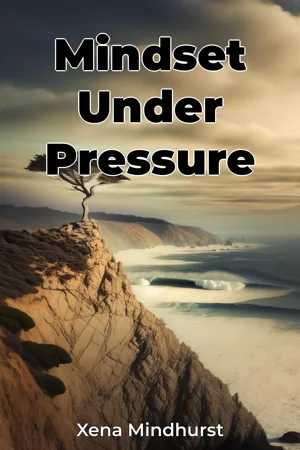
What separates those who thrive under pressure from those who crumble? *Mindset Under Pressure: Mastering High-Stress Moments with Cognitive Science* answers this question by dissecting the mental strategies that enable individuals to perform effectively in demanding scenarios. Drawing from decades of cognitive psychology research, this book bridges scientific rigor with actionable techniques, offering readers a roadmap to transform stress from a paralyzing force into a catalyst for clarity and resilience. The book centers on three core principles: **cognitive reframing**, **attentional control**, and **stress inoculation**. Cognitive reframing—the practice of reinterpretating stressors as challenges rather than threats—forms the foundation of mindset shifts. Attentional control techniques, rooted in studies of elite athletes and emergency responders, teach readers to direct focus amid chaos. Stress inoculation, a concept borrowed from clinical psychology, prepares individuals to handle escalating pressures through graduated exposure. These topics are critical because they address a universal human experience: the biological and psychological toll of stress, which impairs decision-making, creativity, and emotional stability when unmanaged. To contextualize these strategies, the book opens with an overview of the human stress response, tracing its evolutionary purpose as a survival mechanism and its mismatch with modern stressors like public speaking or financial strain. It introduces key findings from Walter Cannon’s fight-or-flight theory and Hans Selye’s General Adaptation Syndrome, clarifying how chronic stress damages health and performance. Readers need no prior psychology knowledge; concepts are explained through relatable analogies, such as comparing cognitive load to a computer’s processing capacity. The central thesis argues that stress resilience is not an innate trait but a trainable skill. By leveraging neuroplasticity—the brain’s ability to rewire itself—individuals can cultivate mental habits that mitigate overwhelm. This perspective challenges the myth that high-pressure competence is reserved for “naturally calm” people, positioning agency and practice as transformative tools. Structured in four parts, the book begins by deconstructing stress myths and introducing cognitive psychology frameworks. The second section delves into attentional control, featuring studies on “quiet eye” training used by marksmen and surgeons to maintain precision under duress. The third explores stress inoculation through case studies of military training programs and crisis negotiators. The final section synthesizes these concepts into a customizable resilience plan, complete with exercises like scenario visualization and real-time reframing prompts. Evidence ranges from controlled lab experiments—such as fMRI scans showing amygdala regulation during reframing—to longitudinal field studies of disaster response teams. The book also incorporates behavioral economics research on decision fatigue and ethnographic accounts of cultural stress rituals, illustrating universal and context-specific strategies. Interdisciplinary insights enrich its arguments: Neuroscience clarifies how mindfulness practices strengthen prefrontal cortex activity; behavioral economics explains why stress narrows decision-making; performance psychology highlights parallels between athletic and corporate high-stakes environments. These connections position stress management as a multidisciplinary endeavor, relevant to diverse fields. *Mindset Under Pressure* distinguishes itself by merging tactical exercises with scientific depth. Unlike generic self-help guides, it avoids oversimplification, addressing nuances like individual variability in stress thresholds and the ethics of stress exposure training. A chapter on “ethical resilience” debates whether stress inoculation could normalize harmful workplace conditions, urging readers to balance adaptation with boundary-setting. Written in a concise, conversational tone, the book translates academic research into digestible insights without sacrificing nuance. Case studies humanize the science, profiling a cardiac surgeon managing operating room crises and a teacher using reframing to navigate classroom conflicts. Targeted at professionals, athletes, caregivers, and anyone facing high-pressure decisions, the book appeals to readers seeking evidence-based self-improvement. Its blend of psychology and practical tools meets genre expectations for self-help stress management, while its empirical grounding satisfies nonfiction rigor. The scope focuses on cognitive strategies, intentionally sidestepping pharmacological or therapeutic interventions. Limitations, such as cultural differences in stress perception, are acknowledged, with recommendations for further reading. Real-world applications are emphasized: readers learn to create “stress blueprints” for recurring challenges, use breathwork to reset attention, and design incremental exposure exercises. Controversies, like debates over the universality of “optimal” stress levels, are presented objectively, encouraging critical reflection. By demystifying the science of stress and providing a structured path to resilience, *Mindset Under Pressure* equips readers not just to survive high-stakes moments, but to harness them as opportunities for growth.
What separates those who thrive under pressure from those who crumble? *Mindset Under Pressure: Mastering High-Stress Moments with Cognitive Science* answers this question by dissecting the mental strategies that enable individuals to perform effectively in demanding scenarios. Drawing from decades of cognitive psychology research, this book bridges scientific rigor with actionable techniques, offering readers a roadmap to transform stress from a paralyzing force into a catalyst for clarity and resilience. The book centers on three core principles: **cognitive reframing**, **attentional control**, and **stress inoculation**. Cognitive reframing—the practice of reinterpretating stressors as challenges rather than threats—forms the foundation of mindset shifts. Attentional control techniques, rooted in studies of elite athletes and emergency responders, teach readers to direct focus amid chaos. Stress inoculation, a concept borrowed from clinical psychology, prepares individuals to handle escalating pressures through graduated exposure. These topics are critical because they address a universal human experience: the biological and psychological toll of stress, which impairs decision-making, creativity, and emotional stability when unmanaged. To contextualize these strategies, the book opens with an overview of the human stress response, tracing its evolutionary purpose as a survival mechanism and its mismatch with modern stressors like public speaking or financial strain. It introduces key findings from Walter Cannon’s fight-or-flight theory and Hans Selye’s General Adaptation Syndrome, clarifying how chronic stress damages health and performance. Readers need no prior psychology knowledge; concepts are explained through relatable analogies, such as comparing cognitive load to a computer’s processing capacity. The central thesis argues that stress resilience is not an innate trait but a trainable skill. By leveraging neuroplasticity—the brain’s ability to rewire itself—individuals can cultivate mental habits that mitigate overwhelm. This perspective challenges the myth that high-pressure competence is reserved for “naturally calm” people, positioning agency and practice as transformative tools. Structured in four parts, the book begins by deconstructing stress myths and introducing cognitive psychology frameworks. The second section delves into attentional control, featuring studies on “quiet eye” training used by marksmen and surgeons to maintain precision under duress. The third explores stress inoculation through case studies of military training programs and crisis negotiators. The final section synthesizes these concepts into a customizable resilience plan, complete with exercises like scenario visualization and real-time reframing prompts. Evidence ranges from controlled lab experiments—such as fMRI scans showing amygdala regulation during reframing—to longitudinal field studies of disaster response teams. The book also incorporates behavioral economics research on decision fatigue and ethnographic accounts of cultural stress rituals, illustrating universal and context-specific strategies. Interdisciplinary insights enrich its arguments: Neuroscience clarifies how mindfulness practices strengthen prefrontal cortex activity; behavioral economics explains why stress narrows decision-making; performance psychology highlights parallels between athletic and corporate high-stakes environments. These connections position stress management as a multidisciplinary endeavor, relevant to diverse fields. *Mindset Under Pressure* distinguishes itself by merging tactical exercises with scientific depth. Unlike generic self-help guides, it avoids oversimplification, addressing nuances like individual variability in stress thresholds and the ethics of stress exposure training. A chapter on “ethical resilience” debates whether stress inoculation could normalize harmful workplace conditions, urging readers to balance adaptation with boundary-setting. Written in a concise, conversational tone, the book translates academic research into digestible insights without sacrificing nuance. Case studies humanize the science, profiling a cardiac surgeon managing operating room crises and a teacher using reframing to navigate classroom conflicts. Targeted at professionals, athletes, caregivers, and anyone facing high-pressure decisions, the book appeals to readers seeking evidence-based self-improvement. Its blend of psychology and practical tools meets genre expectations for self-help stress management, while its empirical grounding satisfies nonfiction rigor. The scope focuses on cognitive strategies, intentionally sidestepping pharmacological or therapeutic interventions. Limitations, such as cultural differences in stress perception, are acknowledged, with recommendations for further reading. Real-world applications are emphasized: readers learn to create “stress blueprints” for recurring challenges, use breathwork to reset attention, and design incremental exposure exercises. Controversies, like debates over the universality of “optimal” stress levels, are presented objectively, encouraging critical reflection. By demystifying the science of stress and providing a structured path to resilience, *Mindset Under Pressure* equips readers not just to survive high-stakes moments, but to harness them as opportunities for growth.
"Mindset Under Pressure" explores how to transform stress from a paralyzing force into a tool for clarity and resilience, blending cognitive psychology with practical strategies. The book’s core premise challenges the myth that thriving under pressure is an innate gift, arguing instead that stress resilience is a trainable skill. Through three key principles—cognitive reframing, attentional control, and stress inoculation—it teaches readers to reinterpret challenges, maintain focus amid chaos, and build tolerance to escalating pressures. These concepts are grounded in interdisciplinary research, from neuroplasticity studies showing the brain’s adaptability to real-world examples like elite athletes and crisis negotiators. The book distinguishes itself by merging scientific rigor with tactical exercises, avoiding oversimplified advice. It opens by demystifying the biology of stress, using analogies like comparing cognitive overload to a computer’s strained processor. Later chapters progress from theory to action, offering tools such as “stress blueprints” and scenario visualization. Unique ethical discussions, like balancing resilience training with workplace boundaries, add depth. Case studies—a surgeon managing operating room crises or a teacher navigating classroom conflicts—humanize the science, while fMRI data and military training examples underscore its evidence-based approach. Written in conversational tone, *Mindset Under Pressure* caters to professionals, caregivers, and anyone facing high-stakes decisions. Its structured four-part framework moves from debunking stress myths to creating personalized resilience plans, emphasizing agency and incremental growth. By framing stress as a catalyst rather than a threat, the book equips readers to harness pressure as an opportunity for mastery.
Book Details
ISBN
9788233955281
Publisher
Publifye AS
Your Licenses
You don't own any licenses for this book
Purchase a license below to unlock this book and download the EPUB.
Purchase License
Select a tier to unlock this book
Need bulk licensing?
Contact us for enterprise agreements.