
About This Book
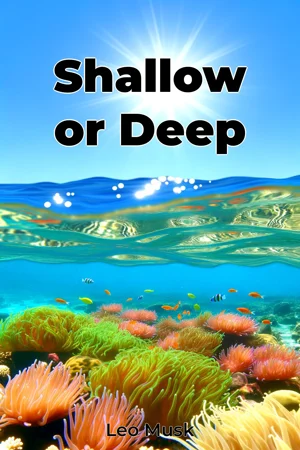
Beneath the ocean’s surface lies a world divided—a realm where sunlight fuels vibrant ecosystems in one layer and eternal darkness sustains life in another. *Shallow or Deep: Life at the Extremes of the Ocean* examines the stark contrasts and hidden connections between these two frontiers, blending marine biology, ecology, and environmental science to unravel how life adapts to radically different conditions. The book opens by juxtaposing the bustling coral reefs of shallow coasts with the alien landscapes of the abyssal zone. Coral reefs, often called the “rainforests of the sea,” host nearly 25% of marine species despite covering less than 1% of the ocean floor. In contrast, the deep sea—a region below 200 meters—remains largely unexplored, yet it harbors organisms capable of surviving crushing pressures, near-freezing temperatures, and perpetual night. By comparing these extremes, the text establishes a central thesis: both shallow and deep ecosystems are critical to oceanic health, yet each faces distinct threats from human activity. Three core themes structure the narrative. First, the book explores the evolutionary adaptations that allow life to thrive in each zone. Shallow-water species, such as photosynthetic corals and schooling fish, rely on symbiotic relationships and rapid reproduction. Deep-sea creatures, like anglerfish and giant tube worms, depend on chemosynthesis, bioluminescence, and energy-efficient behaviors. Second, the text investigates how these ecosystems interact. For instance, nutrient upwelling from the deep fuels plankton blooms near the surface, while sinking organic matter sustains abyssal food webs. Finally, the book addresses anthropogenic impacts, including warming surface waters, plastic pollution, and deep-sea mining, which disrupt these finely tuned systems. Scientific context is provided through a historical lens. Early marine biology focused on accessible coastal regions, with the HMS *Challenger* expeditions of the 1870s marking the first systematic study of the deep ocean. Modern technologies like remotely operated vehicles (ROVs) and DNA sequencing have since revealed astonishing biodiversity in both zones, challenging the outdated notion of the deep sea as a lifeless desert. The book emphasizes that understanding these habitats requires knowledge of basic oceanography—such as thermoclines, hydrostatic pressure, and nutrient cycles—to appreciate how physical forces shape biological outcomes. Evidence is drawn from peer-reviewed studies, field observations, and interviews with researchers. Case studies include the decline of Australia’s Great Barrier Reef due to coral bleaching and the discovery of hydrothermal vent ecosystems in the 1970s, which revolutionized ideas about life’s chemical adaptability. The text also cites long-term data sets, such as sediment traps measuring carbon flux to the deep sea and satellite imagery tracking coastal habitat loss. Interdisciplinary connections strengthen the analysis. Climate science clarifies how rising CO₂ levels acidify shallow waters, while geology informs discussions of seabed mineral extraction. Biotechnology emerges as a surprising link: enzymes from heat-resistant vent bacteria now underpin PCR tests, and coral-derived compounds are used in anti-cancer drugs. These intersections underscore the ocean’s role in global systems, from carbon sequestration to medical innovation. A unique feature of the book is its parallel structure, alternating between shallow and deep ecosystems to highlight contrasts and synergies. This approach avoids romanticizing either zone, instead presenting empirical data to show how both are irreplaceable. The tone balances academic rigor with accessible prose, avoiding jargon without oversimplifying concepts. Photographic descriptions of bioluminescent displays or symbiotic shrimp on vent chimneys add narrative depth, appealing to both casual readers and students. Targeted at environmentally engaged audiences, the book assumes no prior expertise but rewards curiosity about marine science. Policy makers will find actionable insights in chapters discussing marine protected areas and sustainable fishing practices, while educators can use case studies to illustrate ecological principles. Limitations include a focus on saltwater ecosystems, acknowledging that freshwater habitats face parallel crises but require separate analysis. Practical applications are woven throughout. Readers learn how reducing fertilizer runoff can mitigate coastal dead zones and why regulating deep-sea mining could preserve undiscovered species. The final chapters confront ethical debates: Should nations exploit deep-sea minerals for renewable energy technology if it risks destroying fragile ecosystems? Can coral restoration projects outpace warming trends? By framing these questions, the book urges a balanced approach to ocean stewardship—one that prioritizes long-term resilience over short-term gain. *Shallow or Deep* does not shy from complexity. It presents the ocean as a dynamic, interconnected entity, arguing that its survival depends on recognizing the value of both its sunlit shallows and lightless depths. Through meticulous research and vivid storytelling, the book makes a compelling case: to protect the ocean, we must understand it in full.
Beneath the ocean’s surface lies a world divided—a realm where sunlight fuels vibrant ecosystems in one layer and eternal darkness sustains life in another. *Shallow or Deep: Life at the Extremes of the Ocean* examines the stark contrasts and hidden connections between these two frontiers, blending marine biology, ecology, and environmental science to unravel how life adapts to radically different conditions. The book opens by juxtaposing the bustling coral reefs of shallow coasts with the alien landscapes of the abyssal zone. Coral reefs, often called the “rainforests of the sea,” host nearly 25% of marine species despite covering less than 1% of the ocean floor. In contrast, the deep sea—a region below 200 meters—remains largely unexplored, yet it harbors organisms capable of surviving crushing pressures, near-freezing temperatures, and perpetual night. By comparing these extremes, the text establishes a central thesis: both shallow and deep ecosystems are critical to oceanic health, yet each faces distinct threats from human activity. Three core themes structure the narrative. First, the book explores the evolutionary adaptations that allow life to thrive in each zone. Shallow-water species, such as photosynthetic corals and schooling fish, rely on symbiotic relationships and rapid reproduction. Deep-sea creatures, like anglerfish and giant tube worms, depend on chemosynthesis, bioluminescence, and energy-efficient behaviors. Second, the text investigates how these ecosystems interact. For instance, nutrient upwelling from the deep fuels plankton blooms near the surface, while sinking organic matter sustains abyssal food webs. Finally, the book addresses anthropogenic impacts, including warming surface waters, plastic pollution, and deep-sea mining, which disrupt these finely tuned systems. Scientific context is provided through a historical lens. Early marine biology focused on accessible coastal regions, with the HMS *Challenger* expeditions of the 1870s marking the first systematic study of the deep ocean. Modern technologies like remotely operated vehicles (ROVs) and DNA sequencing have since revealed astonishing biodiversity in both zones, challenging the outdated notion of the deep sea as a lifeless desert. The book emphasizes that understanding these habitats requires knowledge of basic oceanography—such as thermoclines, hydrostatic pressure, and nutrient cycles—to appreciate how physical forces shape biological outcomes. Evidence is drawn from peer-reviewed studies, field observations, and interviews with researchers. Case studies include the decline of Australia’s Great Barrier Reef due to coral bleaching and the discovery of hydrothermal vent ecosystems in the 1970s, which revolutionized ideas about life’s chemical adaptability. The text also cites long-term data sets, such as sediment traps measuring carbon flux to the deep sea and satellite imagery tracking coastal habitat loss. Interdisciplinary connections strengthen the analysis. Climate science clarifies how rising CO₂ levels acidify shallow waters, while geology informs discussions of seabed mineral extraction. Biotechnology emerges as a surprising link: enzymes from heat-resistant vent bacteria now underpin PCR tests, and coral-derived compounds are used in anti-cancer drugs. These intersections underscore the ocean’s role in global systems, from carbon sequestration to medical innovation. A unique feature of the book is its parallel structure, alternating between shallow and deep ecosystems to highlight contrasts and synergies. This approach avoids romanticizing either zone, instead presenting empirical data to show how both are irreplaceable. The tone balances academic rigor with accessible prose, avoiding jargon without oversimplifying concepts. Photographic descriptions of bioluminescent displays or symbiotic shrimp on vent chimneys add narrative depth, appealing to both casual readers and students. Targeted at environmentally engaged audiences, the book assumes no prior expertise but rewards curiosity about marine science. Policy makers will find actionable insights in chapters discussing marine protected areas and sustainable fishing practices, while educators can use case studies to illustrate ecological principles. Limitations include a focus on saltwater ecosystems, acknowledging that freshwater habitats face parallel crises but require separate analysis. Practical applications are woven throughout. Readers learn how reducing fertilizer runoff can mitigate coastal dead zones and why regulating deep-sea mining could preserve undiscovered species. The final chapters confront ethical debates: Should nations exploit deep-sea minerals for renewable energy technology if it risks destroying fragile ecosystems? Can coral restoration projects outpace warming trends? By framing these questions, the book urges a balanced approach to ocean stewardship—one that prioritizes long-term resilience over short-term gain. *Shallow or Deep* does not shy from complexity. It presents the ocean as a dynamic, interconnected entity, arguing that its survival depends on recognizing the value of both its sunlit shallows and lightless depths. Through meticulous research and vivid storytelling, the book makes a compelling case: to protect the ocean, we must understand it in full.
"Shallow or Deep: Life at the Extremes of the Ocean" explores the striking divide between the sunlit shallows and lightless depths of the ocean, revealing how life adapts to these extremes and why both realms are vital to planetary health. The book contrasts coral reefs—bursting with biodiversity akin to underwater rainforests—with the mysterious deep sea, where creatures survive crushing pressures and eternal darkness through chemosynthesis and bioluminescence. A central theme emerges: though these zones seem worlds apart, they are interconnected through nutrient cycles and shared vulnerabilities to human impacts like climate change and deep-sea mining. The book’s parallel structure alternates between shallow and deep ecosystems, blending marine biology, oceanography, and environmental science. Readers encounter evolutionary marvels, such as coral symbiosis with algae and tube worms thriving at hydrothermal vents, alongside sobering case studies like coral bleaching in the Great Barrier Reef. By weaving historical expeditions like HMS *Challenger* with modern technologies like DNA sequencing, the narrative underscores how scientific advances have reshaped our understanding of oceanic life. Practical insights—such as how reducing fertilizer runoff protects coastal zones—highlight actionable solutions for conservation. Unique in its balanced approach, *Shallow or Deep* avoids oversimplification, presenting empirical data and ethical dilemmas without losing accessibility. It bridges academic rigor and vivid storytelling, making complex concepts like carbon flux or thermoclines relatable through analogies and real-world examples. For anyone curious about marine ecosystems or environmental stewardship, this book offers a compelling, holistic view of the ocean’s fragile interconnectedness—and why safeguarding both its shallow and deep frontiers is urgent.
Book Details
ISBN
9788233955274
Publisher
Publifye AS
Your Licenses
You don't own any licenses for this book
Purchase a license below to unlock this book and download the EPUB.
Purchase License
Select a tier to unlock this book
Need bulk licensing?
Contact us for enterprise agreements.