
About This Book
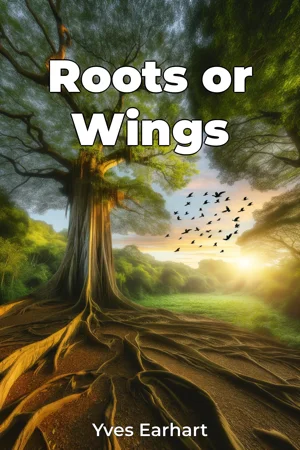
What if survival itself hinges on a fundamental choice: to stay rooted or embrace mobility? *Roots or Wings: The Silent Strategies of Life* delves into this dichotomy, exploring how plants and animals—bound by their distinct biological constraints—have evolved contrasting yet complementary methods to endure, reproduce, and shape their environments. This book synthesizes decades of ecological research to reveal how these strategies not only define individual species but collectively sustain the planet’s ecosystems. The book examines two primary themes: the resource-maximizing adaptations of stationary plants and the behavior-driven survival tactics of mobile animals. It underscores their roles in nutrient cycling, habitat formation, and climate regulation, emphasizing that neither strategy is superior—each is a product of evolutionary trade-offs. By comparing photosynthetic efficiency with predatory ingenuity, symbiotic relationships with migratory instincts, the text invites readers to reconsider how stability and movement coexist in nature’s balance. Evolutionary history provides the backbone for this analysis. Over 500 million years, plants and animals diverged into distinct kingdoms, yet their fates remain intertwined. Plants, anchored by necessity, developed chemical communication, root networks, and seed dispersal mechanisms. Animals, leveraging mobility, evolved complex nervous systems, social hierarchies, and migration patterns. The book contextualizes these adaptations within Earth’s geologic and climatic shifts, illustrating how ice ages, continental drift, and extinction events shaped today’s biodiversity. Central to the book’s thesis is the idea that rooted and mobile life forms rely on interdependence. Forests, for instance, depend on pollinators and seed carriers, while herbivores require plant biomass for energy. This mutualism stabilizes ecosystems, yet human activity—deforestation, urbanization, climate change—disrupts these relationships. The text argues that preserving biodiversity requires understanding these dynamics, as neither kingdom can thrive in isolation. Structured into three sections, the book first introduces core concepts like photosynthesis, trophic levels, and niche specialization. Subsequent chapters dissect plant strategies (e.g., mycorrhizal networks, drought-resistant phenotypes) and animal innovations (e.g., pack hunting, epigenetic memory). Final chapters explore human impacts, applying ecological principles to conservation and sustainability. Case studies include the role of wolves in rewilding Yellowstone and mycorrhizal fungi in regenerative agriculture. Evidence is drawn from peer-reviewed studies, field experiments, and ecological modeling. Notable examples include isotopic tracing of carbon in forest ecosystems, GPS tracking of migratory species like Arctic terns, and genomic analyses of plant stress responses. The book also references Indigenous land-management practices, highlighting time-tested symbiosis between humans and ecosystems. Interdisciplinary insights bridge ecology, climatology, and anthropology. For instance, plant root exudates’ role in carbon sequestration connects to climate policy, while animal migration patterns inform wildlife corridor design. These intersections reinforce that ecological resilience requires collaborative science. *Roots or Wings* distinguishes itself by framing biology through the lens of mobility, a perspective often overlooked in comparative studies. It challenges anthropocentric views by examining intelligence (e.g., plant decision-making) and agency in non-animal life. Metaphors like the “wood-wide web” illustrate complex ideas accessibly, avoiding technical jargon. Written in a narrative nonfiction style, the book balances scientific rigor with vivid storytelling. It employs analogies—comparing coral reefs to underwater cities, or ant colonies to supply-chain networks—to engage both specialists and general readers. The tone remains urgent yet hopeful, stressing actionable solutions over fatalism. Targeted at biology enthusiasts, environmental policymakers, and educators, the book serves as a primer on ecological interconnectedness. It appeals to readers of Robin Wall Kimmerer and David Attenborough, offering fresh perspectives on familiar topics. Its emphasis on practical applications—such as using trophic cascades to guide conservation—makes it a resource for professionals in sustainability fields. While focused on macroscopic organisms, the book acknowledges limitations, excluding microbial life’s critical role. Geographic coverage emphasizes temperate and tropical ecosystems, with brief mentions of extremophiles. Controversies, such as debates over plant sentience or rewilding ethics, are presented neutrally, encouraging critical inquiry. Real-world applications are underscored throughout: urban planners might integrate green corridors to support pollinators, while farmers could adopt polycultures mimicking natural plant communities. The book concludes by urging readers to view human societies as part of, not separate from, ecological networks—advocating for policies that honor both roots and wings. By reframing Earth’s story as a collaboration between stationary and mobile life, *Roots or Wings* redefines resilience, offering a roadmap for coexistence in an era of environmental uncertainty.
What if survival itself hinges on a fundamental choice: to stay rooted or embrace mobility? *Roots or Wings: The Silent Strategies of Life* delves into this dichotomy, exploring how plants and animals—bound by their distinct biological constraints—have evolved contrasting yet complementary methods to endure, reproduce, and shape their environments. This book synthesizes decades of ecological research to reveal how these strategies not only define individual species but collectively sustain the planet’s ecosystems. The book examines two primary themes: the resource-maximizing adaptations of stationary plants and the behavior-driven survival tactics of mobile animals. It underscores their roles in nutrient cycling, habitat formation, and climate regulation, emphasizing that neither strategy is superior—each is a product of evolutionary trade-offs. By comparing photosynthetic efficiency with predatory ingenuity, symbiotic relationships with migratory instincts, the text invites readers to reconsider how stability and movement coexist in nature’s balance. Evolutionary history provides the backbone for this analysis. Over 500 million years, plants and animals diverged into distinct kingdoms, yet their fates remain intertwined. Plants, anchored by necessity, developed chemical communication, root networks, and seed dispersal mechanisms. Animals, leveraging mobility, evolved complex nervous systems, social hierarchies, and migration patterns. The book contextualizes these adaptations within Earth’s geologic and climatic shifts, illustrating how ice ages, continental drift, and extinction events shaped today’s biodiversity. Central to the book’s thesis is the idea that rooted and mobile life forms rely on interdependence. Forests, for instance, depend on pollinators and seed carriers, while herbivores require plant biomass for energy. This mutualism stabilizes ecosystems, yet human activity—deforestation, urbanization, climate change—disrupts these relationships. The text argues that preserving biodiversity requires understanding these dynamics, as neither kingdom can thrive in isolation. Structured into three sections, the book first introduces core concepts like photosynthesis, trophic levels, and niche specialization. Subsequent chapters dissect plant strategies (e.g., mycorrhizal networks, drought-resistant phenotypes) and animal innovations (e.g., pack hunting, epigenetic memory). Final chapters explore human impacts, applying ecological principles to conservation and sustainability. Case studies include the role of wolves in rewilding Yellowstone and mycorrhizal fungi in regenerative agriculture. Evidence is drawn from peer-reviewed studies, field experiments, and ecological modeling. Notable examples include isotopic tracing of carbon in forest ecosystems, GPS tracking of migratory species like Arctic terns, and genomic analyses of plant stress responses. The book also references Indigenous land-management practices, highlighting time-tested symbiosis between humans and ecosystems. Interdisciplinary insights bridge ecology, climatology, and anthropology. For instance, plant root exudates’ role in carbon sequestration connects to climate policy, while animal migration patterns inform wildlife corridor design. These intersections reinforce that ecological resilience requires collaborative science. *Roots or Wings* distinguishes itself by framing biology through the lens of mobility, a perspective often overlooked in comparative studies. It challenges anthropocentric views by examining intelligence (e.g., plant decision-making) and agency in non-animal life. Metaphors like the “wood-wide web” illustrate complex ideas accessibly, avoiding technical jargon. Written in a narrative nonfiction style, the book balances scientific rigor with vivid storytelling. It employs analogies—comparing coral reefs to underwater cities, or ant colonies to supply-chain networks—to engage both specialists and general readers. The tone remains urgent yet hopeful, stressing actionable solutions over fatalism. Targeted at biology enthusiasts, environmental policymakers, and educators, the book serves as a primer on ecological interconnectedness. It appeals to readers of Robin Wall Kimmerer and David Attenborough, offering fresh perspectives on familiar topics. Its emphasis on practical applications—such as using trophic cascades to guide conservation—makes it a resource for professionals in sustainability fields. While focused on macroscopic organisms, the book acknowledges limitations, excluding microbial life’s critical role. Geographic coverage emphasizes temperate and tropical ecosystems, with brief mentions of extremophiles. Controversies, such as debates over plant sentience or rewilding ethics, are presented neutrally, encouraging critical inquiry. Real-world applications are underscored throughout: urban planners might integrate green corridors to support pollinators, while farmers could adopt polycultures mimicking natural plant communities. The book concludes by urging readers to view human societies as part of, not separate from, ecological networks—advocating for policies that honor both roots and wings. By reframing Earth’s story as a collaboration between stationary and mobile life, *Roots or Wings* redefines resilience, offering a roadmap for coexistence in an era of environmental uncertainty.
"Roots or Wings: The Silent Strategies of Life" explores the evolutionary tug-of-war between rooted plants and mobile animals, framing their survival strategies as complementary forces that sustain Earth’s biodiversity. The book’s central theme reveals how stationary plants and migratory animals, shaped by 500 million years of adaptation, balance ecosystems through interdependence. Plants maximize resources via photosynthesis, root networks, and chemical communication, while animals leverage mobility for hunting, migration, and social behaviors. Together, these strategies drive nutrient cycles, climate regulation, and habitat creation—proving neither approach is superior, just distinct solutions to survival. The book stands out by blending ecology with vivid storytelling, using analogies like the “wood-wide web” to demystify plant intelligence and coral reefs as bustling underwater cities. It bridges disciplines, linking plant carbon sequestration to climate policy and animal migration patterns to conservation design. Case studies, such as wolves revitalizing Yellowstone’s ecosystems or mycorrhizal fungi boosting soil health, highlight practical applications. Structured in three sections, it progresses from core concepts like trophic levels to human impacts, urging readers to see societies as part of ecological networks. By reframing resilience as collaboration between rooted and mobile life, *Roots or Wings* offers a fresh lens on climate change and conservation. Its narrative style balances rigor and accessibility, appealing to fans of Robin Wall Kimmerer while equipping policymakers and biologists with actionable insights—a compelling call to honor both stability and movement in safeguarding our planet’s future.
Book Details
ISBN
9788233955250
Publisher
Publifye AS
Your Licenses
You don't own any licenses for this book
Purchase a license below to unlock this book and download the EPUB.
Purchase License
Select a tier to unlock this book
Need bulk licensing?
Contact us for enterprise agreements.