
About This Book
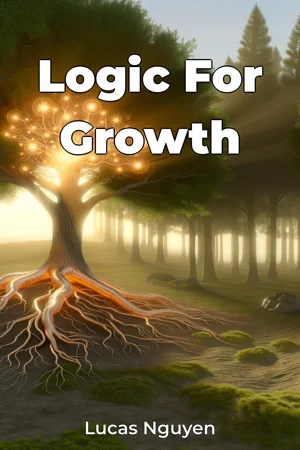
What if the key to unlocking personal growth lies not in relentless positivity or sheer willpower, but in refining how you think? *Logic for Growth* challenges conventional self-help paradigms by arguing that structured reasoning, grounded in scientific research and philosophical rigor, is the most reliable tool for achieving lasting happiness and development. This book bridges the gap between abstract critical thinking techniques and their practical application to everyday life, offering readers a roadmap to navigate complexity, make informed decisions, and cultivate resilience. The book centers on three core themes: cognitive bias mitigation, evidence-based decision-making, and the integration of philosophical wisdom into modern psychology. These topics are explored through a blend of case studies, historical analysis, and contemporary neuroscience, demonstrating how systematic reasoning can counteract the impulsive thinking patterns that often derail personal progress. By addressing the universal human struggle with uncertainty and emotional reactivity, *Logic for Growth* positions logical literacy as a foundational skill for anyone seeking to thrive in an increasingly unpredictable world. To contextualize its arguments, the book traces the evolution of critical thinking from Aristotle’s syllogisms to modern behavioral economics, highlighting recurring gaps between intuition and rationality. It introduces readers to foundational concepts such as probabilistic reasoning, falsifiability, and metacognition, ensuring accessibility for those unfamiliar with formal logic or psychology. The central thesis asserts that deliberate, structured thought processes—not innate talent or vague inspiration—drive measurable growth in relationships, careers, and emotional well-being. Structured in three parts, the book first dismantles myths about “gut instinct” and innate intelligence, using studies like the 1984 MIT cognitive bias experiment to show how even experts fall prey to flawed reasoning. The second section merges philosophical frameworks—such as Stoic emotional regulation and Kantian ethics—with modern research on neuroplasticity, illustrating how disciplined thinking reshapes both brain structure and behavioral outcomes. Final chapters provide actionable strategies, including a step-by-step “decision audit” protocol and exercises derived from cognitive-behavioral therapy (CBT), to transform theoretical knowledge into daily habits. Evidence is drawn from diverse sources: longitudinal studies on habit formation, meta-analyses of psychotherapy outcomes, and original interviews with neuroscientists and ethicists. A standout feature is the analysis of decision-making patterns in high-stakes environments, such as emergency medicine and financial trading, which reveal commonalities in how experts mitigate error under pressure. The book also critiques oversimplified self-help narratives, engaging with ongoing debates about the role of emotion in rationality—arguing that emotions should inform, not dominate, logical processes. Interdisciplinary connections strengthen its case: principles from behavioral economics explain why goal-setting often fails, while Buddhist mindfulness practices are reframed as tools for sustaining analytical focus. This synthesis underscores the universality of logical principles across cultures and epochs. The book’s innovation lies in its rejection of the false dichotomy between “cold logic” and “warm intuition,” proposing instead a dynamic interplay where each enhances the other. Written in a clear, conversational tone with relatable anecdotes—a nurse triaging patients, a parent navigating childcare choices—the book avoids academic jargon without sacrificing depth. It targets professionals seeking career clarity, students building life skills, and individuals recovering from burnout or indecision. While grounded in self-help conventions like chapter summaries and reflection prompts, it diverges from the genre’s often anecdotal approach by prioritizing peer-reviewed data over inspirational storytelling. *Logic for Growth* deliberately limits its scope to individual decision-making, acknowledging broader societal systems but focusing on aspects within a reader’s control. Practical applications include conflict resolution templates, risk-assessment matrices, and methods to identify hidden assumptions in personal beliefs. By confronting controversies—such as the limits of rationality in trauma or cultural differences in logical frameworks—the book invites readers to adapt its tools to their unique contexts. Ultimately, this work redefines personal development as a skill to be methodically honed, offering not just ideas but a usable toolkit for anyone ready to replace guesswork with clarity.
What if the key to unlocking personal growth lies not in relentless positivity or sheer willpower, but in refining how you think? *Logic for Growth* challenges conventional self-help paradigms by arguing that structured reasoning, grounded in scientific research and philosophical rigor, is the most reliable tool for achieving lasting happiness and development. This book bridges the gap between abstract critical thinking techniques and their practical application to everyday life, offering readers a roadmap to navigate complexity, make informed decisions, and cultivate resilience. The book centers on three core themes: cognitive bias mitigation, evidence-based decision-making, and the integration of philosophical wisdom into modern psychology. These topics are explored through a blend of case studies, historical analysis, and contemporary neuroscience, demonstrating how systematic reasoning can counteract the impulsive thinking patterns that often derail personal progress. By addressing the universal human struggle with uncertainty and emotional reactivity, *Logic for Growth* positions logical literacy as a foundational skill for anyone seeking to thrive in an increasingly unpredictable world. To contextualize its arguments, the book traces the evolution of critical thinking from Aristotle’s syllogisms to modern behavioral economics, highlighting recurring gaps between intuition and rationality. It introduces readers to foundational concepts such as probabilistic reasoning, falsifiability, and metacognition, ensuring accessibility for those unfamiliar with formal logic or psychology. The central thesis asserts that deliberate, structured thought processes—not innate talent or vague inspiration—drive measurable growth in relationships, careers, and emotional well-being. Structured in three parts, the book first dismantles myths about “gut instinct” and innate intelligence, using studies like the 1984 MIT cognitive bias experiment to show how even experts fall prey to flawed reasoning. The second section merges philosophical frameworks—such as Stoic emotional regulation and Kantian ethics—with modern research on neuroplasticity, illustrating how disciplined thinking reshapes both brain structure and behavioral outcomes. Final chapters provide actionable strategies, including a step-by-step “decision audit” protocol and exercises derived from cognitive-behavioral therapy (CBT), to transform theoretical knowledge into daily habits. Evidence is drawn from diverse sources: longitudinal studies on habit formation, meta-analyses of psychotherapy outcomes, and original interviews with neuroscientists and ethicists. A standout feature is the analysis of decision-making patterns in high-stakes environments, such as emergency medicine and financial trading, which reveal commonalities in how experts mitigate error under pressure. The book also critiques oversimplified self-help narratives, engaging with ongoing debates about the role of emotion in rationality—arguing that emotions should inform, not dominate, logical processes. Interdisciplinary connections strengthen its case: principles from behavioral economics explain why goal-setting often fails, while Buddhist mindfulness practices are reframed as tools for sustaining analytical focus. This synthesis underscores the universality of logical principles across cultures and epochs. The book’s innovation lies in its rejection of the false dichotomy between “cold logic” and “warm intuition,” proposing instead a dynamic interplay where each enhances the other. Written in a clear, conversational tone with relatable anecdotes—a nurse triaging patients, a parent navigating childcare choices—the book avoids academic jargon without sacrificing depth. It targets professionals seeking career clarity, students building life skills, and individuals recovering from burnout or indecision. While grounded in self-help conventions like chapter summaries and reflection prompts, it diverges from the genre’s often anecdotal approach by prioritizing peer-reviewed data over inspirational storytelling. *Logic for Growth* deliberately limits its scope to individual decision-making, acknowledging broader societal systems but focusing on aspects within a reader’s control. Practical applications include conflict resolution templates, risk-assessment matrices, and methods to identify hidden assumptions in personal beliefs. By confronting controversies—such as the limits of rationality in trauma or cultural differences in logical frameworks—the book invites readers to adapt its tools to their unique contexts. Ultimately, this work redefines personal development as a skill to be methodically honed, offering not just ideas but a usable toolkit for anyone ready to replace guesswork with clarity.
*Logic For Growth* reimagines personal development by arguing that structured reasoning—not just optimism or grit—is the cornerstone of lasting happiness and growth. Bridging philosophy, neuroscience, and practical self-help, the book positions logical literacy as a skill anyone can cultivate to navigate life’s complexities. Its central theme challenges the myth that intuition alone drives success, instead showcasing how evidence-based thinking helps counteract cognitive biases and emotional reactivity. The book stands out by merging ancient wisdom with modern science—like linking Stoic emotional regulation to neuroplasticity research—and provides actionable tools such as decision audits and cognitive-behavioral therapy exercises. A striking example cites a 1984 MIT study where even experts fell prey to flawed reasoning, underscoring the universal need for deliberate thinking. Through relatable anecdotes (a nurse triaging patients, a parent making childcare decisions), it demonstrates how probabilistic reasoning and metacognition transform theoretical concepts into daily habits. Structured in three parts, *Logic For Growth* first dismantles misconceptions about “gut instinct,” then integrates philosophical frameworks with behavioral science, and finally offers step-by-step strategies for real-world application. Unlike traditional self-help books, it prioritizes peer-reviewed data over inspirational anecdotes, creating a rigorous yet accessible guide. By reframing mindfulness as a tool for analytical focus and addressing debates about emotion’s role in logic, the book offers a balanced toolkit for thriving in uncertainty—proving that clarity, not guesswork, fuels growth.
Book Details
ISBN
9788233955168
Publisher
Publifye AS
Your Licenses
You don't own any licenses for this book
Purchase a license below to unlock this book and download the EPUB.
Purchase License
Select a tier to unlock this book
Need bulk licensing?
Contact us for enterprise agreements.