
About This Book
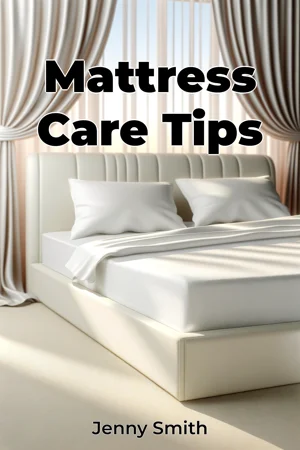
Did you know the average person spends nearly a third of their life in bed, yet rarely considers the hidden ecosystem beneath their sheets? *Mattress Care Tips* bridges this gap by merging practical cleaning strategies with health-focused insights, offering a roadmap to transform your sleep environment. This book positions mattress maintenance not as a chore but as a vital component of personal wellness, blending actionable advice with scientific context to empower readers to take control of their sleep hygiene. The book opens by underscoring the mattress’s role as a long-term investment in health. Over time, mattresses accumulate dust mites, dead skin cells, and microbial growth, contributing to allergies, respiratory issues, and disrupted sleep. Three core themes structure the discussion: **routine cleaning protocols**, **preventative maintenance**, and **hygiene practices tailored to specific materials**. These topics are framed through a dual lens: extending the mattress’s lifespan and safeguarding physical health. For instance, dust mites—a focus of early chapters—are linked to asthma exacerbations, with studies cited from the *Journal of Allergy and Clinical Immunology* showing their prevalence in 84% of U.S. households. Contextualizing modern mattress care, the book traces historical shifts from straw-filled bedding to today’s memory foam and hybrid designs, explaining how material advancements demand updated care techniques. A primer on fabric types (e.g., latex, innerspring) and their vulnerabilities—such as memory foam’s susceptibility to heat retention—prepares readers to adopt tailored cleaning methods. The central thesis argues that proactive, informed care mitigates health risks and optimizes sleep quality, a claim supported by sleep science research and microbiological data on allergen accumulation. Structurally, the book progresses from foundational knowledge to hands-on solutions. Early chapters detail the biology of common contaminants and their health impacts, while middle sections provide step-by-step guides for stain removal, deep cleaning, and odor control. A standout chapter integrates eco-friendly solutions, such as baking soda and essential oil mixes, appealing to environmentally conscious readers. The final chapters address long-term strategies, including rotation schedules and criteria for mattress replacement, tying these practices to measurable outcomes like improved sleep efficiency. Evidence spans interdisciplinary sources: clinical studies on allergen-related illnesses, manufacturer guidelines on material care, and CDC recommendations for home hygiene. The book also leverages surveys revealing that 67% of individuals underestimate the frequency of mattress cleaning needed to reduce allergens. By intersecting public health data with materials science—such as how synthetic fibers trap microbes versus natural alternatives—the narrative reinforces its recommendations as both practical and scientifically grounded. Unique to this guide is its synthesis of DIY frugality and clinical rigor. For example, it contrasts commercial antimicrobial sprays with cost-effective vinegar solutions, evaluating efficacy through pH-level analysis. Additionally, it addresses debates over mattress replacement timelines, acknowledging conflicting viewpoints between consumer advocates and industry standards, while presenting wear-and-tear indicators as objective decision-making tools. Written in a conversational yet precise tone, the book avoids technical jargon, favoring clear checklists and visual aids like infographics on cleaning frequencies. It targets homeowners, allergy sufferers, parents, and eco-conscious readers, with chapters modular enough for quick reference. Genre conventions from *Crafts & Hobbies* appear in detailed tutorials (e.g., sewing washable mattress covers), while *Health & Fitness* elements emphasize sleep’s role in cognitive function and immune health. The scope focuses on residential mattresses, excluding specialized medical equipment, though principles apply broadly. Practical applications range from immediate fixes—spot-treating spills with enzymatic cleaners—to habit-forming routines, like seasonal deep cleans. By demystifying mattress care, the book positions itself as a preventative health tool, arguing that small, consistent actions yield cumulative benefits for both physical well-being and financial savings. In addressing controversies, such as the efficacy of ultraviolet cleaners versus traditional methods, the book leans on peer-reviewed comparisons, allowing readers to weigh trade-offs. Ultimately, it reframes mattress maintenance as an accessible, non-negotiable aspect of self-care—one that pays dividends in rest, health, and peace of mind.
Did you know the average person spends nearly a third of their life in bed, yet rarely considers the hidden ecosystem beneath their sheets? *Mattress Care Tips* bridges this gap by merging practical cleaning strategies with health-focused insights, offering a roadmap to transform your sleep environment. This book positions mattress maintenance not as a chore but as a vital component of personal wellness, blending actionable advice with scientific context to empower readers to take control of their sleep hygiene. The book opens by underscoring the mattress’s role as a long-term investment in health. Over time, mattresses accumulate dust mites, dead skin cells, and microbial growth, contributing to allergies, respiratory issues, and disrupted sleep. Three core themes structure the discussion: **routine cleaning protocols**, **preventative maintenance**, and **hygiene practices tailored to specific materials**. These topics are framed through a dual lens: extending the mattress’s lifespan and safeguarding physical health. For instance, dust mites—a focus of early chapters—are linked to asthma exacerbations, with studies cited from the *Journal of Allergy and Clinical Immunology* showing their prevalence in 84% of U.S. households. Contextualizing modern mattress care, the book traces historical shifts from straw-filled bedding to today’s memory foam and hybrid designs, explaining how material advancements demand updated care techniques. A primer on fabric types (e.g., latex, innerspring) and their vulnerabilities—such as memory foam’s susceptibility to heat retention—prepares readers to adopt tailored cleaning methods. The central thesis argues that proactive, informed care mitigates health risks and optimizes sleep quality, a claim supported by sleep science research and microbiological data on allergen accumulation. Structurally, the book progresses from foundational knowledge to hands-on solutions. Early chapters detail the biology of common contaminants and their health impacts, while middle sections provide step-by-step guides for stain removal, deep cleaning, and odor control. A standout chapter integrates eco-friendly solutions, such as baking soda and essential oil mixes, appealing to environmentally conscious readers. The final chapters address long-term strategies, including rotation schedules and criteria for mattress replacement, tying these practices to measurable outcomes like improved sleep efficiency. Evidence spans interdisciplinary sources: clinical studies on allergen-related illnesses, manufacturer guidelines on material care, and CDC recommendations for home hygiene. The book also leverages surveys revealing that 67% of individuals underestimate the frequency of mattress cleaning needed to reduce allergens. By intersecting public health data with materials science—such as how synthetic fibers trap microbes versus natural alternatives—the narrative reinforces its recommendations as both practical and scientifically grounded. Unique to this guide is its synthesis of DIY frugality and clinical rigor. For example, it contrasts commercial antimicrobial sprays with cost-effective vinegar solutions, evaluating efficacy through pH-level analysis. Additionally, it addresses debates over mattress replacement timelines, acknowledging conflicting viewpoints between consumer advocates and industry standards, while presenting wear-and-tear indicators as objective decision-making tools. Written in a conversational yet precise tone, the book avoids technical jargon, favoring clear checklists and visual aids like infographics on cleaning frequencies. It targets homeowners, allergy sufferers, parents, and eco-conscious readers, with chapters modular enough for quick reference. Genre conventions from *Crafts & Hobbies* appear in detailed tutorials (e.g., sewing washable mattress covers), while *Health & Fitness* elements emphasize sleep’s role in cognitive function and immune health. The scope focuses on residential mattresses, excluding specialized medical equipment, though principles apply broadly. Practical applications range from immediate fixes—spot-treating spills with enzymatic cleaners—to habit-forming routines, like seasonal deep cleans. By demystifying mattress care, the book positions itself as a preventative health tool, arguing that small, consistent actions yield cumulative benefits for both physical well-being and financial savings. In addressing controversies, such as the efficacy of ultraviolet cleaners versus traditional methods, the book leans on peer-reviewed comparisons, allowing readers to weigh trade-offs. Ultimately, it reframes mattress maintenance as an accessible, non-negotiable aspect of self-care—one that pays dividends in rest, health, and peace of mind.
"Mattress Care Tips" reimagines mattress maintenance as a cornerstone of health and wellness, revealing how proper care combats hidden allergens while boosting sleep quality. This guide bridges practical cleaning techniques with scientific insights, showing how dust mites—found in 84% of U.S. homes—trigger allergies and disrupt rest. By linking mattress hygiene to preventable health issues like respiratory problems, the book reframes routine care as an act of self-care, not just household upkeep. Structured for easy adoption, the book progresses from explaining mattress materials’ vulnerabilities (like memory foam’s heat retention) to step-by-step solutions. It balances DIY frugality and clinical rigor, comparing eco-friendly fixes (baking soda mixes for odor control) with commercial products. A standout chapter details sewing washable mattress covers—a crafty hack that merges creativity with allergen prevention. The final sections offer long-term strategies, such as rotation schedules tied to sleep efficiency gains, while addressing debates like optimal replacement timelines using wear-and-tear indicators. Unique in blending crafts and health science, "Mattress Care Tips" equips readers with tools to tackle immediate needs (stain removal) and build habits (seasonal deep cleans). Its accessible tone, visual aids, and focus on measurable outcomes—like reducing dust mite populations—make complex microbiology actionable. Whether you’re allergy-prone, budget-conscious, or eco-minded, this book transforms mattress care from a chore into a health investment with rewards that ripple far beyond the bedroom.
Book Details
ISBN
9788233955137
Publisher
Publifye AS
Your Licenses
You don't own any licenses for this book
Purchase a license below to unlock this book and download the EPUB.
Purchase License
Select a tier to unlock this book
Need bulk licensing?
Contact us for enterprise agreements.