
About This Book
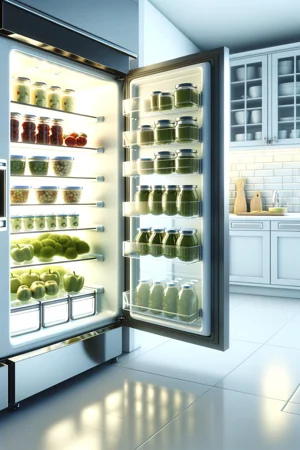
Did you know the average household wastes nearly 30% of its food purchases due to poor refrigeration habits? *Fridge Organization Hacks* addresses this pervasive issue by merging food science, spatial design, and behavioral psychology to transform how readers store perishables. Targeting homeowners, health-conscious individuals, and sustainability advocates, this book offers actionable strategies to reduce waste, save money, and maintain fresher, safer food. **Main Topics and Context** The book centers on three core principles: *zonal organization*, *temperature optimization*, and *habit-driven maintenance*. These concepts are grounded in decades of research on food preservation and home efficiency. Historically, refrigeration revolutionized food safety, but modern lifestyles—marked by bulk purchasing and prepared meals—have outpaced traditional storage practices. By integrating contemporary studies on microbial growth and ergonomic design, the text redefines fridge management as a critical component of household health. **Central Thesis** The book argues that intentional fridge organization directly impacts nutritional intake, food safety, and environmental sustainability. Poorly stored foods lose nutrients faster and risk cross-contamination, while disorganized spaces lead to overbuying and waste. By adopting systematic storage methods, readers can extend ingredient freshness by 40–60%, aligning with USDA recommendations and reducing household carbon footprints. **Content Structure** 1. **Foundations**: Introduces the science of food spoilage, optimal temperature ranges (32–40°F), and humidity zones for produce. 2. **Spatial Design**: Details compartment-specific strategies, such as dedicating upper shelves to ready-to-eat items and lower drawers to raw meats to prevent cross-contamination. 3. **Behavioral Systems**: Provides templates for inventory tracking, expiration-date labeling, and weekly “fridge audits” to curb impulse purchases. 4. **Advanced Techniques**: Explores niche solutions like herb revival methods, DIY ethylene gas absorbers, and repurposing deli containers for modular storage. **Evidence and Interdisciplinary Insights** The book cites peer-reviewed studies on ethylene gas’s role in accelerating spoilage, USDA audits of household food waste, and meal-prep efficiency research. It also draws from environmental science, linking food waste to methane emissions, and behavioral psychology, using “choice architecture” principles to design low-effort organizational systems. Case studies from zero-waste households and professional chefs illustrate real-world success stories. **Unique Approach** Unlike generic organization guides, *Fridge Organization Hacks* combines thermal mapping diagrams (showing temperature fluctuations in typical fridge models) with adaptable workflows for diverse lifestyles. A standout feature is its “Flex Zones” framework, which categorizes storage areas by use frequency—daily essentials at eye level, seasonal items in adjustable bins—to suit families, singles, or meal-preppers. **Tone and Accessibility** Written in a conversational, solution-focused style, the book avoids technical jargon. Clear visuals, such as color-coded storage maps and troubleshooting charts, complement step-by-step instructions. Checklists and QR codes linking to printable templates ensure readers can implement strategies immediately. **Scope and Practicality** While focused on residential fridges, the principles apply to mini-fridges and pantry integrations. The book intentionally excludes commercial kitchen systems, maintaining relevance for everyday users. Each chapter concludes with “5-Minute Fixes”—small changes like repositioning dairy items or adding baking soda boxes—to build momentum toward larger overhauls. **Addressing Debates** The book acknowledges ongoing debates, such as the effectiveness of produce-saving gadgets versus traditional wraps, and presents balanced comparisons. It also challenges the “one-size-fits-all” organizing trends, emphasizing customization based on fridge size, local climate, and dietary needs. **Target Audience Appeal** Ideal for readers seeking to minimize kitchen stress, *Fridge Organization Hacks* bridges gaps between cooking efficiency and sustainable living. Its emphasis on measurable outcomes—like reducing grocery trips or cutting monthly waste by half—resonates with budget-aware and eco-conscious audiences alike. By framing organization as a tool for wellness rather than a chore, the book positions fridge management as a cornerstone of modern, health-focused living.
Did you know the average household wastes nearly 30% of its food purchases due to poor refrigeration habits? *Fridge Organization Hacks* addresses this pervasive issue by merging food science, spatial design, and behavioral psychology to transform how readers store perishables. Targeting homeowners, health-conscious individuals, and sustainability advocates, this book offers actionable strategies to reduce waste, save money, and maintain fresher, safer food. **Main Topics and Context** The book centers on three core principles: *zonal organization*, *temperature optimization*, and *habit-driven maintenance*. These concepts are grounded in decades of research on food preservation and home efficiency. Historically, refrigeration revolutionized food safety, but modern lifestyles—marked by bulk purchasing and prepared meals—have outpaced traditional storage practices. By integrating contemporary studies on microbial growth and ergonomic design, the text redefines fridge management as a critical component of household health. **Central Thesis** The book argues that intentional fridge organization directly impacts nutritional intake, food safety, and environmental sustainability. Poorly stored foods lose nutrients faster and risk cross-contamination, while disorganized spaces lead to overbuying and waste. By adopting systematic storage methods, readers can extend ingredient freshness by 40–60%, aligning with USDA recommendations and reducing household carbon footprints. **Content Structure** 1. **Foundations**: Introduces the science of food spoilage, optimal temperature ranges (32–40°F), and humidity zones for produce. 2. **Spatial Design**: Details compartment-specific strategies, such as dedicating upper shelves to ready-to-eat items and lower drawers to raw meats to prevent cross-contamination. 3. **Behavioral Systems**: Provides templates for inventory tracking, expiration-date labeling, and weekly “fridge audits” to curb impulse purchases. 4. **Advanced Techniques**: Explores niche solutions like herb revival methods, DIY ethylene gas absorbers, and repurposing deli containers for modular storage. **Evidence and Interdisciplinary Insights** The book cites peer-reviewed studies on ethylene gas’s role in accelerating spoilage, USDA audits of household food waste, and meal-prep efficiency research. It also draws from environmental science, linking food waste to methane emissions, and behavioral psychology, using “choice architecture” principles to design low-effort organizational systems. Case studies from zero-waste households and professional chefs illustrate real-world success stories. **Unique Approach** Unlike generic organization guides, *Fridge Organization Hacks* combines thermal mapping diagrams (showing temperature fluctuations in typical fridge models) with adaptable workflows for diverse lifestyles. A standout feature is its “Flex Zones” framework, which categorizes storage areas by use frequency—daily essentials at eye level, seasonal items in adjustable bins—to suit families, singles, or meal-preppers. **Tone and Accessibility** Written in a conversational, solution-focused style, the book avoids technical jargon. Clear visuals, such as color-coded storage maps and troubleshooting charts, complement step-by-step instructions. Checklists and QR codes linking to printable templates ensure readers can implement strategies immediately. **Scope and Practicality** While focused on residential fridges, the principles apply to mini-fridges and pantry integrations. The book intentionally excludes commercial kitchen systems, maintaining relevance for everyday users. Each chapter concludes with “5-Minute Fixes”—small changes like repositioning dairy items or adding baking soda boxes—to build momentum toward larger overhauls. **Addressing Debates** The book acknowledges ongoing debates, such as the effectiveness of produce-saving gadgets versus traditional wraps, and presents balanced comparisons. It also challenges the “one-size-fits-all” organizing trends, emphasizing customization based on fridge size, local climate, and dietary needs. **Target Audience Appeal** Ideal for readers seeking to minimize kitchen stress, *Fridge Organization Hacks* bridges gaps between cooking efficiency and sustainable living. Its emphasis on measurable outcomes—like reducing grocery trips or cutting monthly waste by half—resonates with budget-aware and eco-conscious audiences alike. By framing organization as a tool for wellness rather than a chore, the book positions fridge management as a cornerstone of modern, health-focused living.
"Fridge Organization Hacks" tackles a universal kitchen challenge: reducing food waste while boosting nutrition and sustainability. Blending food science, spatial design, and behavioral psychology, the book reveals how simple fridge upgrades can extend ingredient freshness by 40–60% and slash household waste—a critical shift given that 30% of purchased food typically spoils due to poor storage. Its core framework revolves around *zonal organization* (like storing raw meats low to prevent contamination), *temperature optimization* (with thermal maps showing ideal 32–40°F ranges), and habit-building systems like weekly "fridge audits" to curb overbuying. What sets this guide apart is its practical fusion of research and real-world adaptability. It demystifies complex concepts—for example, explaining how ethylene gas from apples speeds up spinach wilting—while offering niche solutions like reviving herbs in ice water. The "Flex Zones" system tailors layouts to different lifestyles, whether meal-preppers prioritizing grab-and-go containers or families needing adjustable bins for bulk items. Chapters progress from food-science basics to advanced hacks, peppered with QR codes for printable templates and "5-Minute Fixes" for immediate results. Balancing eco-conscious goals with kitchen efficiency, the book positions fridge organization as a gateway to healthier eating and sustainable living. It avoids rigid rules, instead empowering readers to customize strategies based on their fridge size or dietary needs. By transforming cluttered cold storage into an intentional wellness tool, *Fridge Organization Hacks* turns a mundane chore into a measurable win for budgets, health, and the planet.
Book Details
ISBN
9788233955038
Publisher
Publifye AS
Your Licenses
You don't own any licenses for this book
Purchase a license below to unlock this book and download the EPUB.
Purchase License
Select a tier to unlock this book
Need bulk licensing?
Contact us for enterprise agreements.