
About This Book
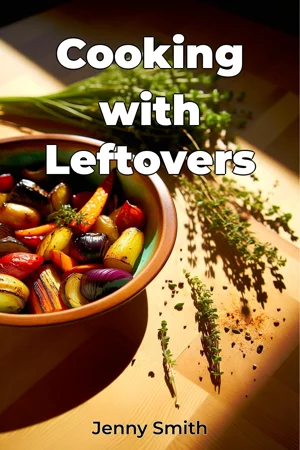
What if every scrap of food in your kitchen could be reinvented into something remarkable? *Cooking with Leftovers* challenges the notion that leftovers are mere afterthoughts, positioning them instead as the foundation for inventive, flavorful meals. This book merges practicality with creativity, offering a roadmap to reduce waste, save money, and elevate everyday cooking. **Main Topics and Context** The book centers on three pillars: the environmental and economic impact of food waste, the art of repurposing ingredients, and strategies for efficient meal planning. Roughly one-third of all food produced globally is wasted, contributing to greenhouse gas emissions and straining household budgets. By reframing leftovers as opportunities rather than burdens, the book addresses these issues through actionable culinary solutions. Historically, cultures worldwide have thrived on resourceful cooking—think Italian ribollita or Indian chaat—but modern convenience culture has shifted priorities. This text reconnects readers with these time-tested practices, updated for contemporary kitchens. **Central Thesis** At its core, *Cooking with Leftovers* argues that mindful ingredient reuse is not a compromise but a creative act. It asserts that sustainability and gourmet cooking can coexist, empowering readers to view their pantries through a lens of possibility. This approach counters the perception of leftovers as inferior, demonstrating how technique and imagination can yield dishes that rival purpose-made meals. **Content Structure** The book opens with a stark analysis of food waste’s global consequences, citing data from the FAO and EPA, before transitioning into practical guidance. Chapter 1 introduces foundational techniques: balancing flavors, adjusting textures, and safely storing ingredients. Chapter 2 delves into recipe templates rather than rigid formulas—for example, transforming roasted vegetables into frittatas, grain bowls, or savory tarts. Chapter 3 explores meal planning strategies to intentionally generate "planned leftovers," such as batch-cooking proteins or grains for multiple uses. The final chapters synthesize these ideas, offering blueprints for themed meals (e.g., "Root-to-Stem Dinners") and tips for repurposing holiday leftovers. **Research and Interdisciplinary Insights** The book draws on agricultural studies, interviews with chefs specializing in zero-waste kitchens, and nutritional analyses to debunk myths about leftover safety and quality. It also intersects with environmental science, illustrating how individual choices collectively impact food systems, and with behavioral economics, highlighting the long-term savings of waste reduction. Cultural anthropology underpins discussions of global traditions, emphasizing how resourcefulness has shaped regional cuisines. **Unique Approach** Unlike conventional cookbooks, this text prioritizes flexibility over fixed recipes. It categorizes leftovers by type (proteins, starches, vegetables) and suggests complementary flavors and techniques, encouraging readers to experiment. A chapter on "flavor bridging" teaches how to adapt dishes across cuisines—for instance, turning roasted chicken into Thai larb or Italian risotto. **Tone and Audience** Written in an encouraging, conversational style, the book avoids technical jargon, making it accessible to novice cooks and seasoned home chefs alike. It appeals to eco-conscious readers seeking actionable sustainability, budget-minded families, and culinary enthusiasts eager to sharpen their improvisational skills. **Scope and Applications** While focused on common household ingredients, the book acknowledges limitations: highly specialized items (e.g., exotic spices) are excluded to maintain practicality. Each chapter concludes with "Challenge Boxes," prompting readers to apply techniques using specific ingredients. Real-world relevance is underscored through cost-tracking exercises and waste audits, enabling readers to measure their progress. **Addressing Perceptions** A recurring theme dismantles the stigma around leftovers, addressing concerns about taste and safety. The book cites peer-reviewed studies on food preservation and includes testimonials from food critics who attest to the viability of reinvented meals. *Cooking with Leftovers* is more than a cookbook—it is a manifesto for reimagining kitchen efficiency. By blending empirical research with hands-on creativity, it invites readers to transform their approach to cooking, one repurposed meal at a time.
What if every scrap of food in your kitchen could be reinvented into something remarkable? *Cooking with Leftovers* challenges the notion that leftovers are mere afterthoughts, positioning them instead as the foundation for inventive, flavorful meals. This book merges practicality with creativity, offering a roadmap to reduce waste, save money, and elevate everyday cooking. **Main Topics and Context** The book centers on three pillars: the environmental and economic impact of food waste, the art of repurposing ingredients, and strategies for efficient meal planning. Roughly one-third of all food produced globally is wasted, contributing to greenhouse gas emissions and straining household budgets. By reframing leftovers as opportunities rather than burdens, the book addresses these issues through actionable culinary solutions. Historically, cultures worldwide have thrived on resourceful cooking—think Italian ribollita or Indian chaat—but modern convenience culture has shifted priorities. This text reconnects readers with these time-tested practices, updated for contemporary kitchens. **Central Thesis** At its core, *Cooking with Leftovers* argues that mindful ingredient reuse is not a compromise but a creative act. It asserts that sustainability and gourmet cooking can coexist, empowering readers to view their pantries through a lens of possibility. This approach counters the perception of leftovers as inferior, demonstrating how technique and imagination can yield dishes that rival purpose-made meals. **Content Structure** The book opens with a stark analysis of food waste’s global consequences, citing data from the FAO and EPA, before transitioning into practical guidance. Chapter 1 introduces foundational techniques: balancing flavors, adjusting textures, and safely storing ingredients. Chapter 2 delves into recipe templates rather than rigid formulas—for example, transforming roasted vegetables into frittatas, grain bowls, or savory tarts. Chapter 3 explores meal planning strategies to intentionally generate "planned leftovers," such as batch-cooking proteins or grains for multiple uses. The final chapters synthesize these ideas, offering blueprints for themed meals (e.g., "Root-to-Stem Dinners") and tips for repurposing holiday leftovers. **Research and Interdisciplinary Insights** The book draws on agricultural studies, interviews with chefs specializing in zero-waste kitchens, and nutritional analyses to debunk myths about leftover safety and quality. It also intersects with environmental science, illustrating how individual choices collectively impact food systems, and with behavioral economics, highlighting the long-term savings of waste reduction. Cultural anthropology underpins discussions of global traditions, emphasizing how resourcefulness has shaped regional cuisines. **Unique Approach** Unlike conventional cookbooks, this text prioritizes flexibility over fixed recipes. It categorizes leftovers by type (proteins, starches, vegetables) and suggests complementary flavors and techniques, encouraging readers to experiment. A chapter on "flavor bridging" teaches how to adapt dishes across cuisines—for instance, turning roasted chicken into Thai larb or Italian risotto. **Tone and Audience** Written in an encouraging, conversational style, the book avoids technical jargon, making it accessible to novice cooks and seasoned home chefs alike. It appeals to eco-conscious readers seeking actionable sustainability, budget-minded families, and culinary enthusiasts eager to sharpen their improvisational skills. **Scope and Applications** While focused on common household ingredients, the book acknowledges limitations: highly specialized items (e.g., exotic spices) are excluded to maintain practicality. Each chapter concludes with "Challenge Boxes," prompting readers to apply techniques using specific ingredients. Real-world relevance is underscored through cost-tracking exercises and waste audits, enabling readers to measure their progress. **Addressing Perceptions** A recurring theme dismantles the stigma around leftovers, addressing concerns about taste and safety. The book cites peer-reviewed studies on food preservation and includes testimonials from food critics who attest to the viability of reinvented meals. *Cooking with Leftovers* is more than a cookbook—it is a manifesto for reimagining kitchen efficiency. By blending empirical research with hands-on creativity, it invites readers to transform their approach to cooking, one repurposed meal at a time.
*Cooking with Leftovers* reimagines the way we view uneaten food, transforming scraps into culinary opportunities while tackling the global crisis of food waste. At its heart, the book champions a simple yet powerful idea: sustainability and creativity belong side by side in the kitchen. Blending environmental urgency with practical solutions, it reveals that one-third of all food produced worldwide goes to waste—a staggering statistic with both ecological and financial consequences. Through this lens, the book revives time-tested traditions from cultures like Italy (think ribollita) and India (chaat), showing how resourcefulness has always shaped delicious meals. What sets this guide apart is its flexible, empowering approach. Instead of rigid recipes, it offers adaptable templates: roasted vegetables morph into frittatas or grain bowls, while proteins become global dishes like Thai larb or Italian risotto. Chapters build from foundational techniques—flavor balancing, safe storage—to strategic meal planning that intentionally creates "planned leftovers." The final sections provide themed meal blueprints, such as root-to-stem dinners, and inventive holiday leftover makeovers. Written in a conversational tone, *Cooking with Leftovers* balances hard data with kitchen creativity, appealing to eco-conscious cooks and budget-minded families alike. By framing waste reduction as a gateway to culinary exploration, it turns everyday ingredients into inspiration, proving that sustainability can be both flavorful and fulfilling.
Book Details
ISBN
9788233954758
Publisher
Publifye AS
Your Licenses
You don't own any licenses for this book
Purchase a license below to unlock this book and download the EPUB.
Purchase License
Select a tier to unlock this book
Need bulk licensing?
Contact us for enterprise agreements.