
About This Book
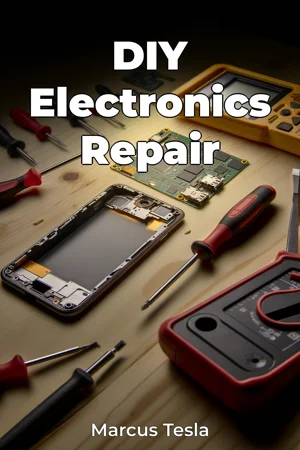
Have you ever thrown away a malfunctioning device, resigned to replacing it simply because repair costs seemed too high or the process too intimidating? *DIY Electronics Repair: A Practical Guide to Troubleshooting and Fixing Common Devices* reframes this dilemma, offering readers the tools to reclaim control over their gadgets. This book bridges the gap between technical expertise and everyday practicality, empowering individuals to diagnose, repair, and maintain electronics—from smartphones to kitchen appliances—while reducing waste and saving money. The book begins by demystifying foundational concepts in electronics, such as voltage, current, and circuitry, ensuring readers grasp the principles behind device functionality. Subsequent chapters address recurring issues in consumer electronics, including battery degradation, screen damage, and power supply failures, with dedicated sections on smartphones, laptops, and small home appliances. A systematic troubleshooting framework teaches readers to isolate faults methodically, avoiding the frustration of guesswork. These topics are critical in a world where rapid technological advancement and planned obsolescence have normalized disposable consumer habits, contributing to a global e-waste crisis. By equipping readers with repair skills, the book challenges this cycle, emphasizing sustainability alongside self-sufficiency. Contextualizing its lessons, the text explores the rise of consumer electronics over the past 50 years, noting how shrinking device sizes and proprietary designs have made repairs appear inaccessible. However, it counters this perception by clarifying that most repairs require only basic tools—multimeters, soldering irons, and screwdrivers—paired with structured problem-solving. The central thesis argues that repair literacy fosters economic resilience and environmental responsibility, transforming users from passive consumers into informed custodians of their devices. Structured for progressive learning, the book opens with circuit diagrams and safety protocols, then advances to hands-on repair scenarios. Chapters on smartphone disassembly, laptop thermal management, and appliance motor repairs include step-by-step visual guides, while case studies analyze real-world failures. The final sections discuss broader implications, linking individual repair efforts to collective reductions in e-waste and advocating for the global “Right to Repair” movement. Evidence draws from manufacturer schematics, interviews with professional technicians, and peer-reviewed studies on e-waste. For instance, data from the Global E-Waste Monitor illustrates how repairing a single laptop can save 1,200 gallons of water used in manufacturing a replacement. The book also incorporates DIY community innovations, such as 3D-printed replacement parts, showcasing grassroots solutions to proprietary barriers. Interdisciplinary connections deepen the content’s relevance: Environmental science underscores the ecological stakes of electronics disposal, economics highlights household savings from repairs, and education theory supports the book’s skill-building approach. This synthesis positions electronics repair as both a practical hobby and a civic act. Unique to this guide is its balance of technical detail and accessibility. Unlike many repair manuals that prioritize rote instructions, *DIY Electronics Repair* explains the “why” behind each step, fostering problem-solving adaptability. For example, a chapter on battery replacements delves into lithium-ion chemistry, enabling readers to assess wear patterns beyond simple voltage checks. Written in clear, jargon-free prose, the book adopts a mentor-like tone, pairing diagrams and photographs with concise explanations. It assumes no prior electronics training, making it suitable for hobbyists, environmentally conscious consumers, and tech enthusiasts seeking to extend device lifespans. Genre conventions from crafts and hobbies appear in project-based layouts, while electronics-specific content ensures technical accuracy. The scope focuses on common household devices, intentionally excluding industrial equipment or niche technologies. Readers are expected to procure basic tools but are guided toward affordable, versatile options. Practical applications range from reviving a water-damaged phone to repurposing retired gadgets into home automation tools. Controversially, the book critiques manufacturer practices that hinder repairs, such as glued components or restricted access to schematics, aligning with legislative efforts to mandate repair-friendly design. By transforming apprehension into agency, *DIY Electronics Repair* redefines electronics as malleable tools rather than fragile commodities. It invites readers to join a growing movement where a soldered joint or a replaced capacitor becomes an act of defiance against waste—and a step toward lasting sustainability.
Have you ever thrown away a malfunctioning device, resigned to replacing it simply because repair costs seemed too high or the process too intimidating? *DIY Electronics Repair: A Practical Guide to Troubleshooting and Fixing Common Devices* reframes this dilemma, offering readers the tools to reclaim control over their gadgets. This book bridges the gap between technical expertise and everyday practicality, empowering individuals to diagnose, repair, and maintain electronics—from smartphones to kitchen appliances—while reducing waste and saving money. The book begins by demystifying foundational concepts in electronics, such as voltage, current, and circuitry, ensuring readers grasp the principles behind device functionality. Subsequent chapters address recurring issues in consumer electronics, including battery degradation, screen damage, and power supply failures, with dedicated sections on smartphones, laptops, and small home appliances. A systematic troubleshooting framework teaches readers to isolate faults methodically, avoiding the frustration of guesswork. These topics are critical in a world where rapid technological advancement and planned obsolescence have normalized disposable consumer habits, contributing to a global e-waste crisis. By equipping readers with repair skills, the book challenges this cycle, emphasizing sustainability alongside self-sufficiency. Contextualizing its lessons, the text explores the rise of consumer electronics over the past 50 years, noting how shrinking device sizes and proprietary designs have made repairs appear inaccessible. However, it counters this perception by clarifying that most repairs require only basic tools—multimeters, soldering irons, and screwdrivers—paired with structured problem-solving. The central thesis argues that repair literacy fosters economic resilience and environmental responsibility, transforming users from passive consumers into informed custodians of their devices. Structured for progressive learning, the book opens with circuit diagrams and safety protocols, then advances to hands-on repair scenarios. Chapters on smartphone disassembly, laptop thermal management, and appliance motor repairs include step-by-step visual guides, while case studies analyze real-world failures. The final sections discuss broader implications, linking individual repair efforts to collective reductions in e-waste and advocating for the global “Right to Repair” movement. Evidence draws from manufacturer schematics, interviews with professional technicians, and peer-reviewed studies on e-waste. For instance, data from the Global E-Waste Monitor illustrates how repairing a single laptop can save 1,200 gallons of water used in manufacturing a replacement. The book also incorporates DIY community innovations, such as 3D-printed replacement parts, showcasing grassroots solutions to proprietary barriers. Interdisciplinary connections deepen the content’s relevance: Environmental science underscores the ecological stakes of electronics disposal, economics highlights household savings from repairs, and education theory supports the book’s skill-building approach. This synthesis positions electronics repair as both a practical hobby and a civic act. Unique to this guide is its balance of technical detail and accessibility. Unlike many repair manuals that prioritize rote instructions, *DIY Electronics Repair* explains the “why” behind each step, fostering problem-solving adaptability. For example, a chapter on battery replacements delves into lithium-ion chemistry, enabling readers to assess wear patterns beyond simple voltage checks. Written in clear, jargon-free prose, the book adopts a mentor-like tone, pairing diagrams and photographs with concise explanations. It assumes no prior electronics training, making it suitable for hobbyists, environmentally conscious consumers, and tech enthusiasts seeking to extend device lifespans. Genre conventions from crafts and hobbies appear in project-based layouts, while electronics-specific content ensures technical accuracy. The scope focuses on common household devices, intentionally excluding industrial equipment or niche technologies. Readers are expected to procure basic tools but are guided toward affordable, versatile options. Practical applications range from reviving a water-damaged phone to repurposing retired gadgets into home automation tools. Controversially, the book critiques manufacturer practices that hinder repairs, such as glued components or restricted access to schematics, aligning with legislative efforts to mandate repair-friendly design. By transforming apprehension into agency, *DIY Electronics Repair* redefines electronics as malleable tools rather than fragile commodities. It invites readers to join a growing movement where a soldered joint or a replaced capacitor becomes an act of defiance against waste—and a step toward lasting sustainability.
*DIY Electronics Repair: A Practical Guide to Troubleshooting and Fixing Common Devices* empowers readers to tackle everyday electronics issues, blending practical skills with a sustainability ethos. Centered on reducing e-waste and reclaiming control over gadgets, the book transforms intimidating repairs into approachable projects. It demystifies core concepts like voltage and circuitry, then guides readers through troubleshooting smartphones, laptops, and appliances—emphasizing how basic tools and systematic problem-solving can revive devices instead of discarding them. By linking repair literacy to environmental impact, it reveals how fixing a single laptop can save 1,200 gallons of water, framing DIY repairs as both cost-saving and ecologically vital. The book stands out by balancing technical depth with accessibility, avoiding rote instructions to instead explain the “why” behind each step. Chapters progress from circuit diagrams and safety protocols to hands-on fixes like battery replacements or screen repairs, enriched with visual guides and real-world case studies. Unique insights—such as decoding lithium-ion battery chemistry or using 3D-printed parts to bypass proprietary barriers—equip readers to adapt solutions beyond the manual. It critiques manufacturer practices that hinder repairs while aligning with the global “Right to Repair” movement, merging activism with practicality. Written in clear, mentor-like prose, the guide transforms novices into informed custodians of their devices. Its project-based approach, rooted in crafts and hobbies, bridges technical accuracy with everyday relevance. Whether reviving water-damaged phones or repurposing old gadgets, the book redefines electronics as tools for sustainability, proving that a soldered joint can be a small act of defiance against disposable culture.
Book Details
ISBN
9788233954734
Publisher
Publifye AS
Your Licenses
You don't own any licenses for this book
Purchase a license below to unlock this book and download the EPUB.
Purchase License
Select a tier to unlock this book
Need bulk licensing?
Contact us for enterprise agreements.