
About This Book
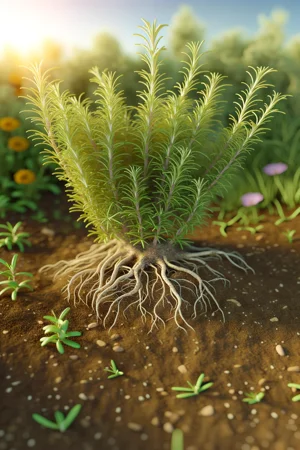
**What if the act of tending a garden could reshape not only your environment but your mind?** *Garden Life Lessons* bridges the worlds of botany and psychology to explore how cultivating plants can foster personal growth, resilience, and well-being. This book synthesizes decades of horticultural therapy research, ecological studies, and psychological insights to reveal the profound parallels between plant behavior and human psychology, offering readers a science-backed roadmap to harnessing nature’s rhythms for mental and emotional health. The book centers on two interconnected themes: the biological mechanisms driving plant adaptability and the measurable psychological benefits of gardening. By examining how plants respond to stress, competition, and environmental change, it draws actionable lessons for human coping strategies. Simultaneously, it unpacks clinical studies demonstrating gardening’s ability to reduce cortisol levels, alleviate symptoms of anxiety, and improve cognitive focus. These topics are framed within the urgent context of modern life, where urbanization and digital saturation have widened the gap between humans and the natural processes that once shaped our development. Historical and scientific context grounds the discussion. Early chapters outline humanity’s evolutionary reliance on plant cultivation, tracing agrarian practices from Neolithic settlements to contemporary urban gardens. Foundational botanical concepts—such as phototropism, root communication, and symbiotic relationships with soil microbes—are explained in accessible terms, alongside key psychological principles like attention restoration theory and biophilia. This dual lens ensures readers appreciate both *how* plants thrive and *why* interacting with them impacts neural pathways linked to stress and creativity. At its core, the book argues that gardening is not merely a hobby but a form of embodied learning. Plants, through their silent resilience and adaptive strategies, model problem-solving techniques applicable to human challenges. A rosemary bush surviving drought through root diversification, for example, becomes a metaphor for cultivating flexibility in adversity. This thesis is supported by meta-analyses of horticultural therapy outcomes, neuroimaging studies showing heightened prefrontal cortex activity during gardening tasks, and longitudinal data linking community gardening projects to improved social cohesion in urban areas. Structurally, the book progresses from theory to practice. Initial chapters introduce plant neurobiology (yes, plants have “decision-making” capacities) and the psychology of nature connection. Middle sections delve into case studies: therapeutic gardens in hospitals accelerating patient recovery, school programs using gardening to boost student focus, and urban planning initiatives integrating green spaces to reduce crime rates. The final chapters provide readers with actionable frameworks, such as designing personal gardens to align with circadian rhythms or employing mindful weeding as a meditation practice. Unique to this work is its integration of hard science with narrative-driven examples. Readers encounter peat moss’s water retention strategies alongside journal entries from war veterans using soil work to process trauma. The book also challenges anthropocentric views by framing plants as active participants in mutualistic relationships, emphasizing reciprocity rather than control. Written in a conversational yet rigorously cited style, the text avoids jargon without sacrificing depth. It appeals to gardeners seeking deeper ecological understanding, psychology enthusiasts exploring nonclinical therapeutic tools, and urban planners or educators advocating for nature-based interventions. Genre conventions of practical guidance and evidence-based analysis are upheld through step-by-step gardening tips, annotated diagrams of plant stress responses, and summaries of peer-reviewed studies. While focused on temperate climates and common garden species, the book acknowledges limitations in its scope—such as regional variability in plant behavior—and directs readers to resources for expanding their inquiry. Controversies, like debates over anthropomorphizing plant intelligence, are addressed head-on, with balanced perspectives from botanists and ethicists. Ultimately, *Garden Life Lessons* posits that every seed planted is a step toward renegotiating humanity’s relationship with the natural world. By marrying the logic of science with the poetry of growth, it invites readers to reconsider soil not as dirt but as a living classroom—one offering timeless lessons in patience, balance, and renewal.
**What if the act of tending a garden could reshape not only your environment but your mind?** *Garden Life Lessons* bridges the worlds of botany and psychology to explore how cultivating plants can foster personal growth, resilience, and well-being. This book synthesizes decades of horticultural therapy research, ecological studies, and psychological insights to reveal the profound parallels between plant behavior and human psychology, offering readers a science-backed roadmap to harnessing nature’s rhythms for mental and emotional health. The book centers on two interconnected themes: the biological mechanisms driving plant adaptability and the measurable psychological benefits of gardening. By examining how plants respond to stress, competition, and environmental change, it draws actionable lessons for human coping strategies. Simultaneously, it unpacks clinical studies demonstrating gardening’s ability to reduce cortisol levels, alleviate symptoms of anxiety, and improve cognitive focus. These topics are framed within the urgent context of modern life, where urbanization and digital saturation have widened the gap between humans and the natural processes that once shaped our development. Historical and scientific context grounds the discussion. Early chapters outline humanity’s evolutionary reliance on plant cultivation, tracing agrarian practices from Neolithic settlements to contemporary urban gardens. Foundational botanical concepts—such as phototropism, root communication, and symbiotic relationships with soil microbes—are explained in accessible terms, alongside key psychological principles like attention restoration theory and biophilia. This dual lens ensures readers appreciate both *how* plants thrive and *why* interacting with them impacts neural pathways linked to stress and creativity. At its core, the book argues that gardening is not merely a hobby but a form of embodied learning. Plants, through their silent resilience and adaptive strategies, model problem-solving techniques applicable to human challenges. A rosemary bush surviving drought through root diversification, for example, becomes a metaphor for cultivating flexibility in adversity. This thesis is supported by meta-analyses of horticultural therapy outcomes, neuroimaging studies showing heightened prefrontal cortex activity during gardening tasks, and longitudinal data linking community gardening projects to improved social cohesion in urban areas. Structurally, the book progresses from theory to practice. Initial chapters introduce plant neurobiology (yes, plants have “decision-making” capacities) and the psychology of nature connection. Middle sections delve into case studies: therapeutic gardens in hospitals accelerating patient recovery, school programs using gardening to boost student focus, and urban planning initiatives integrating green spaces to reduce crime rates. The final chapters provide readers with actionable frameworks, such as designing personal gardens to align with circadian rhythms or employing mindful weeding as a meditation practice. Unique to this work is its integration of hard science with narrative-driven examples. Readers encounter peat moss’s water retention strategies alongside journal entries from war veterans using soil work to process trauma. The book also challenges anthropocentric views by framing plants as active participants in mutualistic relationships, emphasizing reciprocity rather than control. Written in a conversational yet rigorously cited style, the text avoids jargon without sacrificing depth. It appeals to gardeners seeking deeper ecological understanding, psychology enthusiasts exploring nonclinical therapeutic tools, and urban planners or educators advocating for nature-based interventions. Genre conventions of practical guidance and evidence-based analysis are upheld through step-by-step gardening tips, annotated diagrams of plant stress responses, and summaries of peer-reviewed studies. While focused on temperate climates and common garden species, the book acknowledges limitations in its scope—such as regional variability in plant behavior—and directs readers to resources for expanding their inquiry. Controversies, like debates over anthropomorphizing plant intelligence, are addressed head-on, with balanced perspectives from botanists and ethicists. Ultimately, *Garden Life Lessons* posits that every seed planted is a step toward renegotiating humanity’s relationship with the natural world. By marrying the logic of science with the poetry of growth, it invites readers to reconsider soil not as dirt but as a living classroom—one offering timeless lessons in patience, balance, and renewal.
"Garden Life Lessons" uncovers the deep connection between nurturing plants and cultivating mental resilience, blending botany and psychology to show how gardening transforms both landscapes and minds. The book’s central theme revolves around nature’s dual role as teacher and healer, drawing parallels between plant adaptability and human emotional growth. For instance, it reveals how plants like rosemary survive drought through root diversification—a strategy mirroring human flexibility in adversity—and cites studies where gardening lowers cortisol levels, eases anxiety, and sharpens focus. These insights are framed within modern challenges like urbanization, making the case that reconnecting with soil and greenery counters the stress of digital saturation. The book uniquely bridges hard science and relatable storytelling, moving from plant neurobiology (such as how roots “communicate” via soil microbes) to psychological concepts like biophilia—the innate human draw to nature. Middle chapters explore real-world applications, like hospital gardens speeding patient recovery or school programs boosting student focus through horticulture. Practical sections guide readers in designing mindful green spaces or using weeding as meditation. What sets this work apart is its refusal to treat plants as passive decor; instead, it frames them as active collaborators, offering lessons in patience and reciprocity. Written in clear, jargon-free prose, "Garden Life Lessons" balances peer-reviewed research with heartfelt narratives, such as war veterans finding solace in gardening. By merging ecological studies with psychological rigor, it invites readers to view every seed planted as a step toward personal and planetary healing—proving that soil isn’t just dirt, but a living classroom for resilience.
Book Details
ISBN
9788233954529
Publisher
Publifye AS
Your Licenses
You don't own any licenses for this book
Purchase a license below to unlock this book and download the EPUB.
Purchase License
Select a tier to unlock this book
Need bulk licensing?
Contact us for enterprise agreements.