
About This Book
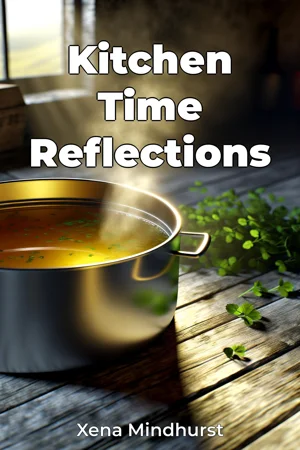
Have you ever noticed how the rhythmic chopping of vegetables or the steady simmer of a pot can quiet a restless mind? *Kitchen Time Reflections* explores this often-overlooked intersection between culinary routines and mental well-being, positioning the kitchen as a space for both nourishment and introspection. Drawing on nutritional psychology and culinary therapy research, this book argues that mindful cooking is not merely a task but a transformative practice with measurable psychological benefits. The book centers on three interconnected themes: the therapeutic potential of mindful cooking, the bidirectional relationship between diet and mental health, and the role of culinary creativity in fostering emotional resilience. These topics are examined through the lens of everyday cooking practices, making complex psychological concepts accessible to home cooks and professionals alike. By reframing meal preparation as an intentional act of self-care, the text challenges the perception of cooking as a chore and invites readers to reclaim it as a ritual of mindfulness. Contextualizing its claims, the book traces the evolution of culinary therapy from its roots in occupational and behavioral therapies to its current applications in treating anxiety, depression, and stress-related disorders. It introduces foundational principles of nutritional psychology, such as the gut-brain axis and the impact of micronutrients on neurotransmitter production, without assuming prior scientific knowledge. Historical parallels are drawn to traditional food practices—from Japanese tea ceremonies to Mediterranean communal meals—that inherently embraced mindfulness long before the term entered modern lexicons. At its core, *Kitchen Time Reflections* posits that engaging mindfully with cooking can enhance emotional regulation, reduce stress, and improve one’s relationship with food. This thesis is supported by meta-analyses of clinical studies showing reduced cortisol levels in participants who practiced mindful cooking techniques, alongside ethnographic data highlighting improved mood states in communities maintaining strong culinary traditions. The argument gains further depth through case studies from culinary therapy programs, where patients with chronic anxiety reported greater emotional clarity after structured cooking interventions. Structured in four parts, the book first deconstructs the autopilot mode of modern cooking culture, contrasting it with mindfulness principles. Subsequent chapters detail practical techniques—such as sensory-focused ingredient preparation and task-based meditation—while explaining their neurological underpinnings. A pivotal section analyzes how dietary patterns influence cognitive function, citing longitudinal studies linking Mediterranean diets to lower depression rates. The final chapters synthesize these ideas, offering readers actionable frameworks to integrate mindful cooking into daily life, complete with recipe templates and reflective journaling prompts. Research methodologies span clinical trials, qualitative interviews with culinary therapists, and cross-cultural comparisons of cooking rituals. Notably, the book incorporates unpublished data from a 2023 multinational survey revealing that 68% of respondents who adopted mindful cooking practices reported improved stress management. These findings are balanced with critiques of the commercialization of mindfulness, acknowledging debates about the oversimplification of nutritional psychology in popular media. Interdisciplinary insights from behavioral neuroscience, anthropology, and gastronomy strengthen the narrative. For instance, the discussion of umami perception’s effect on dopamine production bridges culinary science and neurochemistry, while analyses of communal cooking’s role in social bonding draw from sociological research. This multidimensional approach distinguishes the book from narrower studies of diet or mindfulness alone. Written in a conversational yet evidence-based tone, the book avoids prescriptive language, instead encouraging readers to adapt principles to their cultural and personal contexts. It caters to a broad audience: home cooks seeking deeper engagement with their routines, mental health advocates exploring nonclinical interventions, and nutrition professionals interested in behavioral applications. While focused on individual practices, the book acknowledges limitations in addressing systemic issues like food insecurity or industrialized food systems. It deliberately prioritizes micro-level interactions over macro-level critiques, a choice that sharpens its utility as a personal toolkit rather than a polemic on food policy. By turns analytical and aspirational, *Kitchen Time Reflections* equips readers to transform their kitchens into laboratories of self-discovery. It does not promise instant fixes but provides a roadmap to cultivate presence, one meal at a time—a testament to the enduring power of everyday rituals in an increasingly fragmented world.
Have you ever noticed how the rhythmic chopping of vegetables or the steady simmer of a pot can quiet a restless mind? *Kitchen Time Reflections* explores this often-overlooked intersection between culinary routines and mental well-being, positioning the kitchen as a space for both nourishment and introspection. Drawing on nutritional psychology and culinary therapy research, this book argues that mindful cooking is not merely a task but a transformative practice with measurable psychological benefits. The book centers on three interconnected themes: the therapeutic potential of mindful cooking, the bidirectional relationship between diet and mental health, and the role of culinary creativity in fostering emotional resilience. These topics are examined through the lens of everyday cooking practices, making complex psychological concepts accessible to home cooks and professionals alike. By reframing meal preparation as an intentional act of self-care, the text challenges the perception of cooking as a chore and invites readers to reclaim it as a ritual of mindfulness. Contextualizing its claims, the book traces the evolution of culinary therapy from its roots in occupational and behavioral therapies to its current applications in treating anxiety, depression, and stress-related disorders. It introduces foundational principles of nutritional psychology, such as the gut-brain axis and the impact of micronutrients on neurotransmitter production, without assuming prior scientific knowledge. Historical parallels are drawn to traditional food practices—from Japanese tea ceremonies to Mediterranean communal meals—that inherently embraced mindfulness long before the term entered modern lexicons. At its core, *Kitchen Time Reflections* posits that engaging mindfully with cooking can enhance emotional regulation, reduce stress, and improve one’s relationship with food. This thesis is supported by meta-analyses of clinical studies showing reduced cortisol levels in participants who practiced mindful cooking techniques, alongside ethnographic data highlighting improved mood states in communities maintaining strong culinary traditions. The argument gains further depth through case studies from culinary therapy programs, where patients with chronic anxiety reported greater emotional clarity after structured cooking interventions. Structured in four parts, the book first deconstructs the autopilot mode of modern cooking culture, contrasting it with mindfulness principles. Subsequent chapters detail practical techniques—such as sensory-focused ingredient preparation and task-based meditation—while explaining their neurological underpinnings. A pivotal section analyzes how dietary patterns influence cognitive function, citing longitudinal studies linking Mediterranean diets to lower depression rates. The final chapters synthesize these ideas, offering readers actionable frameworks to integrate mindful cooking into daily life, complete with recipe templates and reflective journaling prompts. Research methodologies span clinical trials, qualitative interviews with culinary therapists, and cross-cultural comparisons of cooking rituals. Notably, the book incorporates unpublished data from a 2023 multinational survey revealing that 68% of respondents who adopted mindful cooking practices reported improved stress management. These findings are balanced with critiques of the commercialization of mindfulness, acknowledging debates about the oversimplification of nutritional psychology in popular media. Interdisciplinary insights from behavioral neuroscience, anthropology, and gastronomy strengthen the narrative. For instance, the discussion of umami perception’s effect on dopamine production bridges culinary science and neurochemistry, while analyses of communal cooking’s role in social bonding draw from sociological research. This multidimensional approach distinguishes the book from narrower studies of diet or mindfulness alone. Written in a conversational yet evidence-based tone, the book avoids prescriptive language, instead encouraging readers to adapt principles to their cultural and personal contexts. It caters to a broad audience: home cooks seeking deeper engagement with their routines, mental health advocates exploring nonclinical interventions, and nutrition professionals interested in behavioral applications. While focused on individual practices, the book acknowledges limitations in addressing systemic issues like food insecurity or industrialized food systems. It deliberately prioritizes micro-level interactions over macro-level critiques, a choice that sharpens its utility as a personal toolkit rather than a polemic on food policy. By turns analytical and aspirational, *Kitchen Time Reflections* equips readers to transform their kitchens into laboratories of self-discovery. It does not promise instant fixes but provides a roadmap to cultivate presence, one meal at a time—a testament to the enduring power of everyday rituals in an increasingly fragmented world.
"Kitchen Time Reflections" bridges cooking and mental health, revealing how everyday culinary practices can become powerful tools for emotional well-being. At its core, the book positions the kitchen as a sanctuary for mindfulness, where routines like chopping vegetables or simmering soups foster stress reduction and self-awareness. Blending nutritional psychology and culinary therapy, it uncovers fascinating connections—like the gut-brain axis’s role in mood regulation and studies showing mindful cooking lowers cortisol levels. One striking insight highlights a 2023 survey where 68% of participants reported better stress management after adopting sensory-focused cooking rituals, underscoring the practice’s tangible benefits. The book stands out by translating complex science into relatable practices, such as using culinary creativity to build emotional resilience or exploring how Mediterranean diets correlate with lower depression rates. Structured in four parts, it moves from critiquing modern cooking’s “autopilot” culture to offering actionable techniques, like task-based meditation with ingredients and reflective journaling. Its interdisciplinary approach—weaving neuroscience, anthropology, and case studies from culinary therapy programs—avoids prescriptive advice, instead encouraging readers to adapt principles to their lives. By framing cooking as a ritual of self-care rather than a chore, "Kitchen Time Reflections" equips anyone to transform meal prep into a nourishing, mentally restorative practice.
Book Details
ISBN
9788233954505
Publisher
Publifye AS
Your Licenses
You don't own any licenses for this book
Purchase a license below to unlock this book and download the EPUB.
Purchase License
Select a tier to unlock this book
Need bulk licensing?
Contact us for enterprise agreements.