
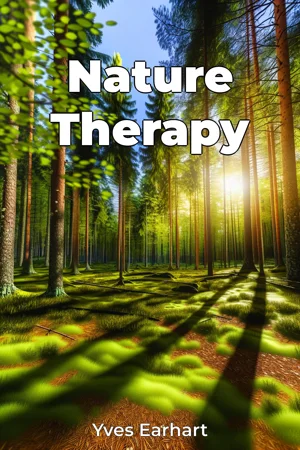
About This Book
Have you ever wondered why a walk in the park can clear your mind or how sunlight seems to sharpen your focus? *Nature Therapy: How the Outdoors Rewires the Brain and Restores Well-Being* delves into the science behind these everyday phenomena, synthesizing decades of environmental psychology research to explain how nature directly shapes mental health and cognitive performance. Framed within the disciplines of psychology and environmental studies, this book bridges empirical evidence with practical insights, offering a roadmap for reclaiming the psychological benefits of the natural world in an increasingly urbanized society. The book opens by exploring two foundational concepts: the *biophilia hypothesis*, which posits an innate human affinity for nature, and *attention restoration theory*, which explains how natural environments replenish cognitive resources depleted by modern life. These ideas are contextualized within a historical framework, tracing humanity’s shift from agrarian societies to technology-dominated urban landscapes—a transition linked to rising rates of stress, anxiety, and attention disorders. By grounding its arguments in evolutionary biology and neuroscience, *Nature Therapy* establishes why reconnecting with nature is not merely a lifestyle choice but a biological imperative. Central to the book’s thesis is the claim that regular exposure to outdoor environments—whether forests, parks, or even urban green spaces—enhances emotional resilience, improves concentration, and fosters creativity. This argument is supported by meta-analyses of longitudinal studies, including data showing reduced cortisol levels in individuals who spend time in nature and improved academic performance in children with access to outdoor play areas. The text critiques the modern “indoor epidemic,” highlighting how screen saturation and sedentary habits exacerbate mental fatigue, while natural settings activate parasympathetic nervous systems, promoting relaxation and mental clarity. Structured into three sections, the book first introduces the psychological and physiological mechanisms linking nature to well-being. Subsequent chapters dissect the role of sensory stimuli—such as bird songs, foliage patterns, and natural light—in regulating mood and attention. Case studies from Japan’s *shinrin-yoku* (forest bathing) practices and Scandinavian outdoor education models illustrate cross-cultural applications of nature therapy. The final section translates theory into action, providing evidence-based strategies for integrating nature into daily routines, urban design, and workplace policies. Research cited includes controlled experiments comparing cognitive task performance in natural versus urban settings, fMRI studies demonstrating reduced amygdala activity during nature exposure, and epidemiological data correlating green space access with lower depression rates. The book also addresses critiques, such as disparities in nature accessibility across socioeconomic groups, and examines how virtual nature simulations might offer partial benefits when real-world access is limited. Interdisciplinary connections strengthen the narrative: public health research underscores nature’s role in preventing chronic stress-related illnesses, while architectural studies demonstrate how biophilic design in buildings can boost productivity. The book further intersects with ecology, arguing that personal well-being and environmental stewardship are mutually reinforcing goals. What distinguishes *Nature Therapy* is its balance of rigor and accessibility. While anchored in peer-reviewed science, the prose avoids jargon, employing relatable anecdotes and actionable advice. Chapters conclude with “Field Notes”—practical exercises like mindful observation techniques or guidelines for creating micro-nature spaces at home. Targeted at both general readers and professionals in psychology, education, or urban planning, the book appeals to anyone seeking data-driven solutions to modern mental health challenges. It intentionally avoids oversimplification, acknowledging that nature is not a panacea but a tool whose efficacy depends on intentional engagement. By framing nature as a co-therapist, the book invites readers to rethink their relationship with the environment—not as a backdrop to life, but as an active participant in it. *Nature Therapy* does not shy from contemporary debates, such as the ethical implications of “prescribing” nature in healthcare or the tension between conservation efforts and human-centric land use. Yet its core message remains optimistic: rekindling our bond with the natural world is not just possible but essential, offering a path to individual and collective renewal in an age of disconnection.
Have you ever wondered why a walk in the park can clear your mind or how sunlight seems to sharpen your focus? *Nature Therapy: How the Outdoors Rewires the Brain and Restores Well-Being* delves into the science behind these everyday phenomena, synthesizing decades of environmental psychology research to explain how nature directly shapes mental health and cognitive performance. Framed within the disciplines of psychology and environmental studies, this book bridges empirical evidence with practical insights, offering a roadmap for reclaiming the psychological benefits of the natural world in an increasingly urbanized society. The book opens by exploring two foundational concepts: the *biophilia hypothesis*, which posits an innate human affinity for nature, and *attention restoration theory*, which explains how natural environments replenish cognitive resources depleted by modern life. These ideas are contextualized within a historical framework, tracing humanity’s shift from agrarian societies to technology-dominated urban landscapes—a transition linked to rising rates of stress, anxiety, and attention disorders. By grounding its arguments in evolutionary biology and neuroscience, *Nature Therapy* establishes why reconnecting with nature is not merely a lifestyle choice but a biological imperative. Central to the book’s thesis is the claim that regular exposure to outdoor environments—whether forests, parks, or even urban green spaces—enhances emotional resilience, improves concentration, and fosters creativity. This argument is supported by meta-analyses of longitudinal studies, including data showing reduced cortisol levels in individuals who spend time in nature and improved academic performance in children with access to outdoor play areas. The text critiques the modern “indoor epidemic,” highlighting how screen saturation and sedentary habits exacerbate mental fatigue, while natural settings activate parasympathetic nervous systems, promoting relaxation and mental clarity. Structured into three sections, the book first introduces the psychological and physiological mechanisms linking nature to well-being. Subsequent chapters dissect the role of sensory stimuli—such as bird songs, foliage patterns, and natural light—in regulating mood and attention. Case studies from Japan’s *shinrin-yoku* (forest bathing) practices and Scandinavian outdoor education models illustrate cross-cultural applications of nature therapy. The final section translates theory into action, providing evidence-based strategies for integrating nature into daily routines, urban design, and workplace policies. Research cited includes controlled experiments comparing cognitive task performance in natural versus urban settings, fMRI studies demonstrating reduced amygdala activity during nature exposure, and epidemiological data correlating green space access with lower depression rates. The book also addresses critiques, such as disparities in nature accessibility across socioeconomic groups, and examines how virtual nature simulations might offer partial benefits when real-world access is limited. Interdisciplinary connections strengthen the narrative: public health research underscores nature’s role in preventing chronic stress-related illnesses, while architectural studies demonstrate how biophilic design in buildings can boost productivity. The book further intersects with ecology, arguing that personal well-being and environmental stewardship are mutually reinforcing goals. What distinguishes *Nature Therapy* is its balance of rigor and accessibility. While anchored in peer-reviewed science, the prose avoids jargon, employing relatable anecdotes and actionable advice. Chapters conclude with “Field Notes”—practical exercises like mindful observation techniques or guidelines for creating micro-nature spaces at home. Targeted at both general readers and professionals in psychology, education, or urban planning, the book appeals to anyone seeking data-driven solutions to modern mental health challenges. It intentionally avoids oversimplification, acknowledging that nature is not a panacea but a tool whose efficacy depends on intentional engagement. By framing nature as a co-therapist, the book invites readers to rethink their relationship with the environment—not as a backdrop to life, but as an active participant in it. *Nature Therapy* does not shy from contemporary debates, such as the ethical implications of “prescribing” nature in healthcare or the tension between conservation efforts and human-centric land use. Yet its core message remains optimistic: rekindling our bond with the natural world is not just possible but essential, offering a path to individual and collective renewal in an age of disconnection.
"Nature Therapy: How the Outdoors Rewires the Brain and Restores Well-Being" explores the profound connection between natural environments and human psychology, arguing that reconnecting with nature is essential for mental health in our urbanized world. Rooted in environmental psychology and neuroscience, the book unveils how evolutionary biology shapes our innate need for nature—a concept called the *biophilia hypothesis*. It pairs this with *attention restoration theory*, explaining how forests, parks, or even city greenery replenish cognitive resources drained by modern life. Striking studies reveal tangible benefits: reduced cortisol levels after nature exposure, improved focus in children with outdoor play access, and enhanced creativity linked to natural light patterns. The book critiques the “indoor epidemic” of screen dependency, showing how nature activates the parasympathetic nervous system, easing stress and sharpening mental clarity. Structured in three sections, *Nature Therapy* moves from scientific foundations to real-world applications. Early chapters dissect how sensory stimuli—like bird songs or dappled sunlight—regulate mood, supported by fMRI scans showing lowered amygdala activity during forest walks. Case studies from Japan’s *shinrin-yoku* (forest bathing) and Scandinavian outdoor schools illustrate cross-cultural practices. The final section offers actionable strategies, from designing urban green spaces to incorporating “micro-nature” into daily routines. Blending rigorous research with relatable anecdotes, the book stands out for its “Field Notes” exercises, like mindful observation techniques, making science accessible. It acknowledges challenges like nature accessibility disparities but remains hopeful, framing nature not as a luxury but a biological ally in combating modern mental health crises.
Book Details
ISBN
9788233954390
Publisher
Publifye AS
Your Licenses
You don't own any licenses for this book
Purchase a license below to unlock this book and download the EPUB.
Purchase License
Select a tier to unlock this book
Need bulk licensing?
Contact us for enterprise agreements.