
About This Book
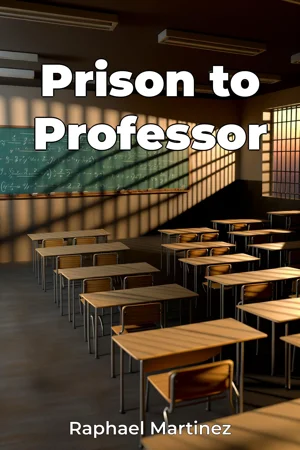
What if the key to breaking cycles of incarceration lies not in harsher punishments, but in the transformative power of education? *Prison to Professor: The Redemptive Potential of Correctional Education* examines this provocative question through a rigorous exploration of academic rehabilitation within carceral systems. Drawing on case studies, statistical analysis, and policy critiques, the book argues that access to education during and after imprisonment not only reshapes individual lives but offers measurable societal benefits, from reduced recidivism to stronger communities. The book anchors its analysis in two central themes: the psychological and social impacts of educational attainment on incarcerated individuals, and the systemic barriers that limit access to these programs. By interweaving personal narratives of formerly incarcerated scholars with longitudinal studies on recidivism, it challenges the prevailing view of prisons as purely punitive institutions. Instead, the text positions education as a catalyst for cognitive restructuring, skill development, and civic reintegration. These themes are contextualized within the history of U.S. correctional education, tracing its expansion during the 1970s Pell Grant era, its decline amid 1990s “tough-on-crime” policies, and its recent resurgence through initiatives like the 2016 Second Chance Pell experiment. Central to the book’s thesis is the claim that prison education programs—ranging from GED courses to college degrees—correlate with a 43% reduction in reoffending rates, as documented by the RAND Corporation. This statistic is juxtaposed with the U.S. Bureau of Justice’s finding that 83% of released prisoners are rearrested within nine years, underscoring the cost-effectiveness of education over perpetual incarceration. The argument is further bolstered by interviews with graduates of programs like the Bard Prison Initiative and Hudson Link, whose academic achievements enabled careers in social work, law, and academia. Structured across three sections, the book first establishes the theoretical framework for education as rehabilitation, citing criminological theories like desistance and cognitive transformation. Subsequent chapters analyze case studies of prison universities, detailing curricula, pedagogical challenges, and post-release outcomes. The final section critiques current policy limitations, such as funding disparities and employer biases against formerly incarcerated graduates, while proposing scalable solutions like employer tax incentives and streamlined credit-transfer systems between prison and mainstream universities. Methodologically, the work blends quantitative analysis—including meta-analyses of recidivism data—with qualitative interviews conducted over a five-year period. Unique to its approach is the inclusion of “counter-narratives” from individuals who reoffended despite educational access, providing a nuanced examination of program limitations. The book also intersects with adjacent fields: it applies behavioral economics to cost-benefit analyses of education versus incarceration ($1 invested in prison education saves $4–$5 in reincarceration costs) and engages with critical race theory to dissect how racial inequities in sentencing influence access to rehabilitative resources. Written in an analytical yet accessible style, *Prison to Professor* avoids academic jargon without sacrificing scholarly rigor. Its tone reflects the gravity of its subject matter while emphasizing actionable insights, making it equally relevant to policymakers, educators, and general readers invested in criminal justice reform. The book intentionally focuses on the U.S. context, acknowledging but not extensively exploring international models, and explicitly avoids romanticizing education as a singular solution. Instead, it frames academic access as one component within broader reforms, such as fair-chance hiring practices and legislative advocacy. By confronting controversies—including objections that prison education “rewards” criminal behavior—the text invites readers to reconsider societal priorities. Is it more ethical to invest in punitive measures that perpetuate cycles of harm, or in interventions that restore human potential? Through its evidence-based yet humanistic lens, *Prison to Professor* makes a compelling case for the latter, offering a roadmap for a system where prisons become sites of redemption rather than repositories of wasted talent.
What if the key to breaking cycles of incarceration lies not in harsher punishments, but in the transformative power of education? *Prison to Professor: The Redemptive Potential of Correctional Education* examines this provocative question through a rigorous exploration of academic rehabilitation within carceral systems. Drawing on case studies, statistical analysis, and policy critiques, the book argues that access to education during and after imprisonment not only reshapes individual lives but offers measurable societal benefits, from reduced recidivism to stronger communities. The book anchors its analysis in two central themes: the psychological and social impacts of educational attainment on incarcerated individuals, and the systemic barriers that limit access to these programs. By interweaving personal narratives of formerly incarcerated scholars with longitudinal studies on recidivism, it challenges the prevailing view of prisons as purely punitive institutions. Instead, the text positions education as a catalyst for cognitive restructuring, skill development, and civic reintegration. These themes are contextualized within the history of U.S. correctional education, tracing its expansion during the 1970s Pell Grant era, its decline amid 1990s “tough-on-crime” policies, and its recent resurgence through initiatives like the 2016 Second Chance Pell experiment. Central to the book’s thesis is the claim that prison education programs—ranging from GED courses to college degrees—correlate with a 43% reduction in reoffending rates, as documented by the RAND Corporation. This statistic is juxtaposed with the U.S. Bureau of Justice’s finding that 83% of released prisoners are rearrested within nine years, underscoring the cost-effectiveness of education over perpetual incarceration. The argument is further bolstered by interviews with graduates of programs like the Bard Prison Initiative and Hudson Link, whose academic achievements enabled careers in social work, law, and academia. Structured across three sections, the book first establishes the theoretical framework for education as rehabilitation, citing criminological theories like desistance and cognitive transformation. Subsequent chapters analyze case studies of prison universities, detailing curricula, pedagogical challenges, and post-release outcomes. The final section critiques current policy limitations, such as funding disparities and employer biases against formerly incarcerated graduates, while proposing scalable solutions like employer tax incentives and streamlined credit-transfer systems between prison and mainstream universities. Methodologically, the work blends quantitative analysis—including meta-analyses of recidivism data—with qualitative interviews conducted over a five-year period. Unique to its approach is the inclusion of “counter-narratives” from individuals who reoffended despite educational access, providing a nuanced examination of program limitations. The book also intersects with adjacent fields: it applies behavioral economics to cost-benefit analyses of education versus incarceration ($1 invested in prison education saves $4–$5 in reincarceration costs) and engages with critical race theory to dissect how racial inequities in sentencing influence access to rehabilitative resources. Written in an analytical yet accessible style, *Prison to Professor* avoids academic jargon without sacrificing scholarly rigor. Its tone reflects the gravity of its subject matter while emphasizing actionable insights, making it equally relevant to policymakers, educators, and general readers invested in criminal justice reform. The book intentionally focuses on the U.S. context, acknowledging but not extensively exploring international models, and explicitly avoids romanticizing education as a singular solution. Instead, it frames academic access as one component within broader reforms, such as fair-chance hiring practices and legislative advocacy. By confronting controversies—including objections that prison education “rewards” criminal behavior—the text invites readers to reconsider societal priorities. Is it more ethical to invest in punitive measures that perpetuate cycles of harm, or in interventions that restore human potential? Through its evidence-based yet humanistic lens, *Prison to Professor* makes a compelling case for the latter, offering a roadmap for a system where prisons become sites of redemption rather than repositories of wasted talent.
"Prison to Professor: The Redemptive Potential of Correctional Education" explores the transformative power of education within the criminal justice system, arguing that access to academic programs during and after incarceration can break cycles of recidivism and foster societal benefits. The book highlights compelling evidence, such as a 43% reduction in reoffending rates among individuals who participate in prison education programs, contrasting sharply with the 83% rearrest rate for released prisoners overall. Through case studies and interviews with graduates of initiatives like the Bard Prison Initiative and Hudson Link, the book showcases how education enables careers in fields like social work, law, and academia, offering a path to cognitive transformation and social reintegration. Structured in three sections, the book begins by establishing the theoretical foundation for education as rehabilitation, followed by an analysis of prison university programs and their outcomes. It concludes with a critique of systemic barriers, such as funding disparities and employer biases, while proposing scalable solutions like employer tax incentives. The book’s unique approach blends quantitative data, such as cost-benefit analyses showing that $1 invested in prison education saves $4–$5 in reincarceration costs, with qualitative narratives, including counter-stories from those who reoffended despite educational access. This balanced perspective avoids romanticizing education as a cure-all, instead framing it as one piece of broader criminal justice reform. Written in an accessible yet rigorous style, "Prison to Professor" challenges readers to rethink societal priorities, advocating for a system where prisons become sites of redemption rather than wasted potential. Its evidence-based arguments and actionable insights make it a valuable resource for policymakers, educators, and anyone invested in criminal justice reform.
Book Details
ISBN
9788233954383
Publisher
Publifye AS
Your Licenses
You don't own any licenses for this book
Purchase a license below to unlock this book and download the EPUB.
Purchase License
Select a tier to unlock this book
Need bulk licensing?
Contact us for enterprise agreements.