
About This Book
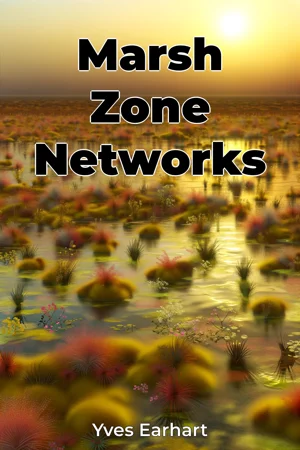
Wetlands are among Earth’s most dynamic ecosystems, teeming with life that shapes—and is shaped by—water, soil, and climate. *Marsh Zone Networks: The Hidden Web of Wetland Life* delves into the intricate relationships between species in these fragile habitats, revealing how their survival hinges on interconnectedness. Combining ecological research, case studies, and conservation strategies, this book illuminates the unseen forces sustaining marshes and why their preservation is critical for both biodiversity and human societies. The book begins by establishing the foundational role of wetlands as biological hubs, where plants, animals, and microorganisms engage in complex interactions. Central themes include symbiotic partnerships (e.g., mutualism between marsh plants and nitrogen-fixing bacteria), predator-prey dynamics that regulate populations, and the cascading effects of keystone species like alligators or beavers. These topics underscore how disruptions to one element can destabilize entire ecosystems. A chapter on ecological networks introduces graph theory as a tool to map species dependencies, offering a visual framework to understand resilience or vulnerability in marshes. Historically, wetlands have been dismissed as wastelands, leading to widespread drainage for agriculture and urban development. The book contextualizes this shift, linking it to a 70% global loss of wetlands since 1900 and subsequent declines in water quality, flood control, and carbon sequestration. Readers need no prior expertise; concepts like trophic levels and hydrology are clarified through analogies, such as comparing wetland food webs to urban supply chains. The central thesis argues that wetland conservation requires a systems-thinking approach: protecting species means safeguarding their relationships. This perspective challenges fragmented conservation efforts focused solely on individual species or habitats. For instance, restoring a marsh’s water flow benefits flora but fails if pollinator populations have collapsed. The book emphasizes that interactions, not just organisms, form the ecosystem’s "architecture." Structurally, the work progresses from micro- to macro-scale analysis. Early chapters detail specific interactions, such as how migratory birds disperse seeds critical for plant diversity. Middle sections explore human impacts, including pollution’s role in altering microbial communities and invasive species outcompeting native flora. The final chapters synthesize these threads, proposing adaptive management strategies like “zoned conservation,” which prioritizes critical interaction hotspots. Case studies from the Florida Everglades, Okavango Delta, and Sundarbans mangrove forests illustrate successes and failures in real-world practice. Evidence is drawn from field experiments, satellite imaging, and decades of biodiversity surveys. Unique datasets include isotope tracing to track nutrient flows and citizen science contributions documenting local species declines. The book also critiques simplistic metrics like species counts, advocating instead for interaction diversity as a better indicator of ecosystem health. Interdisciplinary insights enrich the narrative. Climate science explains how methane-producing wetlands influence global warming, while sociology examines how Indigenous stewardship practices sustain biodiversity. Engineering principles inform discussions on reconstructing hydrological pathways in degraded marshes. These connections position wetlands as intersections of natural and human systems. A standout feature is the application of network theory—a methodology more common in social media or epidemiology—to map ecological relationships. This lens reveals “bridge species” that connect disparate parts of the food web, offering new targets for conservation. The book also challenges the notion of “pristine” ecosystems, highlighting how human-altered marshes can still foster resilience if key interactions persist. Written in a lucid, narrative style, the book balances scientific rigor with accessible explanations. Technical terms are defined in context, and anecdotes—such as the reintroduction of wolves in Yellowstone influencing wetland recovery—anchor abstract concepts. Charts and diagrams supplement the text without overwhelming it. Targeted at environmental scientists, policymakers, and ecology enthusiasts, *Marsh Zone Networks* provides actionable insights for habitat restoration and climate adaptation. Its interdisciplinary approach appeals to geographers, educators, and community organizers engaged in conservation. By focusing on temperate and tropical freshwater marshes, the scope remains manageable, though saltwater and boreal wetlands are acknowledged as areas for future study. Practical applications are stressed throughout. A chapter on policy outlines how zoning laws can protect interaction corridors, while another guides communities in monitoring local species partnerships. The book also addresses debates such as whether engineered solutions (e.g., artificial levees) can replicate natural processes, concluding that hybrid approaches often yield the best outcomes. By framing wetlands as living networks, this work reframes conservation as a task of maintaining connections—biological, hydrological, and cultural. It argues that the survival of these ecosystems depends not just on saving species, but on preserving the delicate, dynamic web that binds them.
Wetlands are among Earth’s most dynamic ecosystems, teeming with life that shapes—and is shaped by—water, soil, and climate. *Marsh Zone Networks: The Hidden Web of Wetland Life* delves into the intricate relationships between species in these fragile habitats, revealing how their survival hinges on interconnectedness. Combining ecological research, case studies, and conservation strategies, this book illuminates the unseen forces sustaining marshes and why their preservation is critical for both biodiversity and human societies. The book begins by establishing the foundational role of wetlands as biological hubs, where plants, animals, and microorganisms engage in complex interactions. Central themes include symbiotic partnerships (e.g., mutualism between marsh plants and nitrogen-fixing bacteria), predator-prey dynamics that regulate populations, and the cascading effects of keystone species like alligators or beavers. These topics underscore how disruptions to one element can destabilize entire ecosystems. A chapter on ecological networks introduces graph theory as a tool to map species dependencies, offering a visual framework to understand resilience or vulnerability in marshes. Historically, wetlands have been dismissed as wastelands, leading to widespread drainage for agriculture and urban development. The book contextualizes this shift, linking it to a 70% global loss of wetlands since 1900 and subsequent declines in water quality, flood control, and carbon sequestration. Readers need no prior expertise; concepts like trophic levels and hydrology are clarified through analogies, such as comparing wetland food webs to urban supply chains. The central thesis argues that wetland conservation requires a systems-thinking approach: protecting species means safeguarding their relationships. This perspective challenges fragmented conservation efforts focused solely on individual species or habitats. For instance, restoring a marsh’s water flow benefits flora but fails if pollinator populations have collapsed. The book emphasizes that interactions, not just organisms, form the ecosystem’s "architecture." Structurally, the work progresses from micro- to macro-scale analysis. Early chapters detail specific interactions, such as how migratory birds disperse seeds critical for plant diversity. Middle sections explore human impacts, including pollution’s role in altering microbial communities and invasive species outcompeting native flora. The final chapters synthesize these threads, proposing adaptive management strategies like “zoned conservation,” which prioritizes critical interaction hotspots. Case studies from the Florida Everglades, Okavango Delta, and Sundarbans mangrove forests illustrate successes and failures in real-world practice. Evidence is drawn from field experiments, satellite imaging, and decades of biodiversity surveys. Unique datasets include isotope tracing to track nutrient flows and citizen science contributions documenting local species declines. The book also critiques simplistic metrics like species counts, advocating instead for interaction diversity as a better indicator of ecosystem health. Interdisciplinary insights enrich the narrative. Climate science explains how methane-producing wetlands influence global warming, while sociology examines how Indigenous stewardship practices sustain biodiversity. Engineering principles inform discussions on reconstructing hydrological pathways in degraded marshes. These connections position wetlands as intersections of natural and human systems. A standout feature is the application of network theory—a methodology more common in social media or epidemiology—to map ecological relationships. This lens reveals “bridge species” that connect disparate parts of the food web, offering new targets for conservation. The book also challenges the notion of “pristine” ecosystems, highlighting how human-altered marshes can still foster resilience if key interactions persist. Written in a lucid, narrative style, the book balances scientific rigor with accessible explanations. Technical terms are defined in context, and anecdotes—such as the reintroduction of wolves in Yellowstone influencing wetland recovery—anchor abstract concepts. Charts and diagrams supplement the text without overwhelming it. Targeted at environmental scientists, policymakers, and ecology enthusiasts, *Marsh Zone Networks* provides actionable insights for habitat restoration and climate adaptation. Its interdisciplinary approach appeals to geographers, educators, and community organizers engaged in conservation. By focusing on temperate and tropical freshwater marshes, the scope remains manageable, though saltwater and boreal wetlands are acknowledged as areas for future study. Practical applications are stressed throughout. A chapter on policy outlines how zoning laws can protect interaction corridors, while another guides communities in monitoring local species partnerships. The book also addresses debates such as whether engineered solutions (e.g., artificial levees) can replicate natural processes, concluding that hybrid approaches often yield the best outcomes. By framing wetlands as living networks, this work reframes conservation as a task of maintaining connections—biological, hydrological, and cultural. It argues that the survival of these ecosystems depends not just on saving species, but on preserving the delicate, dynamic web that binds them.
*Marsh Zone Networks: The Hidden Web of Wetland Life* explores the vital yet fragile interconnectedness of wetland ecosystems, arguing that their survival depends on preserving the dynamic relationships between species, water, and human actions. The book frames marshes as intricate biological networks where keystone species like alligators or beavers act as ecological engineers, while symbiotic partnerships—such as marsh plants collaborating with nitrogen-fixing bacteria—anchor biodiversity. Using network theory, typically applied to social or technological systems, it visualizes how disruptions like pollution or invasive species ripple through these habitats, destabilizing everything from microbial communities to flood control. Blending ecology, climate science, and sociology, the book progresses from micro-level interactions to global challenges. Early chapters dissect species dependencies, likening wetland food webs to urban supply chains for clarity. Later sections analyze human impacts, including a 70% global wetland loss since 1900, and showcase restoration case studies from the Everglades to the Sundarbans. Unique insights emerge, such as how “bridge species” sustain ecological connectivity or why measuring interaction diversity—not just species counts—better predicts ecosystem health. Practical solutions like “zoned conservation” prioritize protecting critical hubs in these networks, challenging outdated, piecemeal approaches. Written accessibly with analogies and narratives, *Marsh Zone Networks* bridges scientific rigor and public understanding. It positions wetlands as intersections of nature and culture, urging readers to see conservation as safeguarding relationships, not just species—a perspective vital for climate resilience and biodiversity in an era of rapid environmental change.
Book Details
ISBN
9788233954291
Publisher
Publifye AS
Your Licenses
You don't own any licenses for this book
Purchase a license below to unlock this book and download the EPUB.
Purchase License
Select a tier to unlock this book
Need bulk licensing?
Contact us for enterprise agreements.