
About This Book
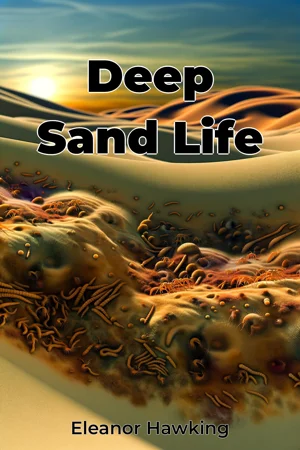
What if the stark, sun-baked surface of a desert conceals a hidden world teeming with life? *Deep Sand Life* challenges the perception of deserts as barren wastelands by unveiling the complex ecosystems thriving beneath their dunes. This book synthesizes decades of scientific research to explore the organisms inhabiting desert sand layers, revealing how these communities survive extreme conditions and reshape our understanding of life’s adaptability. The book centers on three core themes: the physiological adaptations of subsurface organisms, the ecological networks they form, and their role in broader environmental processes. These topics underscore the importance of deserts as dynamic ecosystems rather than biological deserts, offering insights into resilience, biodiversity, and the limits of life. By examining creatures ranging from bacteria and fungi to burrowing arthropods and reptiles, the text argues that desert sand layers are critical, yet overlooked, reservoirs of life with implications for conservation, climate science, and even the search for extraterrestrial organisms. Historically, deserts were dismissed as inhospitable, but advances in technology—such as subsurface sampling and DNA analysis—have uncovered intricate communities beneath the sand. The book contextualizes these discoveries within the broader study of extremophiles, organisms thriving in environments once deemed uninhabitable. It introduces foundational concepts like cryptobiosis (a state of suspended metabolic activity) and biogeochemical cycling, explaining how sand-dwelling species interact with their abiotic surroundings to sustain life. Structured into three sections, *Deep Sand Life* begins by dismantling myths about desert sterility, using case studies from the Sahara, Mojave, and Gobi deserts. The middle chapters detail adaptive strategies, such as thermal regulation in beetles and water retention in succulent plants, while also mapping nutrient flows between microorganisms, sand particles, and larger fauna. The final section addresses the anthropogenic threats to these ecosystems, including climate change and land use shifts, and proposes frameworks for preserving subsurface biodiversity. Evidence is drawn from peer-reviewed field studies, controlled lab experiments, and remote sensing data. The book highlights pioneering work by microbiologists using metagenomics to identify unculturable microbes, as well as ecologists tracking species interactions via sensor networks embedded in dunes. Cross-disciplinary collaborations with geologists and climatologists provide a holistic view of how sand composition and atmospheric patterns influence biotic communities. Connections to soil science, astrobiology, and biotechnology enrich the narrative. For instance, microbial enzymes from desert sands have inspired industrial applications in water filtration, while the study of subsurface microclimates informs hypotheses about Martian habitability. By bridging these fields, the book positions desert sand ecosystems as vital to both planetary health and scientific innovation. A distinguishing feature of *Deep Sand Life* is its focus on vertical stratification within sand layers. Unlike surface-centric studies, it examines how temperature, moisture, and organic matter vary with depth, creating distinct niches for specialized organisms. This vertical lens reveals a tiered ecosystem analogous to ocean zones, challenging readers to reconsider deserts as three-dimensional habitats. Written in clear, engaging prose, the book balances technical detail with narrative storytelling, making it accessible to both specialists and general readers. It avoids sensationalism, grounding each claim in empirical data while emphasizing the urgency of protecting these fragile ecosystems. Targeted at biology enthusiasts, environmental policymakers, and educators, *Deep Sand Life* appeals to anyone interested in ecological resilience or extreme environments. Its genre conventions—hypothesis-driven analysis, methodological transparency, and emphasis on peer-reviewed research—align with rigorous science communication. While focused on arid deserts, the book acknowledges limitations in its scope, excluding polar and coastal deserts. However, its findings prompt broader questions about life’s tenacity in harsh settings. Practical applications include strategies for combating desertification and harnessing extremophile traits for sustainable technologies. The text also engages with debates over biodiversity metrics in deserts, addressing skepticism about the ecological significance of sparse populations. By presenting quantified evidence of species interdependence and nutrient cycling, it asserts that even low-density communities can exert outsized environmental impacts. *Deep Sand Life* redefines deserts as laboratories of adaptation, urging a reevaluation of their ecological value. Its synthesis of hidden worlds beneath the sand invites readers to appreciate the subtle complexity of life at the edge of survivability.
What if the stark, sun-baked surface of a desert conceals a hidden world teeming with life? *Deep Sand Life* challenges the perception of deserts as barren wastelands by unveiling the complex ecosystems thriving beneath their dunes. This book synthesizes decades of scientific research to explore the organisms inhabiting desert sand layers, revealing how these communities survive extreme conditions and reshape our understanding of life’s adaptability. The book centers on three core themes: the physiological adaptations of subsurface organisms, the ecological networks they form, and their role in broader environmental processes. These topics underscore the importance of deserts as dynamic ecosystems rather than biological deserts, offering insights into resilience, biodiversity, and the limits of life. By examining creatures ranging from bacteria and fungi to burrowing arthropods and reptiles, the text argues that desert sand layers are critical, yet overlooked, reservoirs of life with implications for conservation, climate science, and even the search for extraterrestrial organisms. Historically, deserts were dismissed as inhospitable, but advances in technology—such as subsurface sampling and DNA analysis—have uncovered intricate communities beneath the sand. The book contextualizes these discoveries within the broader study of extremophiles, organisms thriving in environments once deemed uninhabitable. It introduces foundational concepts like cryptobiosis (a state of suspended metabolic activity) and biogeochemical cycling, explaining how sand-dwelling species interact with their abiotic surroundings to sustain life. Structured into three sections, *Deep Sand Life* begins by dismantling myths about desert sterility, using case studies from the Sahara, Mojave, and Gobi deserts. The middle chapters detail adaptive strategies, such as thermal regulation in beetles and water retention in succulent plants, while also mapping nutrient flows between microorganisms, sand particles, and larger fauna. The final section addresses the anthropogenic threats to these ecosystems, including climate change and land use shifts, and proposes frameworks for preserving subsurface biodiversity. Evidence is drawn from peer-reviewed field studies, controlled lab experiments, and remote sensing data. The book highlights pioneering work by microbiologists using metagenomics to identify unculturable microbes, as well as ecologists tracking species interactions via sensor networks embedded in dunes. Cross-disciplinary collaborations with geologists and climatologists provide a holistic view of how sand composition and atmospheric patterns influence biotic communities. Connections to soil science, astrobiology, and biotechnology enrich the narrative. For instance, microbial enzymes from desert sands have inspired industrial applications in water filtration, while the study of subsurface microclimates informs hypotheses about Martian habitability. By bridging these fields, the book positions desert sand ecosystems as vital to both planetary health and scientific innovation. A distinguishing feature of *Deep Sand Life* is its focus on vertical stratification within sand layers. Unlike surface-centric studies, it examines how temperature, moisture, and organic matter vary with depth, creating distinct niches for specialized organisms. This vertical lens reveals a tiered ecosystem analogous to ocean zones, challenging readers to reconsider deserts as three-dimensional habitats. Written in clear, engaging prose, the book balances technical detail with narrative storytelling, making it accessible to both specialists and general readers. It avoids sensationalism, grounding each claim in empirical data while emphasizing the urgency of protecting these fragile ecosystems. Targeted at biology enthusiasts, environmental policymakers, and educators, *Deep Sand Life* appeals to anyone interested in ecological resilience or extreme environments. Its genre conventions—hypothesis-driven analysis, methodological transparency, and emphasis on peer-reviewed research—align with rigorous science communication. While focused on arid deserts, the book acknowledges limitations in its scope, excluding polar and coastal deserts. However, its findings prompt broader questions about life’s tenacity in harsh settings. Practical applications include strategies for combating desertification and harnessing extremophile traits for sustainable technologies. The text also engages with debates over biodiversity metrics in deserts, addressing skepticism about the ecological significance of sparse populations. By presenting quantified evidence of species interdependence and nutrient cycling, it asserts that even low-density communities can exert outsized environmental impacts. *Deep Sand Life* redefines deserts as laboratories of adaptation, urging a reevaluation of their ecological value. Its synthesis of hidden worlds beneath the sand invites readers to appreciate the subtle complexity of life at the edge of survivability.
*Deep Sand Life* transforms our understanding of deserts by revealing the thriving, layered ecosystems hidden beneath their seemingly lifeless surfaces. Challenging the myth of deserts as barren wastelands, the book explores how organisms—from bacteria to reptiles—survive extreme aridity, heat, and nutrient scarcity. At its core, it argues that these subsurface communities are vital to ecological resilience, offering lessons for conservation, climate science, and even the search for life on other planets. The book’s strength lies in its vertical perspective, detailing how temperature, moisture, and organic matter create distinct niches at different sand depths. Readers encounter astonishing adaptations: beetles that harvest fog, microbes employing cryptobiosis (metabolic suspension during drought), and intricate nutrient exchanges between fungi and burrowing animals. These insights emerge from cutting-edge methods like metagenomics and sensor networks, revealing interdependencies akin to ocean ecosystems. By bridging disciplines—from astrobiology to soil science—*Deep Sand Life* shows how desert enzymes inspire water filtration tech and inform theories about Martian habitats. Structured to dismantle misconceptions progressively, the book moves from ecosystem fundamentals to urgent threats like desertification. It balances rigorous science with accessible storytelling, using desert case studies to underscore biodiversity’s fragility. Unique in its focus on subsurface stratification, this work redefines deserts as dynamic laboratories of adaptation, urging readers to see these landscapes not as dead zones but as frontiers of life’s ingenuity.
Book Details
ISBN
9788233954222
Publisher
Publifye AS
Your Licenses
You don't own any licenses for this book
Purchase a license below to unlock this book and download the EPUB.
Purchase License
Select a tier to unlock this book
Need bulk licensing?
Contact us for enterprise agreements.