
About This Book
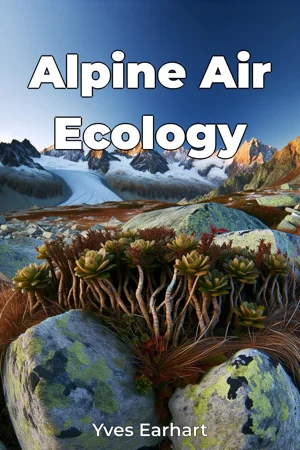
At 3,000 meters above sea level, the air thins, temperatures plummet, and ultraviolet radiation intensifies—yet life persists. *Alpine Air Ecology* examines how organisms not only survive but thrive in Earth’s high-altitude ecosystems, where atmospheric conditions push the boundaries of biological adaptability. This book synthesizes decades of research to unravel the complex interplay between alpine environments and the life forms they sustain, offering insights into resilience, adaptation, and the looming threats posed by climate change. The book begins by establishing the unique challenges of high-altitude atmospheres: reduced oxygen levels, heightened UV exposure, and extreme temperature variability. These factors create a living laboratory for studying physiological and ecological adaptations. Central to the discussion are the evolutionary strategies of alpine flora and fauna, from cushion plants that trap heat to insects with antifreeze proteins. The text also addresses how climate-driven atmospheric shifts are altering these habitats, potentially outpacing species’ ability to adapt. These topics are critical for understanding biodiversity conservation in a warming world, particularly as mountain ecosystems face disproportionate impacts from environmental change. Historical context reveals that alpine biology emerged as a distinct field in the mid-20th century, when researchers began systematically cataloging high-altitude species. Early studies focused on descriptive ecology, but advances in genomics and climatology have since enabled deeper exploration of adaptation mechanisms. The book assumes a basic familiarity with ecological principles but introduces specialized concepts—such as hypobaric hypoxia (low-pressure oxygen deficiency)—through clear, concise definitions. At its core, *Alpine Air Ecology* argues that atmospheric conditions are not merely a backdrop for alpine life but a dynamic force shaping evolution and ecosystem interactions. This thesis challenges older paradigms that prioritized geological or biotic factors in mountain ecology. By reframing the atmosphere as an active agent, the book underscores the urgency of integrating atmospheric science into conservation planning. Structured across three sections, the work first delineates the physicochemical properties of alpine air and their direct effects on organisms. Subsequent chapters detail case studies: the oxygen-efficient metabolism of bar-headed geese, the UV-reflective pigments in alpine flowers, and the symbiotic relationships between soil microbes and dwarf shrubs. The final section synthesizes these threads, projecting how rising temperatures and shifting precipitation patterns could destabilize delicate high-altitude food webs. Evidence is drawn from field experiments, satellite climate data, and comparative genomic analyses. Unique to this work are longitudinal studies of glacial retreat’s impact on insect populations and cross-continental comparisons of alpine plant communities. The book also incorporates citizen science data, highlighting contributions from climbers and hikers who track species migrations. Interdisciplinary connections bridge climatology, biochemistry, and conservation policy. For instance, the book links atmospheric carbon flux models to plant photosynthesis rates, demonstrating how alpine ecosystems act as carbon sinks. It also explores how microbial adaptations to UV radiation inform biomedical research on DNA repair. These intersections reinforce the relevance of alpine studies to broader environmental and health-related challenges. *Alpine Air Ecology* distinguishes itself by merging macro-scale atmospheric dynamics with micro-scale organismal responses, a approach seldom adopted in prior literature. It also emphasizes understudied taxa, such as lichens and nematodes, which play pivotal roles in nutrient cycling. The prose balances scientific rigor with narrative flourishes, employing vivid descriptions of alpine landscapes to anchor technical content. Written for biologists, environmental scientists, and informed lay readers, the book serves as both a reference and a call to action. Its accessible style accommodates students and professionals, while its focus on climate resilience aligns with global policy debates. Genre conventions are upheld through rigorous citation of peer-reviewed studies and explicit discussion of methodological limitations, such as data gaps in remote Himalayan regions. Practical applications include frameworks for monitoring atmospheric stressors in protected areas and strategies for assisted species migration. The book also engages controversies, such as ethical dilemmas around human intervention in “wild” ecosystems and disputes over the feasibility of preserving high-altitude biodiversity under current emission trajectories. By illuminating the invisible threads connecting air and life in extreme environments, *Alpine Air Ecology* redefines our understanding of mountains as dynamic, atmospheric-driven ecosystems—and compels a reevaluation of how to protect them.
At 3,000 meters above sea level, the air thins, temperatures plummet, and ultraviolet radiation intensifies—yet life persists. *Alpine Air Ecology* examines how organisms not only survive but thrive in Earth’s high-altitude ecosystems, where atmospheric conditions push the boundaries of biological adaptability. This book synthesizes decades of research to unravel the complex interplay between alpine environments and the life forms they sustain, offering insights into resilience, adaptation, and the looming threats posed by climate change. The book begins by establishing the unique challenges of high-altitude atmospheres: reduced oxygen levels, heightened UV exposure, and extreme temperature variability. These factors create a living laboratory for studying physiological and ecological adaptations. Central to the discussion are the evolutionary strategies of alpine flora and fauna, from cushion plants that trap heat to insects with antifreeze proteins. The text also addresses how climate-driven atmospheric shifts are altering these habitats, potentially outpacing species’ ability to adapt. These topics are critical for understanding biodiversity conservation in a warming world, particularly as mountain ecosystems face disproportionate impacts from environmental change. Historical context reveals that alpine biology emerged as a distinct field in the mid-20th century, when researchers began systematically cataloging high-altitude species. Early studies focused on descriptive ecology, but advances in genomics and climatology have since enabled deeper exploration of adaptation mechanisms. The book assumes a basic familiarity with ecological principles but introduces specialized concepts—such as hypobaric hypoxia (low-pressure oxygen deficiency)—through clear, concise definitions. At its core, *Alpine Air Ecology* argues that atmospheric conditions are not merely a backdrop for alpine life but a dynamic force shaping evolution and ecosystem interactions. This thesis challenges older paradigms that prioritized geological or biotic factors in mountain ecology. By reframing the atmosphere as an active agent, the book underscores the urgency of integrating atmospheric science into conservation planning. Structured across three sections, the work first delineates the physicochemical properties of alpine air and their direct effects on organisms. Subsequent chapters detail case studies: the oxygen-efficient metabolism of bar-headed geese, the UV-reflective pigments in alpine flowers, and the symbiotic relationships between soil microbes and dwarf shrubs. The final section synthesizes these threads, projecting how rising temperatures and shifting precipitation patterns could destabilize delicate high-altitude food webs. Evidence is drawn from field experiments, satellite climate data, and comparative genomic analyses. Unique to this work are longitudinal studies of glacial retreat’s impact on insect populations and cross-continental comparisons of alpine plant communities. The book also incorporates citizen science data, highlighting contributions from climbers and hikers who track species migrations. Interdisciplinary connections bridge climatology, biochemistry, and conservation policy. For instance, the book links atmospheric carbon flux models to plant photosynthesis rates, demonstrating how alpine ecosystems act as carbon sinks. It also explores how microbial adaptations to UV radiation inform biomedical research on DNA repair. These intersections reinforce the relevance of alpine studies to broader environmental and health-related challenges. *Alpine Air Ecology* distinguishes itself by merging macro-scale atmospheric dynamics with micro-scale organismal responses, a approach seldom adopted in prior literature. It also emphasizes understudied taxa, such as lichens and nematodes, which play pivotal roles in nutrient cycling. The prose balances scientific rigor with narrative flourishes, employing vivid descriptions of alpine landscapes to anchor technical content. Written for biologists, environmental scientists, and informed lay readers, the book serves as both a reference and a call to action. Its accessible style accommodates students and professionals, while its focus on climate resilience aligns with global policy debates. Genre conventions are upheld through rigorous citation of peer-reviewed studies and explicit discussion of methodological limitations, such as data gaps in remote Himalayan regions. Practical applications include frameworks for monitoring atmospheric stressors in protected areas and strategies for assisted species migration. The book also engages controversies, such as ethical dilemmas around human intervention in “wild” ecosystems and disputes over the feasibility of preserving high-altitude biodiversity under current emission trajectories. By illuminating the invisible threads connecting air and life in extreme environments, *Alpine Air Ecology* redefines our understanding of mountains as dynamic, atmospheric-driven ecosystems—and compels a reevaluation of how to protect them.
"Alpine Air Ecology" explores how life persists in Earth’s high-altitude environments, where thin air, intense UV radiation, and extreme temperatures test the limits of survival. The book’s central theme revolves around the dynamic relationship between atmospheric conditions and biological adaptation, arguing that air itself acts as a powerful evolutionary force—not just a passive backdrop. By synthesizing decades of research, it reveals how alpine flora and fauna, from heat-trapping cushion plants to insects with antifreeze proteins, have evolved ingenious strategies to thrive. These adaptations are now under threat as climate change disrupts delicate mountain ecosystems faster than many species can adapt. The book uniquely bridges atmospheric science and biology, offering vivid case studies like bar-headed geese that optimize oxygen use during flight and alpine flowers with UV-reflective pigments. It highlights how rising temperatures and shifting precipitation patterns risk destabilizing these habitats, emphasizing mountains’ role as critical carbon sinks and biodiversity hotspots. Structured across three sections, the work progresses from explaining alpine air’s physical properties to examining species-specific survival tactics, culminating in projections for future ecological disruptions. Field experiments, genomic analyses, and even citizen science data from hikers enrich its evidence, while interdisciplinary connections—like how microbial UV adaptations inform biomedical research—showcase alpine ecology’s broader relevance. What sets "Alpine Air Ecology" apart is its focus on underappreciated organisms, such as nutrient-cycling lichens, and its urgent call to integrate atmospheric dynamics into conservation planning. Balancing scientific rigor with engaging prose, it serves as both a primer on high-altitude ecosystems and a compelling argument for protecting these fragile environments in a warming world.
Book Details
ISBN
9788233954130
Publisher
Publifye AS
Your Licenses
You don't own any licenses for this book
Purchase a license below to unlock this book and download the EPUB.
Purchase License
Select a tier to unlock this book
Need bulk licensing?
Contact us for enterprise agreements.