
About This Book
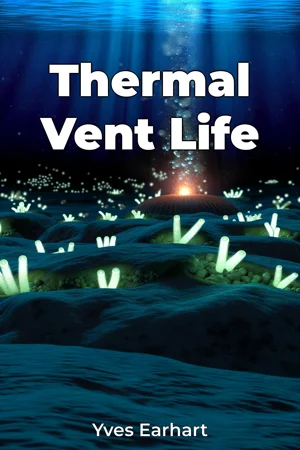
How does life not only survive but flourish in the crushing darkness of the deep ocean, where scalding water erupts from volcanic vents and temperatures swing from freezing to boiling within meters? *Thermal Vent Life* plunges into this alien world, unraveling the biological marvels of hydrothermal vent ecosystems and their revolutionary implications for our understanding of life on Earth—and beyond. The book anchors its exploration in three pivotal themes: the biochemical adaptations of extremophiles (organisms thriving in extreme conditions), the geological dynamics of hydrothermal vent formation, and the ecological interdependence of species in these high-pressure environments. These topics redefine traditional boundaries of biology, challenging assumptions about where life can exist and how ecosystems evolve without sunlight. By examining organisms that metabolize sulfur, withstand extreme heat, and form symbiotic relationships in perpetual darkness, the book illuminates principles relevant to climate resilience, astrobiology, and biotechnological innovation. Historical context begins with the 1977 discovery of hydrothermal vents off the Galápagos Islands, which overturned the long-held belief that all life depends on photosynthesis. The book traces subsequent research milestones, such as the identification of chemosynthesis—a process where bacteria convert inorganic compounds into energy—and the role of vent systems in global ocean chemistry. Foundational concepts in plate tectonics, microbial ecology, and thermodynamics are clarified, ensuring accessibility for readers without specialized background knowledge. Central to the book’s thesis is the argument that hydrothermal vent ecosystems exemplify life’s capacity to adapt to seemingly inhospitable conditions. This adaptability not only expands our grasp of Earth’s biodiversity but also informs the search for extraterrestrial life in environments like Europa’s subsurface oceans or Enceladus’s icy plumes. The resilience of vent organisms underscores the urgency of conserving these fragile ecosystems, which face threats from deep-sea mining and climate-driven ocean changes. Structured into three sections, the book first details the geology and chemistry of hydrothermal vents, explaining how magma-heated water interacts with oceanic crust to create nutrient-rich plumes. The second section dissects the physiology of vent species, from tube worms hosting chemosynthetic bacteria to heat-resistant archaea whose enzymes inspire industrial applications. The final chapters address humanity’s relationship with these ecosystems, discussing their role in carbon cycling, bioprospecting for heat-stable proteins, and ethical debates over exploiting deep-sea resources. Evidence draws from interdisciplinary research: genomic analyses of extremophiles, real-time data from submersible expeditions, and laboratory experiments replicating vent conditions. The book highlights collaborations between microbiologists, geologists, and engineers, particularly in profiling institutions like the Woods Hole Oceanographic Institution and their remotely operated vehicles (ROVs). Case studies, such as the rapid colonization of new vents by planktonic larvae, demonstrate ecological succession in action. Connections to astrobiology, biotechnology, and climate science thread through the narrative. For instance, enzymes from vent microbes are used in PCR testing, while vent ecosystems model how life might persist on other planets. The book also critiques the limitations of current conservation policies, which often prioritize terrestrial over marine environments. A unique focus on technological advancements distinguishes this work. Detailed accounts of sonar mapping, DNA sequencing, and pressure-tolerant lab equipment reveal how science deciphers extreme environments. The book further integrates Indigenous perspectives on deep-sea stewardship, contrasting Western extractive approaches with holistic ecological knowledge. Written in a lucid, narrative-driven style, *Thermal Vent Life* balances scientific rigor with vivid descriptions of submersible dives and bizarre lifeforms. It caters to environmentally engaged readers, students of marine biology, and professionals seeking insights into extremophile applications. While centered on marine vents, it acknowledges the broader study of extremophiles in deserts, polar ice, and acidic lakes, maintaining a focused scope to preserve depth. Practical applications are underscored throughout: vent-derived enzymes in pharmaceuticals, microbial insights into carbon capture, and the use of vent models to predict ecosystem responses to ocean acidification. Controversies, such as disputes over the origin of life near vents versus shallow pools, are presented objectively, emphasizing ongoing inquiry. By bridging discovery science with pressing environmental and technological questions, *Thermal Vent Life* positions hydrothermal vents as both a mirror reflecting Earth’s past and a lens focusing on humanity’s future. ———
How does life not only survive but flourish in the crushing darkness of the deep ocean, where scalding water erupts from volcanic vents and temperatures swing from freezing to boiling within meters? *Thermal Vent Life* plunges into this alien world, unraveling the biological marvels of hydrothermal vent ecosystems and their revolutionary implications for our understanding of life on Earth—and beyond. The book anchors its exploration in three pivotal themes: the biochemical adaptations of extremophiles (organisms thriving in extreme conditions), the geological dynamics of hydrothermal vent formation, and the ecological interdependence of species in these high-pressure environments. These topics redefine traditional boundaries of biology, challenging assumptions about where life can exist and how ecosystems evolve without sunlight. By examining organisms that metabolize sulfur, withstand extreme heat, and form symbiotic relationships in perpetual darkness, the book illuminates principles relevant to climate resilience, astrobiology, and biotechnological innovation. Historical context begins with the 1977 discovery of hydrothermal vents off the Galápagos Islands, which overturned the long-held belief that all life depends on photosynthesis. The book traces subsequent research milestones, such as the identification of chemosynthesis—a process where bacteria convert inorganic compounds into energy—and the role of vent systems in global ocean chemistry. Foundational concepts in plate tectonics, microbial ecology, and thermodynamics are clarified, ensuring accessibility for readers without specialized background knowledge. Central to the book’s thesis is the argument that hydrothermal vent ecosystems exemplify life’s capacity to adapt to seemingly inhospitable conditions. This adaptability not only expands our grasp of Earth’s biodiversity but also informs the search for extraterrestrial life in environments like Europa’s subsurface oceans or Enceladus’s icy plumes. The resilience of vent organisms underscores the urgency of conserving these fragile ecosystems, which face threats from deep-sea mining and climate-driven ocean changes. Structured into three sections, the book first details the geology and chemistry of hydrothermal vents, explaining how magma-heated water interacts with oceanic crust to create nutrient-rich plumes. The second section dissects the physiology of vent species, from tube worms hosting chemosynthetic bacteria to heat-resistant archaea whose enzymes inspire industrial applications. The final chapters address humanity’s relationship with these ecosystems, discussing their role in carbon cycling, bioprospecting for heat-stable proteins, and ethical debates over exploiting deep-sea resources. Evidence draws from interdisciplinary research: genomic analyses of extremophiles, real-time data from submersible expeditions, and laboratory experiments replicating vent conditions. The book highlights collaborations between microbiologists, geologists, and engineers, particularly in profiling institutions like the Woods Hole Oceanographic Institution and their remotely operated vehicles (ROVs). Case studies, such as the rapid colonization of new vents by planktonic larvae, demonstrate ecological succession in action. Connections to astrobiology, biotechnology, and climate science thread through the narrative. For instance, enzymes from vent microbes are used in PCR testing, while vent ecosystems model how life might persist on other planets. The book also critiques the limitations of current conservation policies, which often prioritize terrestrial over marine environments. A unique focus on technological advancements distinguishes this work. Detailed accounts of sonar mapping, DNA sequencing, and pressure-tolerant lab equipment reveal how science deciphers extreme environments. The book further integrates Indigenous perspectives on deep-sea stewardship, contrasting Western extractive approaches with holistic ecological knowledge. Written in a lucid, narrative-driven style, *Thermal Vent Life* balances scientific rigor with vivid descriptions of submersible dives and bizarre lifeforms. It caters to environmentally engaged readers, students of marine biology, and professionals seeking insights into extremophile applications. While centered on marine vents, it acknowledges the broader study of extremophiles in deserts, polar ice, and acidic lakes, maintaining a focused scope to preserve depth. Practical applications are underscored throughout: vent-derived enzymes in pharmaceuticals, microbial insights into carbon capture, and the use of vent models to predict ecosystem responses to ocean acidification. Controversies, such as disputes over the origin of life near vents versus shallow pools, are presented objectively, emphasizing ongoing inquiry. By bridging discovery science with pressing environmental and technological questions, *Thermal Vent Life* positions hydrothermal vents as both a mirror reflecting Earth’s past and a lens focusing on humanity’s future. ———
*Thermal Vent Life* explores the astonishing ecosystems thriving around hydrothermal vents, where scorching, mineral-rich waters sustain life in the deep ocean’s eternal darkness. Anchored in the discovery of these vents in 1977, the book reveals how organisms like sulfur-metabolizing bacteria and giant tube worms redefine life’s limits. These extremophiles rely on chemosynthesis—converting chemicals into energy—instead of sunlight-driven photosynthesis, overturning long-held biological assumptions. The narrative highlights symbiotic relationships, such as tube worms hosting bacteria that detoxify vent fluids, and heat-resistant archaea whose enzymes power breakthroughs like PCR testing. These adaptations offer insights into climate resilience, astrobiology, and even the origins of life. Structured into three sections, the book begins with the geology of vent formation, then dives into the biochemistry of extremophiles, and finally examines humanity’s impact on these fragile ecosystems. It blends submersible expedition accounts, genomic research, and Indigenous stewardship perspectives to explain how vents influence global carbon cycling and inspire biotech innovations. Unique in its interdisciplinary approach, *Thermal Vent Life* connects deep-sea mysteries to urgent environmental issues, from deep-sea mining threats to modeling extraterrestrial life on ocean worlds like Europa. By merging scientific rigor with gripping storytelling, it appeals to curious readers and professionals alike, showcasing how Earth’s most extreme environments illuminate our planet’s past—and humanity’s future.
Book Details
ISBN
9788233954123
Publisher
Publifye AS
Your Licenses
You don't own any licenses for this book
Purchase a license below to unlock this book and download the EPUB.
Purchase License
Select a tier to unlock this book
Need bulk licensing?
Contact us for enterprise agreements.