
About This Book
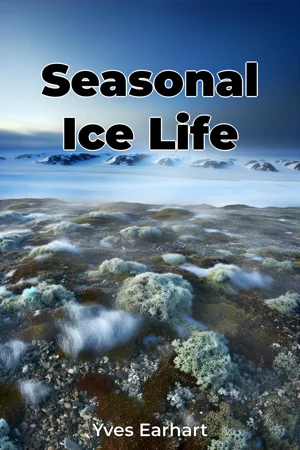
What does it take to survive in a world that freezes and thaws with the seasons? *Seasonal Ice Life* delves into the hidden mechanisms that enable organisms to endure—and thrive—in environments dominated by cyclical freezing. From Arctic tundras to high-altitude lakes, this book explores the biological innovations that have evolved over millennia, offering insights into resilience in the face of Earth’s changing climate. The book centers on three key themes: the physiological adaptations of freeze-tolerant species, the genetic and evolutionary strategies underlying these traits, and the ecological implications of ice-dominated ecosystems. These topics are critical for understanding how life persists in extreme conditions and what these survival strategies might teach us about biodiversity conservation in an era of rapid environmental change. Cyclical freezing environments present unique challenges. Unlike permanently frozen regions, seasonal ice zones force organisms to repeatedly withstand freezing temperatures, thawing, and rehydration. The book begins by contextualizing these habitats within Earth’s biogeographic history, explaining how glacial cycles and climatic shifts have shaped the evolution of cold-adapted species. It introduces foundational concepts such as cryoprotectants (molecules that prevent cellular damage) and metabolic dormancy, ensuring readers grasp the baseline science before diving into complex case studies. At its core, *Seasonal Ice Life* argues that the survival strategies of freeze-adapted organisms are not mere curiosities but vital models for understanding biological resilience. The book posits that studying these species can inform broader ecological principles, from adaptation rates to ecosystem stability, particularly as climate change alters freeze-thaw patterns globally. Structured into three sections, the book first details the physiological tools organisms use to combat ice formation, such as antifreeze proteins in Arctic fish or glycerol production in overwintering insects. The second section traces the genetic pathways and evolutionary pressures that favor these traits, comparing convergent adaptations across diverse taxa. The final chapters examine the cascading effects of warming temperatures on ice-dependent ecosystems, linking microbial communities in permafrost to macro-scale shifts in species distributions. Evidence is drawn from field studies, laboratory experiments, and genomic analyses. For example, the book highlights research on wood frogs (*Lithobates sylvaticus*), which survive winter by freezing up to 65% of their body water, and microbial communities in Siberian permafrost that remain metabolically active at subzero temperatures. Unique datasets, such as long-term ice-core records and cryoimaging techniques, provide visual and quantitative depth to these discussions. Interdisciplinary connections bridge climate science, biotechnology, and conservation biology. The book illustrates how freeze-tolerant bacteria inspire cryopreservation methods for medical applications, while ice-albedo feedback loops (a climate science concept) underscore the urgency of preserving polar ecosystems. These intersections reinforce the relevance of extremophile research beyond academic biology. *Seasonal Ice Life* distinguishes itself by focusing on cyclical, rather than constant, freezing—a dynamic often overlooked in extremophile literature. This lens reveals how organisms balance survival with periodic metabolic activity, offering a nuanced view of adaptation. The book also emphasizes community-level interactions, such as symbiosis between ice algae and zooplankton, challenging the notion of survival as a solitary endeavor. Written in a clear, narrative-driven style, the book balances technical detail with accessible explanations. It avoids excessive jargon, making it suitable for both scientific readers and environmentally engaged general audiences. Case studies are interwoven with historical anecdotes, such as early 20th-century expeditions that first documented freeze-tolerant species, grounding modern research in its human context. Targeted at biologists, students, and climate advocates, *Seasonal Ice Life* appeals to anyone interested in the intersection of evolution and environmental change. Its emphasis on real-world applications—such as bioinspired engineering or predicting ecosystem responses to thawing permafrost—ensures practical relevance. While the scope prioritizes terrestrial and freshwater ecosystems (excluding marine environments), this focus allows depth in analyzing temperate and polar regions. The book acknowledges limitations in predicting adaptive capacities under unprecedented warming rates but stresses the value of historical analogs. By confronting debates over assisted migration and genetic engineering as conservation tools, *Seasonal Ice Life* invites readers to grapple with ethical and ecological dilemmas. It does not shy from uncertainty, instead framing these challenges as catalysts for innovation. In synthesizing centuries of research with cutting-edge science, this book reframes seasonal ice not as a barrier to life but as a catalyst for some of nature’s most remarkable survival stories—stories that may hold keys to our planet’s ecological future.
What does it take to survive in a world that freezes and thaws with the seasons? *Seasonal Ice Life* delves into the hidden mechanisms that enable organisms to endure—and thrive—in environments dominated by cyclical freezing. From Arctic tundras to high-altitude lakes, this book explores the biological innovations that have evolved over millennia, offering insights into resilience in the face of Earth’s changing climate. The book centers on three key themes: the physiological adaptations of freeze-tolerant species, the genetic and evolutionary strategies underlying these traits, and the ecological implications of ice-dominated ecosystems. These topics are critical for understanding how life persists in extreme conditions and what these survival strategies might teach us about biodiversity conservation in an era of rapid environmental change. Cyclical freezing environments present unique challenges. Unlike permanently frozen regions, seasonal ice zones force organisms to repeatedly withstand freezing temperatures, thawing, and rehydration. The book begins by contextualizing these habitats within Earth’s biogeographic history, explaining how glacial cycles and climatic shifts have shaped the evolution of cold-adapted species. It introduces foundational concepts such as cryoprotectants (molecules that prevent cellular damage) and metabolic dormancy, ensuring readers grasp the baseline science before diving into complex case studies. At its core, *Seasonal Ice Life* argues that the survival strategies of freeze-adapted organisms are not mere curiosities but vital models for understanding biological resilience. The book posits that studying these species can inform broader ecological principles, from adaptation rates to ecosystem stability, particularly as climate change alters freeze-thaw patterns globally. Structured into three sections, the book first details the physiological tools organisms use to combat ice formation, such as antifreeze proteins in Arctic fish or glycerol production in overwintering insects. The second section traces the genetic pathways and evolutionary pressures that favor these traits, comparing convergent adaptations across diverse taxa. The final chapters examine the cascading effects of warming temperatures on ice-dependent ecosystems, linking microbial communities in permafrost to macro-scale shifts in species distributions. Evidence is drawn from field studies, laboratory experiments, and genomic analyses. For example, the book highlights research on wood frogs (*Lithobates sylvaticus*), which survive winter by freezing up to 65% of their body water, and microbial communities in Siberian permafrost that remain metabolically active at subzero temperatures. Unique datasets, such as long-term ice-core records and cryoimaging techniques, provide visual and quantitative depth to these discussions. Interdisciplinary connections bridge climate science, biotechnology, and conservation biology. The book illustrates how freeze-tolerant bacteria inspire cryopreservation methods for medical applications, while ice-albedo feedback loops (a climate science concept) underscore the urgency of preserving polar ecosystems. These intersections reinforce the relevance of extremophile research beyond academic biology. *Seasonal Ice Life* distinguishes itself by focusing on cyclical, rather than constant, freezing—a dynamic often overlooked in extremophile literature. This lens reveals how organisms balance survival with periodic metabolic activity, offering a nuanced view of adaptation. The book also emphasizes community-level interactions, such as symbiosis between ice algae and zooplankton, challenging the notion of survival as a solitary endeavor. Written in a clear, narrative-driven style, the book balances technical detail with accessible explanations. It avoids excessive jargon, making it suitable for both scientific readers and environmentally engaged general audiences. Case studies are interwoven with historical anecdotes, such as early 20th-century expeditions that first documented freeze-tolerant species, grounding modern research in its human context. Targeted at biologists, students, and climate advocates, *Seasonal Ice Life* appeals to anyone interested in the intersection of evolution and environmental change. Its emphasis on real-world applications—such as bioinspired engineering or predicting ecosystem responses to thawing permafrost—ensures practical relevance. While the scope prioritizes terrestrial and freshwater ecosystems (excluding marine environments), this focus allows depth in analyzing temperate and polar regions. The book acknowledges limitations in predicting adaptive capacities under unprecedented warming rates but stresses the value of historical analogs. By confronting debates over assisted migration and genetic engineering as conservation tools, *Seasonal Ice Life* invites readers to grapple with ethical and ecological dilemmas. It does not shy from uncertainty, instead framing these challenges as catalysts for innovation. In synthesizing centuries of research with cutting-edge science, this book reframes seasonal ice not as a barrier to life but as a catalyst for some of nature’s most remarkable survival stories—stories that may hold keys to our planet’s ecological future.
"Seasonal Ice Life" explores how life survives—and flourishes—in ecosystems dominated by cyclical freezing, from Arctic tundras to high-altitude lakes. Centered on biological resilience, the book reveals how organisms like wood frogs (which freeze 65% of their body water) and permafrost microbes defy extreme conditions using cryoprotectants, antifreeze proteins, and metabolic dormancy. These adaptations, honed over millennia, offer urgent lessons for biodiversity conservation as climate change disrupts freeze-thaw patterns. By linking physiological marvels to ecological stability, the book positions seasonal ice zones as critical models for understanding survival in a warming world. Structured into three sections, the text first unpacks physical adaptations, then traces their genetic origins, and finally examines climate impacts on ice-dependent ecosystems. Case studies, like symbiotic ice algae sustaining Arctic food webs, highlight communal survival strategies often overlooked in extremophile research. The narrative weaves field studies, genomic analyses, and historical expeditions, avoiding jargon while explaining complex concepts—such as ice-albedo feedback loops—through relatable analogies. Unique in focusing on dynamic freeze-thaw cycles rather than permanent cold, the book bridges climate science, biotechnology, and conservation, revealing how freeze-tolerant bacteria inspire medical cryopreservation or how thawing permafrost threatens carbon stores. Written for both scientists and curious readers, it balances crisp scientific detail with human stories, urging pragmatic action through its exploration of ethical dilemmas like assisted migration. "Seasonal Ice Life" reframes ice not as a barrier but as a catalyst for evolutionary ingenuity—and a beacon for navigating ecological uncertainty.
Book Details
ISBN
9788233954116
Publisher
Publifye AS
Your Licenses
You don't own any licenses for this book
Purchase a license below to unlock this book and download the EPUB.
Purchase License
Select a tier to unlock this book
Need bulk licensing?
Contact us for enterprise agreements.