
About This Book
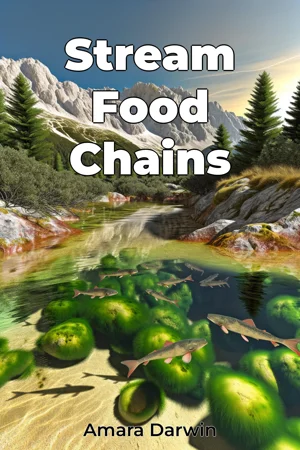
Beneath the rush of icy water and the glint of sunlight on rocky currents, mountain streams harbor a hidden world of interconnected life. How does energy—the currency of survival—flow from algae-covered stones to the talons of ospreys soaring overhead? *Stream Food Chains: Energy Dynamics in Mountain Ecosystems* unravels this intricate web, offering a meticulous exploration of how these fragile yet resilient systems sustain life across gradients of elevation, temperature, and human influence. The book anchors its analysis in three pivotal themes: the structure of stream food chains, the efficiency of energy transfer between trophic levels, and the cascading impacts of environmental disruption. These topics are not merely academic; they illuminate the vulnerability of mountain streams to climate change, pollution, and habitat fragmentation, making their study urgent for conservationists, policymakers, and anyone invested in freshwater ecosystems. To contextualize its findings, the text begins with foundational principles of aquatic ecology, tracing the historical development of stream ecosystem studies. Early chapters revisit the River Continuum Concept, which describes how stream physical characteristics shape biological communities from headwaters to lowlands. However, mountain streams present unique challenges: steep gradients, fluctuating temperatures, and seasonal snowmelt create microhabitats where species adapt to survive relentless currents and nutrient scarcity. The book argues that energy flow in these ecosystems is not a linear cascade but a dynamic network shaped by both biotic interactions (e.g., predation, competition) and abiotic forces like sediment load and dissolved oxygen. Structured across twelve chapters, the work opens with an introduction to primary producers—diatoms, algae, and detritus—that form the base of mountain stream food webs. Subsequent sections detail the roles of macroinvertebrates (mayflies, stoneflies) as keystone species, bridging energy from organic matter to fish, amphibians, and avian predators. A dedicated chapter analyzes energy loss at each trophic level, revealing why trout populations may dwindle even when algal biomass appears abundant. The final third of the book shifts to anthropogenic impacts, examining case studies from the Rockies, Himalayas, and Andes to illustrate how dams, agriculture, and warming temperatures destabilize these networks. Empirical evidence underpins every claim. The authors synthesize decades of field research, including stable isotope analyses tracing carbon pathways and long-term datasets on macroinvertebrate diversity. Notably, the book highlights innovative methodologies, such as using drone technology to map thermal refuges for cold-water species. These findings are paired with comparative studies from pristine versus disturbed streams, underscoring the fragility of energy pathways. Interdisciplinary insights strengthen the narrative. Hydrological models clarify how sediment transport alters primary production, while climate science projections contextualize future threats to streamflow regimes. Additionally, the book bridges ecology and policy, advocating for “process-based conservation” that prioritizes not just species protection but the maintenance of energy flow itself. This holistic approach distinguishes the work from narrower ecological analyses. Written in a precise yet engaging style, *Stream Food Chains* balances technical rigor with accessibility. Complex concepts like trophic cascades are explained through vivid examples, such as the decline of Pacific salmon affecting bear populations and riparian vegetation. While the primary audience includes ecology students and environmental professionals, the text’s clarity extends its appeal to informed lay readers. The book intentionally limits its scope to temperate mountain streams, acknowledging that tropical systems and lowland rivers demand separate consideration. Nevertheless, its framework for analyzing energy dynamics offers a template applicable to other ecosystems. Practical applications are emphasized throughout: final chapters propose habitat restoration techniques, such as rewilding buffer zones and designing fish-friendly culverts, while critiquing outdated policies focused solely on water quality metrics. Debates within the field are not ignored. The text examines ongoing disputes, such as whether top-down (predator-driven) or bottom-up (resource-driven) controls dominate in high-elevation streams, presenting evidence for both viewpoints. Similarly, it addresses controversies around reintroducing apex predators like otters, weighing ecological benefits against conflicts with local communities. By demystifying the invisible threads that bind mountain streams, *Stream Food Chains* equips readers to advocate for ecosystems where energy flow is as critical as water itself. It is a call to recognize that the health of these streams—and the life they sustain—depends on understanding the delicate balance between nature’s forces and human intervention.
Beneath the rush of icy water and the glint of sunlight on rocky currents, mountain streams harbor a hidden world of interconnected life. How does energy—the currency of survival—flow from algae-covered stones to the talons of ospreys soaring overhead? *Stream Food Chains: Energy Dynamics in Mountain Ecosystems* unravels this intricate web, offering a meticulous exploration of how these fragile yet resilient systems sustain life across gradients of elevation, temperature, and human influence. The book anchors its analysis in three pivotal themes: the structure of stream food chains, the efficiency of energy transfer between trophic levels, and the cascading impacts of environmental disruption. These topics are not merely academic; they illuminate the vulnerability of mountain streams to climate change, pollution, and habitat fragmentation, making their study urgent for conservationists, policymakers, and anyone invested in freshwater ecosystems. To contextualize its findings, the text begins with foundational principles of aquatic ecology, tracing the historical development of stream ecosystem studies. Early chapters revisit the River Continuum Concept, which describes how stream physical characteristics shape biological communities from headwaters to lowlands. However, mountain streams present unique challenges: steep gradients, fluctuating temperatures, and seasonal snowmelt create microhabitats where species adapt to survive relentless currents and nutrient scarcity. The book argues that energy flow in these ecosystems is not a linear cascade but a dynamic network shaped by both biotic interactions (e.g., predation, competition) and abiotic forces like sediment load and dissolved oxygen. Structured across twelve chapters, the work opens with an introduction to primary producers—diatoms, algae, and detritus—that form the base of mountain stream food webs. Subsequent sections detail the roles of macroinvertebrates (mayflies, stoneflies) as keystone species, bridging energy from organic matter to fish, amphibians, and avian predators. A dedicated chapter analyzes energy loss at each trophic level, revealing why trout populations may dwindle even when algal biomass appears abundant. The final third of the book shifts to anthropogenic impacts, examining case studies from the Rockies, Himalayas, and Andes to illustrate how dams, agriculture, and warming temperatures destabilize these networks. Empirical evidence underpins every claim. The authors synthesize decades of field research, including stable isotope analyses tracing carbon pathways and long-term datasets on macroinvertebrate diversity. Notably, the book highlights innovative methodologies, such as using drone technology to map thermal refuges for cold-water species. These findings are paired with comparative studies from pristine versus disturbed streams, underscoring the fragility of energy pathways. Interdisciplinary insights strengthen the narrative. Hydrological models clarify how sediment transport alters primary production, while climate science projections contextualize future threats to streamflow regimes. Additionally, the book bridges ecology and policy, advocating for “process-based conservation” that prioritizes not just species protection but the maintenance of energy flow itself. This holistic approach distinguishes the work from narrower ecological analyses. Written in a precise yet engaging style, *Stream Food Chains* balances technical rigor with accessibility. Complex concepts like trophic cascades are explained through vivid examples, such as the decline of Pacific salmon affecting bear populations and riparian vegetation. While the primary audience includes ecology students and environmental professionals, the text’s clarity extends its appeal to informed lay readers. The book intentionally limits its scope to temperate mountain streams, acknowledging that tropical systems and lowland rivers demand separate consideration. Nevertheless, its framework for analyzing energy dynamics offers a template applicable to other ecosystems. Practical applications are emphasized throughout: final chapters propose habitat restoration techniques, such as rewilding buffer zones and designing fish-friendly culverts, while critiquing outdated policies focused solely on water quality metrics. Debates within the field are not ignored. The text examines ongoing disputes, such as whether top-down (predator-driven) or bottom-up (resource-driven) controls dominate in high-elevation streams, presenting evidence for both viewpoints. Similarly, it addresses controversies around reintroducing apex predators like otters, weighing ecological benefits against conflicts with local communities. By demystifying the invisible threads that bind mountain streams, *Stream Food Chains* equips readers to advocate for ecosystems where energy flow is as critical as water itself. It is a call to recognize that the health of these streams—and the life they sustain—depends on understanding the delicate balance between nature’s forces and human intervention.
"Stream Food Chains: Energy Dynamics in Mountain Ecosystems" uncovers the hidden relationships that sustain life in fast-flowing freshwater habitats, where energy flows from algae and microbes to predators like fish and ospreys. The book’s central theme—how mountain streams balance resilience and fragility—reveals why these ecosystems are vital yet vulnerable to climate change, pollution, and habitat fragmentation. By blending aquatic ecology with conservation urgency, it demonstrates how disruptions to energy dynamics ripple across trophic levels, threatening entire food webs. The book begins with foundational concepts, like the River Continuum Concept, then dives into the unique challenges of mountain streams: steep gradients, snowmelt-driven flows, and species adapted to nutrient-poor environments. Readers discover intriguing insights, such as why abundant algae doesn’t always sustain trout populations (energy loss at each trophic level acts like a “leaky pipe”) and how macroinvertebrates like mayflies serve as keystone energy brokers. Case studies from the Rockies to the Himalayas illustrate human impacts—dams fracture habitats, while warming temperatures erase cold-water refuges. The authors use stable isotope analyses and drone mapping to trace carbon pathways and quantify threats, grounding theory in decades of field research. What sets this work apart is its interdisciplinary lens, merging hydrology, climate science, and policy. It argues for “process-based conservation” that protects energy flow itself, not just species. Accessible explanations, like linking salmon declines to bear behavior and forest health, make complex ideas tangible. Structured across 12 chapters, the book progresses from ecological principles to solutions—rewilding buffer zones, redesigning infrastructure—offering a roadmap for safeguarding these critical ecosystems. For biologists, conservationists, and mountain enthusiasts alike, it’s a compelling call to protect streams where energy circulation is as essential as water.
Book Details
ISBN
9788233954086
Publisher
Publifye AS
Your Licenses
You don't own any licenses for this book
Purchase a license below to unlock this book and download the EPUB.
Purchase License
Select a tier to unlock this book
Need bulk licensing?
Contact us for enterprise agreements.