
About This Book
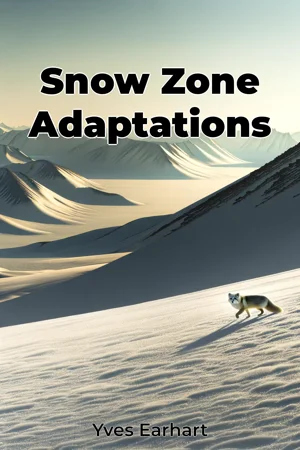
How do organisms not only endure but flourish in environments where winter never relents? *Snow Zone Adaptations* explores this paradox through a meticulous examination of life forms inhabiting Earth’s coldest, most inhospitable realms—glacial fields, alpine peaks, and polar tundras. This book synthesizes decades of biological research to reveal the intricate strategies enabling survival in perpetual snow, while contextualizing their significance in an era of rapid climate change. The book anchors its analysis in three core themes: physiological adaptations, behavioral strategies, and symbiotic relationships. These topics are explored through case studies spanning microbes, plants, and animals, illustrating how life persists where temperatures plummet and resources are scarce. Understanding these mechanisms is critical not only for appreciating biodiversity but also for predicting how ecosystems may respond to environmental shifts. Historically, scientific interest in cold-adapted organisms surged with the discovery of extremophiles—species thriving in conditions once deemed uninhabitable. *Snow Zone Adaptations* builds on this foundation, integrating modern genomic research with ecological fieldwork. Prior knowledge of basic ecology and evolutionary principles is helpful but not required, as the book carefully outlines concepts like cryoprotection, metabolic suppression, and niche specialization. Central to the text is the argument that survival in snow zones hinges on a dynamic interplay between genetic innovation and ecological collaboration. The book posits that these adaptations are not mere curiosities but vital blueprints for resilience, offering insights into species conservation and biotechnological breakthroughs. This thesis challenges the perception of frozen ecosystems as barren, instead recasting them as hubs of evolutionary ingenuity. Structured in three parts, the book first introduces the physical and chemical constraints of snow zones, from subzero temperatures to nutrient-poor substrates. Subsequent chapters dissect survival strategies: the role of antifreeze proteins in Arctic fish, hibernation tactics of mammals like the Arctic ground squirrel, and mutualistic relationships between lichens and their microbial partners. The final section addresses anthropogenic threats, analyzing how melting ice and habitat fragmentation jeopardize these finely tuned systems. Evidence is drawn from peer-reviewed studies, field observations, and laboratory experiments. Notable examples include microbial communities in Greenland’s ice sheets, which reshape glacier albedo, and tardigrades’ cryptobiosis, a reversible metabolic shutdown. The book also incorporates Indigenous knowledge, highlighting how Arctic peoples have documented and utilized cold-adapted species for millennia. Interdisciplinary connections underscore the relevance of snow zone biology. Climatology intersects with discussions on bio-albedo effects, where microbial blooms accelerate ice melt. Biotechnology applications feature enzymes derived from psychrophilic (cold-loving) bacteria, used in pharmaceuticals and food preservation. Astrobiological parallels are drawn to icy moons like Europa, where similar survival strategies might sustain extraterrestrial life. *Snow Zone Adaptations* distinguishes itself by merging macroscopic ecological patterns with molecular-level mechanisms. A chapter on “genetic plasticity” contrasts short-term acclimatization with long-term evolutionary shifts, using genomic data to trace adaptations in high-altitude flora. This dual-scale approach bridges traditional biology with cutting-edge systems theory. Written in a concise, narrative-driven style, the book balances scientific rigor with accessible prose. Technical terms are defined contextually, and vivid descriptions of fieldwork—such as drilling Antarctic ice cores—anchor abstract concepts in tangible experiences. Targeted at biology enthusiasts, students, and climate researchers, the book serves as both a reference and a call to action. Its findings are pertinent to conservationists developing strategies for at-risk species and policymakers evaluating ecosystem services in vulnerable regions. Adhering to conventions of scientific non-fiction, each chapter concludes with discussion questions and annotated references. The scope focuses on terrestrial and aquatic snow zones, deliberately excluding deep-sea hydrothermal vents or other extreme habitats to maintain thematic cohesion. Practical applications are emphasized throughout. Farmers in alpine regions, for instance, may apply insights on cold-resistant crops, while biotech firms explore cryoprotective compounds for organ transplantation. The book also addresses controversies, such as debates over “assisted evolution”—human intervention to enhance species’ climate resilience—weighing ethical implications against urgent conservation needs. By illuminating the hidden vitality of frozen landscapes, *Snow Zone Adaptations* redefines humanity’s relationship with the cold, urging readers to view these ecosystems not as wastelands but as archives of life’s tenacity—and as harbingers of our planet’s precarious future.
How do organisms not only endure but flourish in environments where winter never relents? *Snow Zone Adaptations* explores this paradox through a meticulous examination of life forms inhabiting Earth’s coldest, most inhospitable realms—glacial fields, alpine peaks, and polar tundras. This book synthesizes decades of biological research to reveal the intricate strategies enabling survival in perpetual snow, while contextualizing their significance in an era of rapid climate change. The book anchors its analysis in three core themes: physiological adaptations, behavioral strategies, and symbiotic relationships. These topics are explored through case studies spanning microbes, plants, and animals, illustrating how life persists where temperatures plummet and resources are scarce. Understanding these mechanisms is critical not only for appreciating biodiversity but also for predicting how ecosystems may respond to environmental shifts. Historically, scientific interest in cold-adapted organisms surged with the discovery of extremophiles—species thriving in conditions once deemed uninhabitable. *Snow Zone Adaptations* builds on this foundation, integrating modern genomic research with ecological fieldwork. Prior knowledge of basic ecology and evolutionary principles is helpful but not required, as the book carefully outlines concepts like cryoprotection, metabolic suppression, and niche specialization. Central to the text is the argument that survival in snow zones hinges on a dynamic interplay between genetic innovation and ecological collaboration. The book posits that these adaptations are not mere curiosities but vital blueprints for resilience, offering insights into species conservation and biotechnological breakthroughs. This thesis challenges the perception of frozen ecosystems as barren, instead recasting them as hubs of evolutionary ingenuity. Structured in three parts, the book first introduces the physical and chemical constraints of snow zones, from subzero temperatures to nutrient-poor substrates. Subsequent chapters dissect survival strategies: the role of antifreeze proteins in Arctic fish, hibernation tactics of mammals like the Arctic ground squirrel, and mutualistic relationships between lichens and their microbial partners. The final section addresses anthropogenic threats, analyzing how melting ice and habitat fragmentation jeopardize these finely tuned systems. Evidence is drawn from peer-reviewed studies, field observations, and laboratory experiments. Notable examples include microbial communities in Greenland’s ice sheets, which reshape glacier albedo, and tardigrades’ cryptobiosis, a reversible metabolic shutdown. The book also incorporates Indigenous knowledge, highlighting how Arctic peoples have documented and utilized cold-adapted species for millennia. Interdisciplinary connections underscore the relevance of snow zone biology. Climatology intersects with discussions on bio-albedo effects, where microbial blooms accelerate ice melt. Biotechnology applications feature enzymes derived from psychrophilic (cold-loving) bacteria, used in pharmaceuticals and food preservation. Astrobiological parallels are drawn to icy moons like Europa, where similar survival strategies might sustain extraterrestrial life. *Snow Zone Adaptations* distinguishes itself by merging macroscopic ecological patterns with molecular-level mechanisms. A chapter on “genetic plasticity” contrasts short-term acclimatization with long-term evolutionary shifts, using genomic data to trace adaptations in high-altitude flora. This dual-scale approach bridges traditional biology with cutting-edge systems theory. Written in a concise, narrative-driven style, the book balances scientific rigor with accessible prose. Technical terms are defined contextually, and vivid descriptions of fieldwork—such as drilling Antarctic ice cores—anchor abstract concepts in tangible experiences. Targeted at biology enthusiasts, students, and climate researchers, the book serves as both a reference and a call to action. Its findings are pertinent to conservationists developing strategies for at-risk species and policymakers evaluating ecosystem services in vulnerable regions. Adhering to conventions of scientific non-fiction, each chapter concludes with discussion questions and annotated references. The scope focuses on terrestrial and aquatic snow zones, deliberately excluding deep-sea hydrothermal vents or other extreme habitats to maintain thematic cohesion. Practical applications are emphasized throughout. Farmers in alpine regions, for instance, may apply insights on cold-resistant crops, while biotech firms explore cryoprotective compounds for organ transplantation. The book also addresses controversies, such as debates over “assisted evolution”—human intervention to enhance species’ climate resilience—weighing ethical implications against urgent conservation needs. By illuminating the hidden vitality of frozen landscapes, *Snow Zone Adaptations* redefines humanity’s relationship with the cold, urging readers to view these ecosystems not as wastelands but as archives of life’s tenacity—and as harbingers of our planet’s precarious future.
*Snow Zone Adaptations* unveils the astonishing survival strategies of life in Earth’s coldest ecosystems, from polar tundras to alpine peaks. The book’s central theme explores how organisms thrive in perpetual winter through physiological ingenuity, behavioral flexibility, and symbiotic partnerships. Readers encounter Arctic fish with antifreeze proteins that prevent ice formation in their blood, Arctic ground squirrels that suppress their metabolism during months-long hibernation, and lichens whose cooperative relationships with microbes allow them to colonize barren rock. These adaptations aren’t just biological curiosities—they’re lifelines in environments where temperatures plummet and resources vanish for most of the year. The book’s strength lies in bridging molecular mechanisms with ecological patterns. It progresses from explaining the harsh physics of snow zones to dissecting survival tactics across species, concluding with urgent insights on climate change threats. Case studies, like ice-albedo shifts caused by glacier-dwelling microbes or Indigenous knowledge of cold-adapted species, highlight the interplay between evolution and environment. Uniquely, it ties survival strategies to modern applications, such as biotechnology inspired by extremophile enzymes or conservation debates over “assisted evolution.” Written for both science enthusiasts and experts, the narrative blends fieldwork anecdotes with accessible explanations of concepts like cryoprotection and niche specialization, offering a compelling testament to life’s resilience in the planet’s most unforgiving realms.
Book Details
ISBN
9788233954062
Publisher
Publifye AS
Your Licenses
You don't own any licenses for this book
Purchase a license below to unlock this book and download the EPUB.
Purchase License
Select a tier to unlock this book
Need bulk licensing?
Contact us for enterprise agreements.