
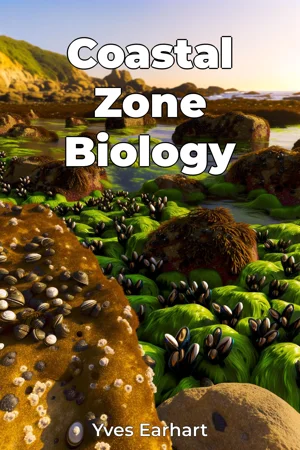
About This Book
**Opening Hook:** What enables life to thrive in the relentless clash of crashing waves, scorching sun, and shifting sands? *Coastal Zone Biology* plunges readers into the volatile world of intertidal ecosystems, where survival hinges on extraordinary biological ingenuity. **Main Topics & Significance:** The book explores three pillars: (1) physiological and behavioral adaptations of intertidal organisms, (2) ecological interdependencies shaping these communities, and (3) human impacts on coastal resilience. These topics illuminate how life persists in extreme environments and why safeguarding these zones is critical for biodiversity and climate mitigation. **Context & Background:** Intertidal zones—the narrow bands between land and sea—have fascinated scientists since early naturalists like Charles Darwin documented their biodiversity. Modern research integrates ecology, genetics, and climatology, yet gaps remain in understanding how these ecosystems withstand escalating anthropogenic stressors. The book assumes basic familiarity with ecological principles but clarifies specialized terms for broader accessibility. **Central Thesis:** Intertidal organisms are not merely survivors of harsh conditions; their adaptations offer blueprints for resilience in a rapidly changing planet. By decoding their strategies, we gain insights applicable to conservation, biotechnology, and climate adaptation. **Content Overview:** 1. **Foundations:** Introduces intertidal zonation, abiotic stressors (e.g., salinity, desiccation), and keystone species. 2. **Adaptation Mechanisms:** Examines molecular responses (e.g., heat-shock proteins in mussels), behavioral tactics (e.g., barnacle feeding rhythms), and morphological innovations (e.g., kelp holdfasts). 3. **Ecological Networks:** Analyzes predator-prey dynamics, symbiotic relationships, and nutrient cycling. 4. **Human Pressures:** Discusses pollution, habitat fragmentation, and ocean acidification, culminating in case studies on restoration efforts. 5. **Future Directions:** Proposes policy frameworks and community-led conservation models. **Evidence & Research:** The book synthesizes field experiments, genomic analyses, and long-term ecological monitoring. Unique datasets include thermal tolerance thresholds of gastropods and bioerosion rates under elevated CO₂. Citizen science initiatives, like tidepool biodiversity surveys, supplement traditional research. **Interdisciplinary Connections:** 1. **Climate Science:** Intertidal species serve as bioindicators for ocean warming. 2. **Biotechnology:** Enzyme adaptations in extremophiles inspire industrial applications. 3. **Anthropology:** Coastal Indigenous practices inform sustainable resource management. These intersections underscore the ecosystem’s relevance beyond marine biology. **Unique Approach:** The book bridges organismal biology and systems ecology, emphasizing scalability—lessons from a single rock pool apply to global biogeochemical cycles. It also highlights understudied tropical intertidal zones, challenging temperate-centric narratives. **Tone & Style:** Academic rigor is tempered with narrative flair, blending empirical data with vivid descriptions of ecosystems. Technical concepts are explained through analogies (e.g., comparing barnacle cement to industrial adhesives). **Target Audience:** Students and professionals in marine biology, environmental policymakers, and science enthusiasts will find value. Its applied focus appeals to conservation practitioners, while ecological storytelling engages general readers. **Genre-Specific Elements:** Aligning with science and environmental genres, the book prioritizes empirical evidence, cites peer-reviewed studies, and avoids speculative claims. Diagrams of adaptive traits and glossary sidebars enhance clarity. **Scope & Limitations:** Focus is restricted to macroorganisms (excluding microbes) and emphasizes temperate and tropical zones. Polar intertidal systems are acknowledged but not explored in depth. **Real-World Applications:** Readers gain tools to advocate for marine-protected areas, reduce coastal pollution, and participate in monitoring programs. Farmers and aquaculturists can apply insights on stress-resistant species. **Controversies & Debates:** The book addresses disputes over conservation prioritization (e.g., flagship species vs. ecosystem-wide approaches) and critiques technological interventions like artificial seawalls. It advocates for hybrid strategies blending traditional knowledge and innovation. *Coastal Zone Biology* reframes the shore as a living laboratory, where every tidepool holds secrets to adaptability. By unraveling these secrets, the book equips readers to confront ecological challenges with informed urgency.
**Opening Hook:** What enables life to thrive in the relentless clash of crashing waves, scorching sun, and shifting sands? *Coastal Zone Biology* plunges readers into the volatile world of intertidal ecosystems, where survival hinges on extraordinary biological ingenuity. **Main Topics & Significance:** The book explores three pillars: (1) physiological and behavioral adaptations of intertidal organisms, (2) ecological interdependencies shaping these communities, and (3) human impacts on coastal resilience. These topics illuminate how life persists in extreme environments and why safeguarding these zones is critical for biodiversity and climate mitigation. **Context & Background:** Intertidal zones—the narrow bands between land and sea—have fascinated scientists since early naturalists like Charles Darwin documented their biodiversity. Modern research integrates ecology, genetics, and climatology, yet gaps remain in understanding how these ecosystems withstand escalating anthropogenic stressors. The book assumes basic familiarity with ecological principles but clarifies specialized terms for broader accessibility. **Central Thesis:** Intertidal organisms are not merely survivors of harsh conditions; their adaptations offer blueprints for resilience in a rapidly changing planet. By decoding their strategies, we gain insights applicable to conservation, biotechnology, and climate adaptation. **Content Overview:** 1. **Foundations:** Introduces intertidal zonation, abiotic stressors (e.g., salinity, desiccation), and keystone species. 2. **Adaptation Mechanisms:** Examines molecular responses (e.g., heat-shock proteins in mussels), behavioral tactics (e.g., barnacle feeding rhythms), and morphological innovations (e.g., kelp holdfasts). 3. **Ecological Networks:** Analyzes predator-prey dynamics, symbiotic relationships, and nutrient cycling. 4. **Human Pressures:** Discusses pollution, habitat fragmentation, and ocean acidification, culminating in case studies on restoration efforts. 5. **Future Directions:** Proposes policy frameworks and community-led conservation models. **Evidence & Research:** The book synthesizes field experiments, genomic analyses, and long-term ecological monitoring. Unique datasets include thermal tolerance thresholds of gastropods and bioerosion rates under elevated CO₂. Citizen science initiatives, like tidepool biodiversity surveys, supplement traditional research. **Interdisciplinary Connections:** 1. **Climate Science:** Intertidal species serve as bioindicators for ocean warming. 2. **Biotechnology:** Enzyme adaptations in extremophiles inspire industrial applications. 3. **Anthropology:** Coastal Indigenous practices inform sustainable resource management. These intersections underscore the ecosystem’s relevance beyond marine biology. **Unique Approach:** The book bridges organismal biology and systems ecology, emphasizing scalability—lessons from a single rock pool apply to global biogeochemical cycles. It also highlights understudied tropical intertidal zones, challenging temperate-centric narratives. **Tone & Style:** Academic rigor is tempered with narrative flair, blending empirical data with vivid descriptions of ecosystems. Technical concepts are explained through analogies (e.g., comparing barnacle cement to industrial adhesives). **Target Audience:** Students and professionals in marine biology, environmental policymakers, and science enthusiasts will find value. Its applied focus appeals to conservation practitioners, while ecological storytelling engages general readers. **Genre-Specific Elements:** Aligning with science and environmental genres, the book prioritizes empirical evidence, cites peer-reviewed studies, and avoids speculative claims. Diagrams of adaptive traits and glossary sidebars enhance clarity. **Scope & Limitations:** Focus is restricted to macroorganisms (excluding microbes) and emphasizes temperate and tropical zones. Polar intertidal systems are acknowledged but not explored in depth. **Real-World Applications:** Readers gain tools to advocate for marine-protected areas, reduce coastal pollution, and participate in monitoring programs. Farmers and aquaculturists can apply insights on stress-resistant species. **Controversies & Debates:** The book addresses disputes over conservation prioritization (e.g., flagship species vs. ecosystem-wide approaches) and critiques technological interventions like artificial seawalls. It advocates for hybrid strategies blending traditional knowledge and innovation. *Coastal Zone Biology* reframes the shore as a living laboratory, where every tidepool holds secrets to adaptability. By unraveling these secrets, the book equips readers to confront ecological challenges with informed urgency.
"Coastal Zone Biology" unveils the dynamic world of intertidal ecosystems, where life thrives between land and sea amid pounding waves, shifting temperatures, and human pressures. Centered on the resilience of coastal organisms, the book reveals how species like mussels and barnacles employ astonishing adaptations—such as heat-shock proteins to withstand scorching heat or rock-gripping cement stronger than industrial adhesives. These survival strategies, honed over millennia, are framed as blueprints for addressing modern climate challenges. The text underscores ecological interdependencies, illustrating how predator-prey balances and symbiotic relationships sustain biodiversity, while human impacts like pollution and ocean acidification threaten these fragile networks. Structured to guide readers from tidal pool intricacies to global implications, the book progresses through five clear stages. It begins with foundational concepts like zonation and keystone species, then dives into molecular and behavioral adaptations. Later chapters dissect human-driven disruptions and showcase restoration case studies, blending field research, genomics, and Indigenous knowledge. Unique in its focus on understudied tropical zones, the book challenges temperate-centric views and bridges organismal biology with systems ecology. Its accessible tone demystifies complex ideas—comparing barnacle feeding rhythms to clockwork, for instance—while advocating for hybrid conservation strategies that merge policy, technology, and community action. By framing the shore as a living laboratory, "Coastal Zone Biology" equips scientists, policymakers, and enthusiasts with insights to protect these vital ecosystems. Its fusion of rigorous science, vivid storytelling, and practical tools makes it a standout resource for understanding coastal resilience in an era of rapid change.
Book Details
ISBN
9788233953997
Publisher
Publifye AS
Your Licenses
You don't own any licenses for this book
Purchase a license below to unlock this book and download the EPUB.
Purchase License
Select a tier to unlock this book
Need bulk licensing?
Contact us for enterprise agreements.