
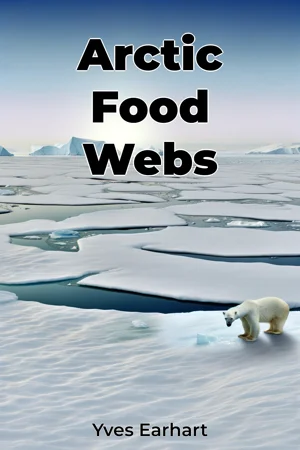
About This Book
**Title:** *Arctic Food Webs: Dynamics of Survival in a Changing Ecosystem* **Opening Hook:** What enables life to flourish in the Arctic, where temperatures plunge below freezing and sunlight vanishes for months? This book unravels the hidden mechanisms of one of Earth’s most extreme ecosystems, revealing how intricate relationships among species sustain life—and how these systems now face unprecedented disruption. **Main Topics and Significance:** The book examines three core themes: the role of keystone species like polar bears and Arctic cod, the efficiency of energy transfer across trophic levels, and the cascading impacts of climate change. These topics are critical for understanding how Arctic ecosystems maintain stability, why minor disruptions can trigger widespread consequences, and what these shifts mean for global biodiversity and human communities reliant on polar resources. **Context and Background:** The Arctic, often misperceived as a barren icescape, hosts complex food webs that have evolved over millennia. Historically, indigenous communities recognized these interdependencies, while early Western science underestimated their complexity. Modern ecology now reveals a tightly networked system where plankton, fish, seals, and predators coexist in a delicate balance. The book assumes basic familiarity with ecological terms like “trophic levels” but clarifies concepts through real-world examples. **Central Argument:** Arctic food webs are both resilient and fragile—their specialized adaptations enable survival in extreme conditions, but their reliance on precise energy pathways makes them vulnerable to human-driven climate shifts. Understanding these dynamics is not just academically significant but urgent for shaping effective conservation policies. **Content Overview:** 1. **Introduction:** Defines food webs, energy pyramids, and the Arctic’s unique abiotic factors. 2. **Keystone Species:** Explores how predators and foundational species (e.g., ice algae) structure the ecosystem. 3. **Energy Transfer:** Analyzes why Arctic energy efficiency is lower than in temperate systems, impacting species survival. 4. **Human Impacts:** Links melting sea ice, pollutant bioaccumulation, and overfishing to trophic collapses. 5. **Conservation Synthesis:** Proposes strategies integrating science, policy, and indigenous knowledge to mitigate damage. **Evidence and Research:** The book synthesizes field studies on species behavior, satellite data tracking ice loss, and isotopic analyses of energy flow. Unique datasets include decades-long ecological monitoring by the Arctic Council and oral histories from Inuit communities documenting shifting migration patterns. Climate models project future scenarios, emphasizing tipping points like phytoplankton bloom disruptions. **Interdisciplinary Connections:** 1. **Climate Science:** Correlates rising temperatures with altered predator-prey cycles. 2. **Sociology:** Highlights indigenous stewardship practices as models for sustainable resource use. 3. **Economics:** Evaluates the cost of biodiversity loss versus short-term gains from Arctic drilling. These intersections underscore that preserving the Arctic requires collaboration across disciplines. **Unique Approach:** The book merges quantitative ecological models with qualitative indigenous knowledge, offering a holistic view often absent in Western science. It also applies network theory to map species interactions, identifying “weak links” whose loss could destabilize entire webs. **Tone and Style:** Written in clear, jargon-free prose, the book balances academic rigor with narrative case studies. Technical concepts are illustrated through examples, such as how a single disrupted seal population affects Inuit hunting traditions. **Target Audience:** Environmental scientists, students, policymakers, and readers interested in climate change will find this book actionable. It provides researchers with frameworks for studying ecosystems, offers policymakers evidence for regulation, and empowers citizens to advocate for preservation. **Genre-Specific Elements:** As a science and environment text, the book prioritizes empirical data, peer-reviewed studies, and reproducible methodologies. Diagrams of food webs, graphs of temperature trends, and maps of species ranges align with reader expectations for fact-based analysis. **Scope and Limitations:** Focusing on marine and terrestrial systems, the book briefly addresses freshwater ecosystems. Geographically centered on the circumpolar Arctic, it acknowledges parallels to Antarctic systems but avoids direct comparisons to maintain depth. **Real-World Applications:** Readers will learn to interpret ecological indicators (e.g., sea ice thickness) as signs of ecosystem health, advocate for policies limiting overfishing, and support community-led conservation initiatives. Strategies like reducing carbon footprints are tied directly to Arctic outcomes. **Controversies and Debates:** The book addresses disagreements over prioritizing conservation funding—should efforts target charismatic species like polar bears or foundational plankton? It also examines tensions between economic development (e.g., shipping routes) and habitat protection, presenting data without endorsing specific solutions. **Conclusion:** *Arctic Food Webs* reframes the Arctic as a dynamic, interconnected system where microscopic and macroscopic life jointly dictate survival. By dissecting its delicate energy pathways, the book equips readers to grasp the urgency of preservation and the tools needed to act.
**Title:** *Arctic Food Webs: Dynamics of Survival in a Changing Ecosystem* **Opening Hook:** What enables life to flourish in the Arctic, where temperatures plunge below freezing and sunlight vanishes for months? This book unravels the hidden mechanisms of one of Earth’s most extreme ecosystems, revealing how intricate relationships among species sustain life—and how these systems now face unprecedented disruption. **Main Topics and Significance:** The book examines three core themes: the role of keystone species like polar bears and Arctic cod, the efficiency of energy transfer across trophic levels, and the cascading impacts of climate change. These topics are critical for understanding how Arctic ecosystems maintain stability, why minor disruptions can trigger widespread consequences, and what these shifts mean for global biodiversity and human communities reliant on polar resources. **Context and Background:** The Arctic, often misperceived as a barren icescape, hosts complex food webs that have evolved over millennia. Historically, indigenous communities recognized these interdependencies, while early Western science underestimated their complexity. Modern ecology now reveals a tightly networked system where plankton, fish, seals, and predators coexist in a delicate balance. The book assumes basic familiarity with ecological terms like “trophic levels” but clarifies concepts through real-world examples. **Central Argument:** Arctic food webs are both resilient and fragile—their specialized adaptations enable survival in extreme conditions, but their reliance on precise energy pathways makes them vulnerable to human-driven climate shifts. Understanding these dynamics is not just academically significant but urgent for shaping effective conservation policies. **Content Overview:** 1. **Introduction:** Defines food webs, energy pyramids, and the Arctic’s unique abiotic factors. 2. **Keystone Species:** Explores how predators and foundational species (e.g., ice algae) structure the ecosystem. 3. **Energy Transfer:** Analyzes why Arctic energy efficiency is lower than in temperate systems, impacting species survival. 4. **Human Impacts:** Links melting sea ice, pollutant bioaccumulation, and overfishing to trophic collapses. 5. **Conservation Synthesis:** Proposes strategies integrating science, policy, and indigenous knowledge to mitigate damage. **Evidence and Research:** The book synthesizes field studies on species behavior, satellite data tracking ice loss, and isotopic analyses of energy flow. Unique datasets include decades-long ecological monitoring by the Arctic Council and oral histories from Inuit communities documenting shifting migration patterns. Climate models project future scenarios, emphasizing tipping points like phytoplankton bloom disruptions. **Interdisciplinary Connections:** 1. **Climate Science:** Correlates rising temperatures with altered predator-prey cycles. 2. **Sociology:** Highlights indigenous stewardship practices as models for sustainable resource use. 3. **Economics:** Evaluates the cost of biodiversity loss versus short-term gains from Arctic drilling. These intersections underscore that preserving the Arctic requires collaboration across disciplines. **Unique Approach:** The book merges quantitative ecological models with qualitative indigenous knowledge, offering a holistic view often absent in Western science. It also applies network theory to map species interactions, identifying “weak links” whose loss could destabilize entire webs. **Tone and Style:** Written in clear, jargon-free prose, the book balances academic rigor with narrative case studies. Technical concepts are illustrated through examples, such as how a single disrupted seal population affects Inuit hunting traditions. **Target Audience:** Environmental scientists, students, policymakers, and readers interested in climate change will find this book actionable. It provides researchers with frameworks for studying ecosystems, offers policymakers evidence for regulation, and empowers citizens to advocate for preservation. **Genre-Specific Elements:** As a science and environment text, the book prioritizes empirical data, peer-reviewed studies, and reproducible methodologies. Diagrams of food webs, graphs of temperature trends, and maps of species ranges align with reader expectations for fact-based analysis. **Scope and Limitations:** Focusing on marine and terrestrial systems, the book briefly addresses freshwater ecosystems. Geographically centered on the circumpolar Arctic, it acknowledges parallels to Antarctic systems but avoids direct comparisons to maintain depth. **Real-World Applications:** Readers will learn to interpret ecological indicators (e.g., sea ice thickness) as signs of ecosystem health, advocate for policies limiting overfishing, and support community-led conservation initiatives. Strategies like reducing carbon footprints are tied directly to Arctic outcomes. **Controversies and Debates:** The book addresses disagreements over prioritizing conservation funding—should efforts target charismatic species like polar bears or foundational plankton? It also examines tensions between economic development (e.g., shipping routes) and habitat protection, presenting data without endorsing specific solutions. **Conclusion:** *Arctic Food Webs* reframes the Arctic as a dynamic, interconnected system where microscopic and macroscopic life jointly dictate survival. By dissecting its delicate energy pathways, the book equips readers to grasp the urgency of preservation and the tools needed to act.
*Arctic Food Webs: Dynamics of Survival in a Changing Ecosystem* explores how life thrives in Earth’s harshest environment—and why this intricate balance is unraveling. Centered on the fragile yet resilient connections between species, the book reveals how keystone players like polar bears and Arctic cod shape the ecosystem. Polar bears, for instance, aren’t just apex predators; their movements distribute nutrients across vast icescapes, while tiny Arctic cod act as linchpins, channeling energy from plankton to seals and whales. Yet climate-driven sea ice loss disrupts these relationships, threatening cascading collapses. The book underscores a paradox: Arctic food webs evolved to endure extreme cold but rely on precise energy transfers, making them acutely sensitive to modern disruptions. Blending ecological models with Indigenous knowledge, the authors map how shifts in species behavior ripple through trophic levels. One striking insight: melting ice doesn’t just shrink habitats—it alters the timing of phytoplankton blooms, starving fish populations that entire food webs depend on. The book progresses from foundational concepts to urgent conservation strategies, using network theory to identify critical “weak links” like sea ice algae. Case studies illustrate how Inuit observations complement satellite data, offering a holistic view often missing in Western science. Accessible yet rigorous, *Arctic Food Webs* bridges disciplines, showing why saving this ecosystem demands both cutting-edge science and time-tested stewardship. It equips readers to grasp the stakes of biodiversity loss and the tools to address it, from policy to grassroots action.
Book Details
ISBN
9788233953973
Publisher
Publifye AS
Your Licenses
You don't own any licenses for this book
Purchase a license below to unlock this book and download the EPUB.
Purchase License
Select a tier to unlock this book
Need bulk licensing?
Contact us for enterprise agreements.