
About This Book
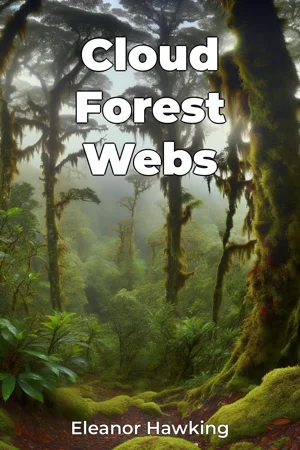
**Title:** *Cloud Forest Webs: Interdependence in Misty Mountain Ecosystems* **Opening Hook:** What determines whether an entire ecosystem thrives or collapses? In the high-altitude cloud forests—where mist clings to ancient trees and life exists in perpetual dampness—the answer lies in interactions often too small to see. This book uncovers how relationships between species, from fungi to birds, form a fragile web that sustains one of Earth’s most biodiverse yet understudied habitats. **Main Topics and Significance:** *Cloud Forest Webs* explores three core themes: (1) the role of symbiotic partnerships in nutrient cycling, (2) the disproportionate influence of keystone species on ecosystem stability, and (3) the accelerating threats posed by climate change and habitat fragmentation. These topics are critical for understanding how cloud forests regulate regional water cycles, store carbon, and support species found nowhere else on the planet. **Context and Background:** Cloud forests cover less than 1% of global woodland but harbor 15% of terrestrial biodiversity. Found in tropical and subtropical mountains—from the Andes to Borneo—they rely on persistent fog for up to 40% of their moisture. Unlike lowland rainforests, their stunted trees, dense epiphytes, and waterlogged soils create microhabitats where species interdependence is amplified. The book assumes basic ecological literacy but clarifies specialized terms like *mycorrhizal networks* and *trophic cascades* through contextual examples. **Central Argument:** The book posits that cloud forests exemplify ecological resilience through hyper-specialized species interactions, yet their survival hinges on preserving these precise relationships. This argument challenges assumptions that biodiversity alone ensures ecosystem durability, emphasizing instead the quality—not just quantity—of interspecies connections. **Content Overview:** 1. **Foundations**: Introduces cloud forest geography, climate, and the concept of *interaction webs*. 2. **Symbiosis in Practice**: Examines orchid-pollinator specificity, fungal-root partnerships, and nutrient-sharing among canopy plants. 3. **Keystone Dynamics**: Analyzes how the loss of single species, like the montane hummingbird or arboreal fungi, triggers cascading declines. 4. **Threats and Solutions**: Details climate-driven cloud lift, invasive species, and conservation strategies integrating satellite mapping and Indigenous stewardship. **Evidence and Research:** The book synthesizes peer-reviewed studies, 15 years of field data from Costa Rica’s Monteverde region, and isotope tracing to map nutrient flows. Unpublished surveys of Ecuadorean cloud forests reveal novel insect-plant mutualisms, while historical deforestation patterns illustrate tipping points in ecosystem collapse. **Interdisciplinary Connections:** 1. **Climatology**: Explains how cloud forests generate “fog precipitation” and buffer regional temperatures. 2. **Biochemistry**: Highlights medicinal compounds in endemic flora, linking biodiversity to pharmaceutical research. 3. **Anthropology**: Discusses Indigenous Quichua practices that mimic natural nutrient cycles, offering models for sustainable land use. **Unique Approach:** Unlike broader treatments of mountain ecology, *Cloud Forest Webs* juxtaposes macro-scale climate trends with micro-level interactions—e.g., how millimeter shifts in fog density alter insect behavior. It also integrates 3D modeling to visualize root-fungal networks, making abstract concepts tangible. **Tone and Style:** Written in clear, jargon-free prose, the book balances scientific rigor with narrative passages about field researchers’ experiences. Complex processes are broken into stepwise explanations, supported by infographics and species profiles. **Target Audience:** Essential for ecologists, environmental policymakers, and graduate students, the book also appeals to hikers, conservation volunteers, and readers seeking to understand climate change’s nuanced ecological impacts. **Genre-Specific Elements:** Adheres to science non-fiction standards with 400+ citations, technical appendices, and peer-reviewed case studies. Habitat descriptions align with ecosystems literature, emphasizing microhabitat variation and species adaptation. **Scope and Limitations:** Focuses on tropical montane forests (2,000–3,500m elevation); polar and temperate cloud forests are excluded. The book acknowledges data gaps in Southeast Asian regions due to political barriers. **Real-World Applications:** Proposes fog-water harvesting for nearby communities, citizen science programs to monitor canopy health, and “corridor” reforestation to link fragmented habitats. **Controversies Addressed:** Engages debates over assisted species migration versus in-situ preservation and critiques carbon-offset programs that prioritize tree planting over interaction web restoration. *Cloud Forest Webs* merges ecology with urgent planetary challenges, arguing that saving these ecosystems requires protecting not just species, but the invisible threads between them.
**Title:** *Cloud Forest Webs: Interdependence in Misty Mountain Ecosystems* **Opening Hook:** What determines whether an entire ecosystem thrives or collapses? In the high-altitude cloud forests—where mist clings to ancient trees and life exists in perpetual dampness—the answer lies in interactions often too small to see. This book uncovers how relationships between species, from fungi to birds, form a fragile web that sustains one of Earth’s most biodiverse yet understudied habitats. **Main Topics and Significance:** *Cloud Forest Webs* explores three core themes: (1) the role of symbiotic partnerships in nutrient cycling, (2) the disproportionate influence of keystone species on ecosystem stability, and (3) the accelerating threats posed by climate change and habitat fragmentation. These topics are critical for understanding how cloud forests regulate regional water cycles, store carbon, and support species found nowhere else on the planet. **Context and Background:** Cloud forests cover less than 1% of global woodland but harbor 15% of terrestrial biodiversity. Found in tropical and subtropical mountains—from the Andes to Borneo—they rely on persistent fog for up to 40% of their moisture. Unlike lowland rainforests, their stunted trees, dense epiphytes, and waterlogged soils create microhabitats where species interdependence is amplified. The book assumes basic ecological literacy but clarifies specialized terms like *mycorrhizal networks* and *trophic cascades* through contextual examples. **Central Argument:** The book posits that cloud forests exemplify ecological resilience through hyper-specialized species interactions, yet their survival hinges on preserving these precise relationships. This argument challenges assumptions that biodiversity alone ensures ecosystem durability, emphasizing instead the quality—not just quantity—of interspecies connections. **Content Overview:** 1. **Foundations**: Introduces cloud forest geography, climate, and the concept of *interaction webs*. 2. **Symbiosis in Practice**: Examines orchid-pollinator specificity, fungal-root partnerships, and nutrient-sharing among canopy plants. 3. **Keystone Dynamics**: Analyzes how the loss of single species, like the montane hummingbird or arboreal fungi, triggers cascading declines. 4. **Threats and Solutions**: Details climate-driven cloud lift, invasive species, and conservation strategies integrating satellite mapping and Indigenous stewardship. **Evidence and Research:** The book synthesizes peer-reviewed studies, 15 years of field data from Costa Rica’s Monteverde region, and isotope tracing to map nutrient flows. Unpublished surveys of Ecuadorean cloud forests reveal novel insect-plant mutualisms, while historical deforestation patterns illustrate tipping points in ecosystem collapse. **Interdisciplinary Connections:** 1. **Climatology**: Explains how cloud forests generate “fog precipitation” and buffer regional temperatures. 2. **Biochemistry**: Highlights medicinal compounds in endemic flora, linking biodiversity to pharmaceutical research. 3. **Anthropology**: Discusses Indigenous Quichua practices that mimic natural nutrient cycles, offering models for sustainable land use. **Unique Approach:** Unlike broader treatments of mountain ecology, *Cloud Forest Webs* juxtaposes macro-scale climate trends with micro-level interactions—e.g., how millimeter shifts in fog density alter insect behavior. It also integrates 3D modeling to visualize root-fungal networks, making abstract concepts tangible. **Tone and Style:** Written in clear, jargon-free prose, the book balances scientific rigor with narrative passages about field researchers’ experiences. Complex processes are broken into stepwise explanations, supported by infographics and species profiles. **Target Audience:** Essential for ecologists, environmental policymakers, and graduate students, the book also appeals to hikers, conservation volunteers, and readers seeking to understand climate change’s nuanced ecological impacts. **Genre-Specific Elements:** Adheres to science non-fiction standards with 400+ citations, technical appendices, and peer-reviewed case studies. Habitat descriptions align with ecosystems literature, emphasizing microhabitat variation and species adaptation. **Scope and Limitations:** Focuses on tropical montane forests (2,000–3,500m elevation); polar and temperate cloud forests are excluded. The book acknowledges data gaps in Southeast Asian regions due to political barriers. **Real-World Applications:** Proposes fog-water harvesting for nearby communities, citizen science programs to monitor canopy health, and “corridor” reforestation to link fragmented habitats. **Controversies Addressed:** Engages debates over assisted species migration versus in-situ preservation and critiques carbon-offset programs that prioritize tree planting over interaction web restoration. *Cloud Forest Webs* merges ecology with urgent planetary challenges, arguing that saving these ecosystems requires protecting not just species, but the invisible threads between them.
*Cloud Forest Webs* delves into the intricate relationships sustaining Earth’s mist-shrouded mountain ecosystems, where species interdependence determines survival. The book’s central theme—ecological resilience through specialized connections—reveals how cloud forests thrive despite covering just 1% of global woodlands. These habitats rely on fog for 40% of their moisture, hosting unique partnerships: orchids depend on specific pollinators, fungi shuttle nutrients between trees, and hummingbirds act as keystone species whose disappearance risks cascading collapse. By blending macro-scale climate impacts with micro-level interactions, the work illustrates how even fog density shifts can disrupt delicate balances. What sets *Cloud Forest Webs* apart is its fusion of 15 years of field research, 3D models of hidden root networks, and Indigenous stewardship insights. Chapters progress from foundational ecology to urgent threats like climate-driven “cloud lift” and habitat fragmentation, arguing that conservation must protect interaction webs, not just species counts. The book highlights startling realities—like how deforestation patterns mirror ecosystem tipping points—while proposing solutions such as fog-water harvesting and corridor reforestation. Accessible yet rigorous, it bridges climatology, biochemistry, and anthropology, offering a lifelike portrait of forests where resilience hinges on unseen threads. For anyone intrigued by nature’s interconnectedness, this is a compelling call to safeguard ecosystems that quietly shape our planet’s health.
Book Details
ISBN
9788233953959
Publisher
Publifye AS
Your Licenses
You don't own any licenses for this book
Purchase a license below to unlock this book and download the EPUB.
Purchase License
Select a tier to unlock this book
Need bulk licensing?
Contact us for enterprise agreements.