
About This Book
**Title:** *Ancient Ice Biology: Unlocking the Secrets of Glacier-Bound Microorganisms* **Opening Hook:** What if Earth’s glaciers are not just frozen reservoirs of water, but vast, icy libraries preserving life forms from millennia past? As climate change accelerates ice melt, scientists are racing to decode the genetic and ecological secrets of microorganisms entombed within glaciers—a discovery that could reshape our understanding of life’s resilience and Earth’s climatic history. **Main Topics & Significance:** The book explores three core themes: (1) the diversity and survival strategies of microorganisms in glacial environments, (2) the role of ice-preserved microbes in reconstructing past ecosystems and climate conditions, and (3) the implications of glacial melt for releasing ancient biological material into modern ecosystems. These topics are critical for understanding how life adapts to extreme conditions, how historical climate shifts have shaped biodiversity, and what risks or opportunities thawing glaciers may pose to global ecosystems. **Context & Background:** Glaciers have long been viewed as sterile, lifeless landscapes. However, advances in genomic sequencing and microbial ecology since the late 20th century have revealed that ice sheets harbor bacteria, archaea, fungi, and viruses, some dormant for hundreds of thousands of years. The book contextualizes this research within the broader history of glaciology and microbiology, tracing milestones such as the 1996 discovery of viable 2,500-year-old microbes in Greenland ice cores. Basic concepts in microbial metabolism, ice core analysis, and paleoclimatology are clarified to ensure accessibility. **Central Thesis:** The book argues that glaciers serve as unique biological archives, offering unprecedented insights into evolutionary processes, historical climate dynamics, and the potential for microbial life to endure environmental extremes. This perspective challenges the notion of glaciers as inert entities, positioning them instead as dynamic, living systems integral to Earth’s ecological and climatic narrative. **Content Overview:** 1. **Foundations**: Introduces glacial ecosystems, defining cryoenvironments and the methods used to study ice-embedded microbes. 2. **Survival Mechanisms**: Examines adaptive strategies like cryoprotectant synthesis, metabolic dormancy, and DNA repair in subzero conditions. 3. **Climate Archives**: Analyzes how microbial communities in ice cores correlate with historical atmospheric data, revealing links between biodiversity shifts and past warming events. 4. **Thaw & Consequences**: Discusses modern risks, including the release of ancient pathogens and disruptions to nutrient cycles as glaciers retreat. 5. **Future Directions**: Explores applications in biotechnology (e.g., cold-adapted enzymes) and climate modeling. **Evidence & Research:** The book synthesizes peer-reviewed studies on microbial viability in ice, isotopic analysis of ice cores, and metagenomic surveys of glacial meltwater. Unique data sources include samples from the Tibetan Plateau, Andes, and Antarctic ice sheets, alongside laboratory experiments simulating microbial revival after thaw. Collaborative fieldwork between glaciologists, geneticists, and climatologists is emphasized. **Interdisciplinary Connections:** 1. **Climate Science**: Microbial data complements physical climate models, refining predictions of ecosystem responses to warming. 2. **Astrobiology**: Survival strategies of ice-bound microbes inform the search for extraterrestrial life in icy moons like Europa. 3. **Biotechnology**: Enzymes from cold-adapted microbes have applications in medicine, agriculture, and industrial processes. **Unique Approach:** The book integrates genomic research with ethical discourse, questioning humanity’s responsibility to preserve glacial ecosystems as they transition from climatic archives to active biological contributors. Case studies contrast polar and alpine glaciers, highlighting regional variability in microbial communities. **Tone & Style:** Written in clear, jargon-free prose, the book balances academic rigor with narrative elements, such as firsthand accounts of ice-core drilling expeditions. Complex concepts are explained through analogies, such as comparing ice layers to “biological time capsules.” **Target Audience:** Aimed at students and professionals in environmental science, microbiology, and climate studies, the book also appeals to general readers interested in climate change and Earth’s history. Educators will find its interdisciplinary approach valuable for curriculum development. **Genre-Specific Elements:** Aligning with science and ecosystems genres, the book prioritizes empirical data, includes habitat-specific case studies, and adheres to a cause-effect structure when linking microbial activity to climatic outcomes. **Scope & Limitations:** Focus is restricted to microbial life; larger glacial organisms (e.g., tardigrades) are mentioned briefly. Geographic limitations, such as limited data from African glaciers, are acknowledged. **Real-World Applications:** Readers gain insights into climate advocacy (e.g., protecting glacial regions as scientific sites) and bioprospecting for sustainable technologies. Policymakers are urged to consider microbial data in conservation strategies. **Controversies & Debates:** The book addresses debates over the likelihood of ancient pathogens causing modern outbreaks, citing studies that assess risks as low but warranting vigilance. Ethical concerns about extracting ice cores—potentially accelerating microbial exposure—are also examined. **Conclusion:** *Ancient Ice Biology* reframes glaciers as living, evolving systems whose microscopic inhabitants hold keys to understanding life’s past and future. By bridging biology, climate science, and ethics, it invites readers to reconsider humanity’s role in preserving these fragile, frozen worlds.
**Title:** *Ancient Ice Biology: Unlocking the Secrets of Glacier-Bound Microorganisms* **Opening Hook:** What if Earth’s glaciers are not just frozen reservoirs of water, but vast, icy libraries preserving life forms from millennia past? As climate change accelerates ice melt, scientists are racing to decode the genetic and ecological secrets of microorganisms entombed within glaciers—a discovery that could reshape our understanding of life’s resilience and Earth’s climatic history. **Main Topics & Significance:** The book explores three core themes: (1) the diversity and survival strategies of microorganisms in glacial environments, (2) the role of ice-preserved microbes in reconstructing past ecosystems and climate conditions, and (3) the implications of glacial melt for releasing ancient biological material into modern ecosystems. These topics are critical for understanding how life adapts to extreme conditions, how historical climate shifts have shaped biodiversity, and what risks or opportunities thawing glaciers may pose to global ecosystems. **Context & Background:** Glaciers have long been viewed as sterile, lifeless landscapes. However, advances in genomic sequencing and microbial ecology since the late 20th century have revealed that ice sheets harbor bacteria, archaea, fungi, and viruses, some dormant for hundreds of thousands of years. The book contextualizes this research within the broader history of glaciology and microbiology, tracing milestones such as the 1996 discovery of viable 2,500-year-old microbes in Greenland ice cores. Basic concepts in microbial metabolism, ice core analysis, and paleoclimatology are clarified to ensure accessibility. **Central Thesis:** The book argues that glaciers serve as unique biological archives, offering unprecedented insights into evolutionary processes, historical climate dynamics, and the potential for microbial life to endure environmental extremes. This perspective challenges the notion of glaciers as inert entities, positioning them instead as dynamic, living systems integral to Earth’s ecological and climatic narrative. **Content Overview:** 1. **Foundations**: Introduces glacial ecosystems, defining cryoenvironments and the methods used to study ice-embedded microbes. 2. **Survival Mechanisms**: Examines adaptive strategies like cryoprotectant synthesis, metabolic dormancy, and DNA repair in subzero conditions. 3. **Climate Archives**: Analyzes how microbial communities in ice cores correlate with historical atmospheric data, revealing links between biodiversity shifts and past warming events. 4. **Thaw & Consequences**: Discusses modern risks, including the release of ancient pathogens and disruptions to nutrient cycles as glaciers retreat. 5. **Future Directions**: Explores applications in biotechnology (e.g., cold-adapted enzymes) and climate modeling. **Evidence & Research:** The book synthesizes peer-reviewed studies on microbial viability in ice, isotopic analysis of ice cores, and metagenomic surveys of glacial meltwater. Unique data sources include samples from the Tibetan Plateau, Andes, and Antarctic ice sheets, alongside laboratory experiments simulating microbial revival after thaw. Collaborative fieldwork between glaciologists, geneticists, and climatologists is emphasized. **Interdisciplinary Connections:** 1. **Climate Science**: Microbial data complements physical climate models, refining predictions of ecosystem responses to warming. 2. **Astrobiology**: Survival strategies of ice-bound microbes inform the search for extraterrestrial life in icy moons like Europa. 3. **Biotechnology**: Enzymes from cold-adapted microbes have applications in medicine, agriculture, and industrial processes. **Unique Approach:** The book integrates genomic research with ethical discourse, questioning humanity’s responsibility to preserve glacial ecosystems as they transition from climatic archives to active biological contributors. Case studies contrast polar and alpine glaciers, highlighting regional variability in microbial communities. **Tone & Style:** Written in clear, jargon-free prose, the book balances academic rigor with narrative elements, such as firsthand accounts of ice-core drilling expeditions. Complex concepts are explained through analogies, such as comparing ice layers to “biological time capsules.” **Target Audience:** Aimed at students and professionals in environmental science, microbiology, and climate studies, the book also appeals to general readers interested in climate change and Earth’s history. Educators will find its interdisciplinary approach valuable for curriculum development. **Genre-Specific Elements:** Aligning with science and ecosystems genres, the book prioritizes empirical data, includes habitat-specific case studies, and adheres to a cause-effect structure when linking microbial activity to climatic outcomes. **Scope & Limitations:** Focus is restricted to microbial life; larger glacial organisms (e.g., tardigrades) are mentioned briefly. Geographic limitations, such as limited data from African glaciers, are acknowledged. **Real-World Applications:** Readers gain insights into climate advocacy (e.g., protecting glacial regions as scientific sites) and bioprospecting for sustainable technologies. Policymakers are urged to consider microbial data in conservation strategies. **Controversies & Debates:** The book addresses debates over the likelihood of ancient pathogens causing modern outbreaks, citing studies that assess risks as low but warranting vigilance. Ethical concerns about extracting ice cores—potentially accelerating microbial exposure—are also examined. **Conclusion:** *Ancient Ice Biology* reframes glaciers as living, evolving systems whose microscopic inhabitants hold keys to understanding life’s past and future. By bridging biology, climate science, and ethics, it invites readers to reconsider humanity’s role in preserving these fragile, frozen worlds.
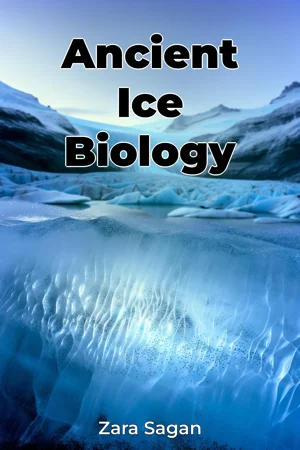
"Ancient Ice Biology" reveals glaciers not as barren ice masses but as living archives teeming with microorganisms that have survived for millennia. The book centers on how these tiny life forms—bacteria, viruses, and fungi—offer clues about Earth’s climatic past and life’s adaptability. By studying ice cores, scientists have revived microbes frozen for 2,500 years, uncovering survival tricks like DNA repair in subzero conditions and dormancy strategies. These organisms also act as climate time capsules: shifts in their communities match historical warming events, linking biology directly to atmospheric changes. Yet, as glaciers melt, dormant pathogens and nutrients re-enter ecosystems, posing unanswered questions about risks and disruptions. Blending genomics, paleoclimatology, and ethics, the book progresses from explaining icy habitats to probing future implications. Chapters explore how cold-adapted enzymes could revolutionize biotechnology or how microbes from Antarctica inform the search for life on icy moons like Europa. Unlike purely technical texts, it weaves fieldwork stories—like drilling Tibetan ice cores—with accessible analogies, comparing glacial layers to “biological history books.” This interdisciplinary lens, paired with urgent discussions about preserving glaciers as scientific and ecological treasures, makes the book a standout. It bridges niche science and global relevance, appealing to both experts and curious readers eager to grasp climate change’s hidden biological dimension.
Book Details
ISBN
9788233953911
Publisher
Publifye AS
Your Licenses
You don't own any licenses for this book
Purchase a license below to unlock this book and download the EPUB.
Purchase License
Select a tier to unlock this book
Need bulk licensing?
Contact us for enterprise agreements.