
About This Book
**Title:** *Cave Life Forms: Survival, Adaptation, and Ecology in Perpetual Darkness* **Opening Hook:** What does it take to survive in an environment devoid of light, where temperatures are constant, and resources are vanishingly scarce? This book plunges into the hidden realms of caves, mines, and underground waterways to uncover the organisms that thrive in Earth’s most inhospitable habitats—ecosystems shaped not by the sun’s energy, but by evolutionary ingenuity. **Main Topics and Significance:** The book focuses on three core themes: (1) the physiological and behavioral adaptations of cave-dwelling species, (2) the ecological networks that sustain life in darkness, and (3) the role of chemosynthesis and alternative energy pathways. These topics are critical for understanding how life persists in extreme environments, offering insights into evolutionary processes, ecosystem resilience, and potential parallels for extraterrestrial life. **Context and Background:** Cave biology emerged as a scientific discipline in the 19th century, challenging the assumption that light-dependent photosynthesis was essential for complex ecosystems. Early explorers documented species with reduced pigmentation, absent eyes, and heightened sensory adaptations. Modern research integrates genomics, microbiology, and geochemistry to decode how these organisms circumvent energy scarcity. Readers are introduced to foundational concepts in ecology, such as trophic dynamics and speciation, ensuring accessibility for non-specialists. **Central Thesis:** The book argues that subterranean ecosystems are not marginal curiosities but vital models for studying evolutionary innovation and ecological stability. By examining life in perpetual darkness, we gain a framework for understanding resilience in the face of environmental extremes—a theme increasingly relevant amid climate change and habitat degradation. **Content Overview:** 1. **Introduction**: Defines troglobites (obligate cave species) and contrasts their ecosystems with sunlit habitats. 2. **Adaptations**: Explores sensory enhancements, metabolic efficiency, and life-history strategies in species like the olm (*Proteus anguinus*) and cavefish (*Astyanax mexicanus*). 3. **Ecological Networks**: Analyzes nutrient cycling via bat guano, microbial biofilms, and predation hierarchies. 4. **Energy Innovations**: Details chemolithotrophic bacteria that oxidize minerals, forming the base of food webs. 5. **Implications**: Discusses applications in biotechnology, conservation, and astrobiology. **Evidence and Research:** Case studies from Lechuguilla Cave (New Mexico) and Movile Cave (Romania) illustrate species-specific adaptations and microbial interdependence. Genomic data reveals convergent evolution in visual regression across disparate taxa. The book cites isotopic tracing to map nutrient flows and experimental studies on metabolic rates in low-energy environments. **Interdisciplinary Connections:** 1. **Astrobiology**: Subterranean systems mirror proposed habitats on Mars or Europa, where life might rely on chemical energy. 2. **Conservation Biology**: Cave species, often endemic and imperiled, highlight the urgency of protecting subterranean biodiversity. 3. **Biotechnology**: Enzymes from extremophile microorganisms have potential industrial and medical uses. **Unique Approach:** The book synthesizes decades of localized studies into a global perspective, emphasizing convergent evolutionary strategies. It prioritizes lesser-known invertebrates and microbes alongside charismatic species, challenging anthropocentric views of biodiversity. **Tone and Style:** Written in clear, narrative-driven prose, the book balances scientific rigor with vivid descriptions of subterranean landscapes. Technical terms are contextualized, and anecdotes from researchers underscore the challenges of fieldwork. **Target Audience:** Academics in ecology and evolutionary biology will appreciate the synthesis of recent research, while students and science enthusiasts gain an entry point into extremophile biology. Conservation practitioners and educators will find actionable insights into habitat preservation. **Genre-Specific Elements:** Aligned with scientific non-fiction, the book emphasizes hypothesis testing, empirical data, and peer-reviewed sources. Descriptions of mountain cave systems anchor the content within the “Ecosystems & Habitats” genre, detailing geology’s role in shaping biotic communities. **Scope and Limitations:** Focus is restricted to terrestrial caves; marine caves and artificial subterranean systems (e.g., sewers) are excluded. The book acknowledges gaps in microbial research, particularly regarding viral interactions in subsurface ecosystems. **Real-World Applications:** Findings inform strategies for bioremediation using cave-adapted microbes and protocols for mitigating human impacts on subterranean habitats. Policymakers are urged to expand protected areas to include vertical ecosystems (surface to bedrock). **Controversies and Debates:** The book addresses disputes over the origin of cave species (adaptive vs. regressive evolution) and the ethics of tourism in fragile environments. It critiques “bio-prospecting” in caves without equitable benefit-sharing. *Cave Life Forms* bridges the gap between specialized research and public understanding, revealing darkness not as a barrier, but as a catalyst for life’s creativity. —
**Title:** *Cave Life Forms: Survival, Adaptation, and Ecology in Perpetual Darkness* **Opening Hook:** What does it take to survive in an environment devoid of light, where temperatures are constant, and resources are vanishingly scarce? This book plunges into the hidden realms of caves, mines, and underground waterways to uncover the organisms that thrive in Earth’s most inhospitable habitats—ecosystems shaped not by the sun’s energy, but by evolutionary ingenuity. **Main Topics and Significance:** The book focuses on three core themes: (1) the physiological and behavioral adaptations of cave-dwelling species, (2) the ecological networks that sustain life in darkness, and (3) the role of chemosynthesis and alternative energy pathways. These topics are critical for understanding how life persists in extreme environments, offering insights into evolutionary processes, ecosystem resilience, and potential parallels for extraterrestrial life. **Context and Background:** Cave biology emerged as a scientific discipline in the 19th century, challenging the assumption that light-dependent photosynthesis was essential for complex ecosystems. Early explorers documented species with reduced pigmentation, absent eyes, and heightened sensory adaptations. Modern research integrates genomics, microbiology, and geochemistry to decode how these organisms circumvent energy scarcity. Readers are introduced to foundational concepts in ecology, such as trophic dynamics and speciation, ensuring accessibility for non-specialists. **Central Thesis:** The book argues that subterranean ecosystems are not marginal curiosities but vital models for studying evolutionary innovation and ecological stability. By examining life in perpetual darkness, we gain a framework for understanding resilience in the face of environmental extremes—a theme increasingly relevant amid climate change and habitat degradation. **Content Overview:** 1. **Introduction**: Defines troglobites (obligate cave species) and contrasts their ecosystems with sunlit habitats. 2. **Adaptations**: Explores sensory enhancements, metabolic efficiency, and life-history strategies in species like the olm (*Proteus anguinus*) and cavefish (*Astyanax mexicanus*). 3. **Ecological Networks**: Analyzes nutrient cycling via bat guano, microbial biofilms, and predation hierarchies. 4. **Energy Innovations**: Details chemolithotrophic bacteria that oxidize minerals, forming the base of food webs. 5. **Implications**: Discusses applications in biotechnology, conservation, and astrobiology. **Evidence and Research:** Case studies from Lechuguilla Cave (New Mexico) and Movile Cave (Romania) illustrate species-specific adaptations and microbial interdependence. Genomic data reveals convergent evolution in visual regression across disparate taxa. The book cites isotopic tracing to map nutrient flows and experimental studies on metabolic rates in low-energy environments. **Interdisciplinary Connections:** 1. **Astrobiology**: Subterranean systems mirror proposed habitats on Mars or Europa, where life might rely on chemical energy. 2. **Conservation Biology**: Cave species, often endemic and imperiled, highlight the urgency of protecting subterranean biodiversity. 3. **Biotechnology**: Enzymes from extremophile microorganisms have potential industrial and medical uses. **Unique Approach:** The book synthesizes decades of localized studies into a global perspective, emphasizing convergent evolutionary strategies. It prioritizes lesser-known invertebrates and microbes alongside charismatic species, challenging anthropocentric views of biodiversity. **Tone and Style:** Written in clear, narrative-driven prose, the book balances scientific rigor with vivid descriptions of subterranean landscapes. Technical terms are contextualized, and anecdotes from researchers underscore the challenges of fieldwork. **Target Audience:** Academics in ecology and evolutionary biology will appreciate the synthesis of recent research, while students and science enthusiasts gain an entry point into extremophile biology. Conservation practitioners and educators will find actionable insights into habitat preservation. **Genre-Specific Elements:** Aligned with scientific non-fiction, the book emphasizes hypothesis testing, empirical data, and peer-reviewed sources. Descriptions of mountain cave systems anchor the content within the “Ecosystems & Habitats” genre, detailing geology’s role in shaping biotic communities. **Scope and Limitations:** Focus is restricted to terrestrial caves; marine caves and artificial subterranean systems (e.g., sewers) are excluded. The book acknowledges gaps in microbial research, particularly regarding viral interactions in subsurface ecosystems. **Real-World Applications:** Findings inform strategies for bioremediation using cave-adapted microbes and protocols for mitigating human impacts on subterranean habitats. Policymakers are urged to expand protected areas to include vertical ecosystems (surface to bedrock). **Controversies and Debates:** The book addresses disputes over the origin of cave species (adaptive vs. regressive evolution) and the ethics of tourism in fragile environments. It critiques “bio-prospecting” in caves without equitable benefit-sharing. *Cave Life Forms* bridges the gap between specialized research and public understanding, revealing darkness not as a barrier, but as a catalyst for life’s creativity. —
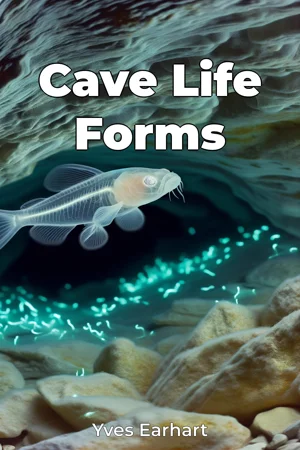
"Cave Life Forms: Survival, Adaptation, and Ecology in Perpetual Darkness" explores the hidden world of subterranean ecosystems, where life thrives without sunlight through astonishing evolutionary ingenuity. The book centers on how species like blind cavefish and translucent olms adapt to perpetual darkness, developing heightened senses, slowed metabolisms, and unique reproductive strategies. It reveals how these ecosystems depend on chemosynthesis—microbes converting minerals into energy—rather than photosynthesis, creating food webs sustained by bat guano, microbial biofilms, and specialized predators. By studying extreme environments like Romania’s Movile Cave, where toxic gases fuel life, the book draws parallels to potential extraterrestrial habitats, bridging ecology and astrobiology. Blending vivid case studies with genomics and isotope analysis, the book progresses from individual adaptations to systemic ecological networks. Early chapters detail sensory trade-offs, such as loss of vision compensated by electroreception, while later sections explore conservation challenges for endemic species threatened by human activity. Unique in its global scope, it highlights lesser-known invertebrates and microbes alongside iconic species, emphasizing how caves model resilience in energy-scarce environments. Accessible yet rigorous, the work connects niche science to broader themes like climate change and biotech innovation, showcasing enzymes from extremophiles used in medical research. This synthesis of biology, geology, and ethics positions caves as vital laboratories for understanding life’s tenacity—and the urgency of protecting Earth’s final frontiers.
Book Details
ISBN
9788233953904
Publisher
Publifye AS
Your Licenses
You don't own any licenses for this book
Purchase a license below to unlock this book and download the EPUB.
Purchase License
Select a tier to unlock this book
Need bulk licensing?
Contact us for enterprise agreements.