
About This Book
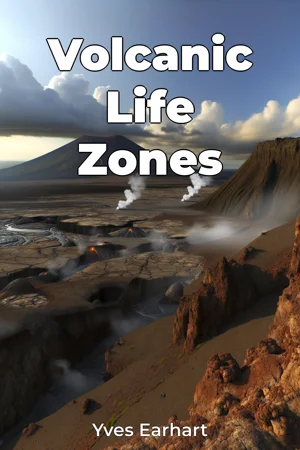
**Title:** *Volcanic Life Zones: Survival and Adaptation in Earth’s Most Extreme Habitats* **Opening Hook:** What does it take to survive in a landscape where the ground breathes fire, the air carries poison, and the very soil rebels against life? This book ventures into the molten margins of active volcanoes to uncover the tenacity of organisms that call these infernal zones home. **Main Topics and Significance:** The book examines three core themes: (1) the geological and chemical foundations of volcanic ecosystems, (2) the physiological and behavioral adaptations of extremophile species, and (3) the role of volcanic habitats in shaping broader ecological and evolutionary processes. These topics illuminate how life persists in environments once deemed sterile, offering insights into resilience, biodiversity, and the limits of biological possibility. **Context and Background:** Volcanic regions have historically been dismissed as biological deserts, but advances in microbiology, geochemistry, and remote sensing have revealed thriving communities in these extreme settings. The book contextualizes these discoveries within the broader history of extremophile research, beginning with early studies of thermophiles in Yellowstone’s hot springs and expanding to modern investigations of acid-tolerant fungi in active calderas. Basic concepts in plate tectonics, microbial metabolism, and ecological succession are introduced to equip readers with foundational knowledge. **Central Argument:** The book posits that volcanic ecosystems are not outliers but dynamic laboratories where life adapts through rapid innovation. These zones challenge traditional definitions of habitability and provide critical clues about how organisms might endure on other planets or during Earth’s past mass extinction events. **Content Overview:** 1. **Introduction:** Defines volcanic life zones and their global distribution. 2. **Geological Foundations:** Explores volcanic soil chemistry, geothermal energy gradients, and microclimates. 3. **Adaptive Strategies:** Analyzes case studies, such as heat-resistant archaea, sulfur-metabolizing bacteria, and plants with hyperaccumulation of heavy metals. 4. **Ecological Succession:** Traces how pioneer species colonize post-eruption landscapes, enabling complex ecosystems to emerge. 5. **Implications:** Discusses applications in biotechnology, climate change resilience, and astrobiology. **Evidence and Research:** Findings are supported by field data from sites like Mount Etna, Hawai’i Volcanoes National Park, and the Marum Crater in Vanuatu. Methodologies include genomic sequencing of extremophiles, isotopic analysis of volcanic soils, and time-lapse imaging of ecological recovery after eruptions. The book also integrates Indigenous knowledge of volcanic flora and fauna, adding cultural depth to scientific observations. **Interdisciplinary Connections:** 1. **Astrobiology:** Volcanic microbes inform hypotheses about life on Mars or Europa. 2. **Climate Science:** Volcanic CO2 cycles and extremophile carbon fixation mechanisms refine climate models. 3. **Evolutionary Biology:** Rapid adaptation in volcanic zones tests theories of speciation under stress. **Unique Approach:** The book bridges macro-scale geology and micro-scale biology, illustrating how tectonic forces directly shape genetic and ecological change. It also emphasizes symbiosis—for example, how mycorrhizal fungi enable plants to survive toxic soils—to challenge the notion of survival as a solitary struggle. **Tone and Style:** Written in clear, narrative-driven prose, the book balances scientific rigor with vivid descriptions of volcanic landscapes. Technical terms are defined contextually, making the content accessible to non-specialists without oversimplification. **Target Audience:** Geared toward students and professionals in earth sciences, ecology, and environmental biology, as well as general readers with an interest in extreme environments. Its interdisciplinary focus appeals to those curious about the intersections of geology, biology, and planetary science. **Genre-Specific Elements:** Aligns with conventions of earth sciences through detailed analyses of geological processes, while ecosystem-focused sections adhere to habitat studies by emphasizing species interactions and energy flows. Case studies are structured to mirror fieldwork reports, reinforcing the fact-based approach. **Scope and Limitations:** The book focuses on terrestrial volcanoes, excluding marine hydrothermal vents. It prioritizes modern ecosystems over fossilized ones, though brief comparisons to prehistoric volcanic events are included. **Real-World Applications:** Insights from volcanic adaptations are already inspiring bioremediation techniques for polluted soils and heat-resistant enzymes for industrial processes. Farmers near volcanic regions may also benefit from understanding resilient agricultural practices. **Controversies and Debates:** The book addresses ongoing disputes, such as whether volcanic ecosystems are truly independent of photosynthetic energy or rely indirectly on organic inputs from surrounding areas. It also examines conflicting hypotheses about the origins of extremophile lineages. *Volcanic Life Zones* reshapes our understanding of life’s adaptability, proving that even in the planet’s most violent corners, evolution writes extraordinary stories of survival.
**Title:** *Volcanic Life Zones: Survival and Adaptation in Earth’s Most Extreme Habitats* **Opening Hook:** What does it take to survive in a landscape where the ground breathes fire, the air carries poison, and the very soil rebels against life? This book ventures into the molten margins of active volcanoes to uncover the tenacity of organisms that call these infernal zones home. **Main Topics and Significance:** The book examines three core themes: (1) the geological and chemical foundations of volcanic ecosystems, (2) the physiological and behavioral adaptations of extremophile species, and (3) the role of volcanic habitats in shaping broader ecological and evolutionary processes. These topics illuminate how life persists in environments once deemed sterile, offering insights into resilience, biodiversity, and the limits of biological possibility. **Context and Background:** Volcanic regions have historically been dismissed as biological deserts, but advances in microbiology, geochemistry, and remote sensing have revealed thriving communities in these extreme settings. The book contextualizes these discoveries within the broader history of extremophile research, beginning with early studies of thermophiles in Yellowstone’s hot springs and expanding to modern investigations of acid-tolerant fungi in active calderas. Basic concepts in plate tectonics, microbial metabolism, and ecological succession are introduced to equip readers with foundational knowledge. **Central Argument:** The book posits that volcanic ecosystems are not outliers but dynamic laboratories where life adapts through rapid innovation. These zones challenge traditional definitions of habitability and provide critical clues about how organisms might endure on other planets or during Earth’s past mass extinction events. **Content Overview:** 1. **Introduction:** Defines volcanic life zones and their global distribution. 2. **Geological Foundations:** Explores volcanic soil chemistry, geothermal energy gradients, and microclimates. 3. **Adaptive Strategies:** Analyzes case studies, such as heat-resistant archaea, sulfur-metabolizing bacteria, and plants with hyperaccumulation of heavy metals. 4. **Ecological Succession:** Traces how pioneer species colonize post-eruption landscapes, enabling complex ecosystems to emerge. 5. **Implications:** Discusses applications in biotechnology, climate change resilience, and astrobiology. **Evidence and Research:** Findings are supported by field data from sites like Mount Etna, Hawai’i Volcanoes National Park, and the Marum Crater in Vanuatu. Methodologies include genomic sequencing of extremophiles, isotopic analysis of volcanic soils, and time-lapse imaging of ecological recovery after eruptions. The book also integrates Indigenous knowledge of volcanic flora and fauna, adding cultural depth to scientific observations. **Interdisciplinary Connections:** 1. **Astrobiology:** Volcanic microbes inform hypotheses about life on Mars or Europa. 2. **Climate Science:** Volcanic CO2 cycles and extremophile carbon fixation mechanisms refine climate models. 3. **Evolutionary Biology:** Rapid adaptation in volcanic zones tests theories of speciation under stress. **Unique Approach:** The book bridges macro-scale geology and micro-scale biology, illustrating how tectonic forces directly shape genetic and ecological change. It also emphasizes symbiosis—for example, how mycorrhizal fungi enable plants to survive toxic soils—to challenge the notion of survival as a solitary struggle. **Tone and Style:** Written in clear, narrative-driven prose, the book balances scientific rigor with vivid descriptions of volcanic landscapes. Technical terms are defined contextually, making the content accessible to non-specialists without oversimplification. **Target Audience:** Geared toward students and professionals in earth sciences, ecology, and environmental biology, as well as general readers with an interest in extreme environments. Its interdisciplinary focus appeals to those curious about the intersections of geology, biology, and planetary science. **Genre-Specific Elements:** Aligns with conventions of earth sciences through detailed analyses of geological processes, while ecosystem-focused sections adhere to habitat studies by emphasizing species interactions and energy flows. Case studies are structured to mirror fieldwork reports, reinforcing the fact-based approach. **Scope and Limitations:** The book focuses on terrestrial volcanoes, excluding marine hydrothermal vents. It prioritizes modern ecosystems over fossilized ones, though brief comparisons to prehistoric volcanic events are included. **Real-World Applications:** Insights from volcanic adaptations are already inspiring bioremediation techniques for polluted soils and heat-resistant enzymes for industrial processes. Farmers near volcanic regions may also benefit from understanding resilient agricultural practices. **Controversies and Debates:** The book addresses ongoing disputes, such as whether volcanic ecosystems are truly independent of photosynthetic energy or rely indirectly on organic inputs from surrounding areas. It also examines conflicting hypotheses about the origins of extremophile lineages. *Volcanic Life Zones* reshapes our understanding of life’s adaptability, proving that even in the planet’s most violent corners, evolution writes extraordinary stories of survival.
"Volcanic Life Zones" explores how organisms thrive in Earth’s most hostile volcanic environments, challenging assumptions about the limits of life. The book’s central theme reveals these fiery landscapes as dynamic laboratories where rapid adaptation drives biodiversity. By merging geology and biology, it uncovers how extremophiles—like heat-resistant archaea and sulfur-metabolizing bacteria—harness toxic elements for survival. One striking example details plants that partner with fungi to detoxify soils, illustrating symbiosis as a survival strategy. Another insight highlights volcanic soil’s role in ecological recovery, where pioneer species kickstart ecosystems after eruptions, offering lessons for climate change resilience. The book progresses from volcanic geology to astrobiological implications, blending fieldwork from sites like Hawai’i Volcanoes National Park with Indigenous ecological knowledge. Its unique value lies in connecting micro-scale adaptations (such as heat-resistant enzymes) to macro-scale processes like planetary habitability. Accessible explanations of concepts like microbial metabolism or ecological succession cater to both specialists and curious readers. By framing volcanoes as cradles of innovation rather than dead zones, "Volcanic Life Zones" reshapes our understanding of life’s tenacity—and what it might take to survive on other worlds.
Book Details
ISBN
9788233953898
Publisher
Publifye AS
Your Licenses
You don't own any licenses for this book
Purchase a license below to unlock this book and download the EPUB.
Purchase License
Select a tier to unlock this book
Need bulk licensing?
Contact us for enterprise agreements.