
About This Book
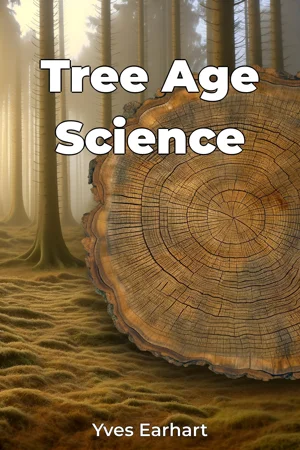
**What if the silent giants towering above us have been recording Earth’s secrets all along?** *Tree Age Science* delves into the hidden language of trees, revealing how their growth patterns and responses to environmental changes serve as living archives of planetary history. Bridging ecology, climatology, and biology, this book deciphers the stories etched into tree rings, bark, and cells, offering readers a lens to understand humanity’s intertwined fate with forests. **Main Topics and Significance** The book explores three core themes: 1. **Dendrochronology**: The science of dating tree rings to reconstruct past climates and ecological events. 2. **Environmental Stress Signals**: How trees encode data about droughts, wildfires, and pollution. 3. **Symbiotic Ecosystems**: The role of trees in shaping habitats and supporting biodiversity. These topics underscore the urgency of studying arboreal records to address climate change, habitat loss, and sustainable resource management. **Context and Background** Dendrochronology emerged in the early 20th century when astronomer Andrew Douglass linked tree rings to solar cycles. Today, advances in radiocarbon dating and isotopic analysis have expanded its applications. The book assumes no prior scientific expertise, introducing foundational concepts like photosynthesis, carbon sequestration, and ecological resilience with clarity. **Central Thesis** Trees are not passive observers but dynamic chroniclers of environmental history. By decoding their biological and chemical signatures, we gain empirical insights into Earth’s past and tools to mitigate ecological crises. This argument reframes forests as critical allies in climate science and conservation. **Content Overview** The book is structured into three sections: 1. **Foundations**: Introduces tree biology, growth cycles, and dendrochronological methods. 2. **Environmental Narratives**: Examines case studies linking tree ring data to volcanic eruptions, ice age transitions, and modern anthropogenic impacts. 3. **Future Frontiers**: Discusses using tree data to model climate scenarios, restore degraded ecosystems, and inform policy. **Evidence and Research** The text draws on peer-reviewed studies, cross-referencing tree ring data with ice core samples and historical records. Unique methodologies include stable isotope analysis to trace atmospheric changes and machine learning models predicting forest responses to warming. Examples range from millennia-old bristlecone pines to Amazonian rainforests. **Interdisciplinary Connections** 1. **Climatology**: Tree rings validate climate models and reveal pre-industrial baselines. 2. **Anthropology**: Deforestation patterns correlate with societal collapses, such as the Maya civilization. 3. **Conservation Biology**: Genetic diversity in trees informs strategies to combat invasive species. These intersections highlight how arboreal data bridges human and natural histories. **Unique Approach** The book synthesizes hard science with narrative storytelling, juxtaposing technical analyses with profiles of researchers and indigenous communities whose traditional knowledge complements scientific inquiry. A chapter on “ghost forests”—stands killed by sea-level rise—illustrates climate impacts through visceral, place-based accounts. **Tone and Style** Written in accessible, jargon-free prose, the book balances academic rigor with engaging anecdotes. Complex concepts are explained through analogies, such as comparing tree rings to library archives. **Target Audience** Appeals to environmental scientists, students, policymakers, and general readers seeking to understand climate science through a natural lens. Its emphasis on actionable insights makes it relevant to activists and educators. **Genre-Specific Elements** Aligns with science and environmental genres by prioritizing empirical data, citing peer-reviewed sources, and addressing global ecological challenges. Case studies adhere to non-fiction conventions of evidence-based storytelling. **Scope and Limitations** Focuses on temperate and boreal forests due to richer dendrochronological records; tropical regions receive less coverage. The book acknowledges gaps in data from areas with high deforestation rates. **Real-World Applications** Readers will learn to interpret tree health as an indicator of ecosystem vitality, apply historical data to reforestation projects, and advocate for policies prioritizing carbon-storing tree species. **Controversies and Debates** The book addresses disputes over using tree rings as standalone climate proxies and critiques anthropocentric frameworks that undervalue forests’ intrinsic ecological roles. By framing trees as both witnesses and participants in Earth’s history, *Tree Age Science* challenges readers to rethink humanity’s relationship with the natural world—one ring at a time.
**What if the silent giants towering above us have been recording Earth’s secrets all along?** *Tree Age Science* delves into the hidden language of trees, revealing how their growth patterns and responses to environmental changes serve as living archives of planetary history. Bridging ecology, climatology, and biology, this book deciphers the stories etched into tree rings, bark, and cells, offering readers a lens to understand humanity’s intertwined fate with forests. **Main Topics and Significance** The book explores three core themes: 1. **Dendrochronology**: The science of dating tree rings to reconstruct past climates and ecological events. 2. **Environmental Stress Signals**: How trees encode data about droughts, wildfires, and pollution. 3. **Symbiotic Ecosystems**: The role of trees in shaping habitats and supporting biodiversity. These topics underscore the urgency of studying arboreal records to address climate change, habitat loss, and sustainable resource management. **Context and Background** Dendrochronology emerged in the early 20th century when astronomer Andrew Douglass linked tree rings to solar cycles. Today, advances in radiocarbon dating and isotopic analysis have expanded its applications. The book assumes no prior scientific expertise, introducing foundational concepts like photosynthesis, carbon sequestration, and ecological resilience with clarity. **Central Thesis** Trees are not passive observers but dynamic chroniclers of environmental history. By decoding their biological and chemical signatures, we gain empirical insights into Earth’s past and tools to mitigate ecological crises. This argument reframes forests as critical allies in climate science and conservation. **Content Overview** The book is structured into three sections: 1. **Foundations**: Introduces tree biology, growth cycles, and dendrochronological methods. 2. **Environmental Narratives**: Examines case studies linking tree ring data to volcanic eruptions, ice age transitions, and modern anthropogenic impacts. 3. **Future Frontiers**: Discusses using tree data to model climate scenarios, restore degraded ecosystems, and inform policy. **Evidence and Research** The text draws on peer-reviewed studies, cross-referencing tree ring data with ice core samples and historical records. Unique methodologies include stable isotope analysis to trace atmospheric changes and machine learning models predicting forest responses to warming. Examples range from millennia-old bristlecone pines to Amazonian rainforests. **Interdisciplinary Connections** 1. **Climatology**: Tree rings validate climate models and reveal pre-industrial baselines. 2. **Anthropology**: Deforestation patterns correlate with societal collapses, such as the Maya civilization. 3. **Conservation Biology**: Genetic diversity in trees informs strategies to combat invasive species. These intersections highlight how arboreal data bridges human and natural histories. **Unique Approach** The book synthesizes hard science with narrative storytelling, juxtaposing technical analyses with profiles of researchers and indigenous communities whose traditional knowledge complements scientific inquiry. A chapter on “ghost forests”—stands killed by sea-level rise—illustrates climate impacts through visceral, place-based accounts. **Tone and Style** Written in accessible, jargon-free prose, the book balances academic rigor with engaging anecdotes. Complex concepts are explained through analogies, such as comparing tree rings to library archives. **Target Audience** Appeals to environmental scientists, students, policymakers, and general readers seeking to understand climate science through a natural lens. Its emphasis on actionable insights makes it relevant to activists and educators. **Genre-Specific Elements** Aligns with science and environmental genres by prioritizing empirical data, citing peer-reviewed sources, and addressing global ecological challenges. Case studies adhere to non-fiction conventions of evidence-based storytelling. **Scope and Limitations** Focuses on temperate and boreal forests due to richer dendrochronological records; tropical regions receive less coverage. The book acknowledges gaps in data from areas with high deforestation rates. **Real-World Applications** Readers will learn to interpret tree health as an indicator of ecosystem vitality, apply historical data to reforestation projects, and advocate for policies prioritizing carbon-storing tree species. **Controversies and Debates** The book addresses disputes over using tree rings as standalone climate proxies and critiques anthropocentric frameworks that undervalue forests’ intrinsic ecological roles. By framing trees as both witnesses and participants in Earth’s history, *Tree Age Science* challenges readers to rethink humanity’s relationship with the natural world—one ring at a time.
"Tree Age Science" unveils the extraordinary role of trees as living historians, decoding Earth’s environmental past and present through their rings, cells, and interactions. At its core, the book explores dendrochronology—the study of tree rings—to reveal how these natural archives document centuries of climate shifts, volcanic eruptions, and human impacts. Readers discover how a single ring can pinpoint droughts, wildfires, or even societal collapses, like the Maya civilization’s decline linked to deforestation. Beyond climate clues, the book highlights trees as ecosystem engineers, fostering biodiversity through symbiotic relationships with fungi and wildlife while silently combating climate change via carbon sequestration. Blending ecology and climatology, the authors present cutting-edge research—from isotopic analysis tracing atmospheric changes to AI models predicting forest resilience. Case studies span ancient bristlecone pines surviving millennia to modern “ghost forests” killed by rising seas, grounding complex science in vivid examples. The narrative uniquely bridges technical rigor and storytelling, weaving indigenous knowledge with lab discoveries to show how trees inform conservation strategies. Structured in three acts—tree biology, environmental detective work, and future solutions—the book progresses from foundational concepts to urgent applications, like using historical data to guide reforestation. What sets *Tree Age Science* apart is its ability to transform trees from passive scenery into active climate allies. By framing forests as dynamic chroniclers, it empowers readers to rethink conservation, policy, and humanity’s bond with nature—proving that every ring holds a lesson for our planet’s survival.
Book Details
ISBN
9788233953874
Publisher
Publifye AS
Your Licenses
You don't own any licenses for this book
Purchase a license below to unlock this book and download the EPUB.
Purchase License
Select a tier to unlock this book
Need bulk licensing?
Contact us for enterprise agreements.