
About This Book
**Opening Hook:** In the relentless cold of the Arctic, where temperatures plunge below -30°C and winter darkness lingers for months, a surprising burst of color defies the odds: hardy flowers bloom. How do these fragile-seeming plants not only survive but reproduce in one of Earth’s most extreme environments? **Main Topics and Significance:** *Arctic Flower Life* examines two core survival strategies of polar flora: **rapid growth cycles** synchronized with brief summers and **heat-trapping morphological adaptations**, such as parabolic petals and hairy stems. A third focus explores **symbiotic relationships** with pollinators like Arctic bumblebees. These topics reveal how life persists in marginal ecosystems, offering insights into ecological resilience and the potential impacts of climate change on fragile habitats. **Context and Background:** The Arctic growing season spans just 6–10 weeks, with temperatures rarely exceeding 10°C. Permafrost limits root growth, and unpredictable snowfall can bury plants mid-bloom. Historically, early polar explorers documented these species as curiosities, but modern ecologists study them as models of adaptation. The book assumes basic familiarity with plant biology but clarifies specialized terms like "cushion morphologies" or "phenological tracking." **Central Argument:** Arctic flowering plants employ highly specialized, interdependent strategies to exploit microclimates and ephemeral resources. Their success underscores the importance of biodiversity in stabilizing ecosystems facing rapid environmental shifts—a critical lesson as the Arctic warms three times faster than the global average. **Content Overview:** 1. **Introduction**: Profiles the Arctic’s ecological constraints and introduces key species like *Saxifraga oppositifolia* (purple saxifrage). 2. **Growth Strategies**: Explores how plants accelerate germination and flowering using thermal plasticity and stored nutrients. 3. **Structural Adaptations**: Analyzes canopy designs that retain heat and protect reproductive organs. 4. **Ecological Interdependence**: Details pollinator interactions and mycorrhizal networks. 5. **Climate Implications**: Assesses how warming temperatures disrupt synchrony between plants and pollinators. 6. **Conservation Applications**: Proposes habitat-preservation frameworks informed by plant resilience. **Evidence and Research:** The book synthesizes field data from long-term monitoring sites like Svalbard and Greenland, laboratory experiments on seed viability, and satellite imagery tracking bloom cycles. Unique datasets include century-old herbarium specimens compared to modern populations, revealing shifts in flowering timings. Indigenous knowledge from Inuit communities supplements ecological observations. **Interdisciplinary Connections:** 1. **Climate Science**: Links plant phenology to broader atmospheric changes. 2. **Materials Science**: Inspires biomimetic designs based on heat-trapping petal structures. 3. **Anthropology**: Examines how Arctic flora sustains Indigenous food and medicinal traditions. **Unique Approach:** The book integrates **microscale thermal imaging** to visualize how flower structures create microhabitats up to 6°C warmer than ambient air. It also highlights **Indigenous stewardship practices**, offering a holistic view of Arctic ecosystems rarely addressed in Western botanical studies. **Tone and Style:** Written in clear, jargon-free prose with narrative descriptions of fieldwork. Technical concepts are explained through analogies, such as comparing parabolic petals to satellite dishes concentrating warmth. **Target Audience:** Ecologists, environmental policymakers, and biology educators will find actionable data, while general readers gain accessible insights into climate resilience. The text bridges academic and public audiences. **Genre-Specific Elements:** Aligns with life sciences genres by prioritizing empirical data and methodological transparency. For ecosystems/habitats, it emphasizes species-environment interactions and conservation ethics. **Scope and Limitations:** Focuses exclusively on flowering plants (angiosperms), excluding lichens and mosses. Discusses climate impacts but avoids speculative predictions beyond current data. **Real-World Applications:** Findings inform seed-bank curation for cold-adapted species and guide the design of artificial microclimates in agriculture. Policymakers can apply plant-resilience principles to habitat-corridor planning. **Controversies Addressed:** Debates whether accelerated growth cycles sufficiently compensate for pollinator declines or if Arctic flora faces inevitable population collapse. The book acknowledges gaps in predicting how non-native species may encroach as temperatures rise. **Closing Note:** By dissecting the Arctic’s botanical survivors, *Arctic Flower Life* reframes fragility into a study of tenacity, urging readers to reconsider humanity’s role in preserving ecosystems that endure against staggering odds.
**Opening Hook:** In the relentless cold of the Arctic, where temperatures plunge below -30°C and winter darkness lingers for months, a surprising burst of color defies the odds: hardy flowers bloom. How do these fragile-seeming plants not only survive but reproduce in one of Earth’s most extreme environments? **Main Topics and Significance:** *Arctic Flower Life* examines two core survival strategies of polar flora: **rapid growth cycles** synchronized with brief summers and **heat-trapping morphological adaptations**, such as parabolic petals and hairy stems. A third focus explores **symbiotic relationships** with pollinators like Arctic bumblebees. These topics reveal how life persists in marginal ecosystems, offering insights into ecological resilience and the potential impacts of climate change on fragile habitats. **Context and Background:** The Arctic growing season spans just 6–10 weeks, with temperatures rarely exceeding 10°C. Permafrost limits root growth, and unpredictable snowfall can bury plants mid-bloom. Historically, early polar explorers documented these species as curiosities, but modern ecologists study them as models of adaptation. The book assumes basic familiarity with plant biology but clarifies specialized terms like "cushion morphologies" or "phenological tracking." **Central Argument:** Arctic flowering plants employ highly specialized, interdependent strategies to exploit microclimates and ephemeral resources. Their success underscores the importance of biodiversity in stabilizing ecosystems facing rapid environmental shifts—a critical lesson as the Arctic warms three times faster than the global average. **Content Overview:** 1. **Introduction**: Profiles the Arctic’s ecological constraints and introduces key species like *Saxifraga oppositifolia* (purple saxifrage). 2. **Growth Strategies**: Explores how plants accelerate germination and flowering using thermal plasticity and stored nutrients. 3. **Structural Adaptations**: Analyzes canopy designs that retain heat and protect reproductive organs. 4. **Ecological Interdependence**: Details pollinator interactions and mycorrhizal networks. 5. **Climate Implications**: Assesses how warming temperatures disrupt synchrony between plants and pollinators. 6. **Conservation Applications**: Proposes habitat-preservation frameworks informed by plant resilience. **Evidence and Research:** The book synthesizes field data from long-term monitoring sites like Svalbard and Greenland, laboratory experiments on seed viability, and satellite imagery tracking bloom cycles. Unique datasets include century-old herbarium specimens compared to modern populations, revealing shifts in flowering timings. Indigenous knowledge from Inuit communities supplements ecological observations. **Interdisciplinary Connections:** 1. **Climate Science**: Links plant phenology to broader atmospheric changes. 2. **Materials Science**: Inspires biomimetic designs based on heat-trapping petal structures. 3. **Anthropology**: Examines how Arctic flora sustains Indigenous food and medicinal traditions. **Unique Approach:** The book integrates **microscale thermal imaging** to visualize how flower structures create microhabitats up to 6°C warmer than ambient air. It also highlights **Indigenous stewardship practices**, offering a holistic view of Arctic ecosystems rarely addressed in Western botanical studies. **Tone and Style:** Written in clear, jargon-free prose with narrative descriptions of fieldwork. Technical concepts are explained through analogies, such as comparing parabolic petals to satellite dishes concentrating warmth. **Target Audience:** Ecologists, environmental policymakers, and biology educators will find actionable data, while general readers gain accessible insights into climate resilience. The text bridges academic and public audiences. **Genre-Specific Elements:** Aligns with life sciences genres by prioritizing empirical data and methodological transparency. For ecosystems/habitats, it emphasizes species-environment interactions and conservation ethics. **Scope and Limitations:** Focuses exclusively on flowering plants (angiosperms), excluding lichens and mosses. Discusses climate impacts but avoids speculative predictions beyond current data. **Real-World Applications:** Findings inform seed-bank curation for cold-adapted species and guide the design of artificial microclimates in agriculture. Policymakers can apply plant-resilience principles to habitat-corridor planning. **Controversies Addressed:** Debates whether accelerated growth cycles sufficiently compensate for pollinator declines or if Arctic flora faces inevitable population collapse. The book acknowledges gaps in predicting how non-native species may encroach as temperatures rise. **Closing Note:** By dissecting the Arctic’s botanical survivors, *Arctic Flower Life* reframes fragility into a study of tenacity, urging readers to reconsider humanity’s role in preserving ecosystems that endure against staggering odds.
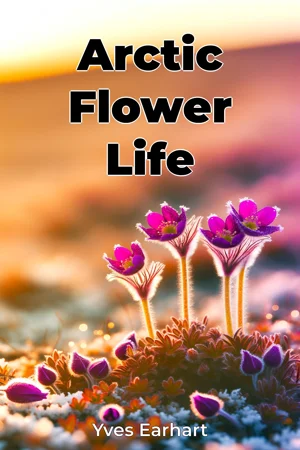
"Arctic Flower Life" unveils the extraordinary survival strategies of plants thriving in the Arctic’s brutal environment, where subzero temperatures and fleeting summers test life’s limits. At its core, the book explores how Arctic flowers like the purple saxifrage master two key tactics: compressing their entire life cycle into mere weeks and evolving heat-trapping structures, such as parabolic petals that act like miniature greenhouses. These adaptations create microclimates up to 6°C warmer than surrounding air—a lifeline in a land where winter darkness lingers for months. Equally fascinating are the plants’ symbiotic partnerships with Arctic bumblebees and fungi, relationships finely tuned to the region’s brief growing season. Yet climate change looms, disrupting the synchrony between blooms and pollinators and threatening this fragile balance. The book stands out by blending cutting-edge science—like thermal imaging that maps flower warmth—with Indigenous knowledge, offering a rare holistic perspective. Through vivid fieldwork narratives and comparisons of century-old herbarium specimens with modern data, it traces shifts in flowering patterns linked to rapid Arctic warming. Chapters progress from explaining survival mechanisms to proposing conservation strategies, such as using plant resilience principles to design habitat corridors. By framing Arctic flora not as victims but as tenacious innovators, "Arctic Flower Life" transforms our understanding of fragility, urging readers to see these ecosystems as vital models for adapting to a changing world.
Book Details
ISBN
9788233953843
Publisher
Publifye AS
Your Licenses
You don't own any licenses for this book
Purchase a license below to unlock this book and download the EPUB.
Purchase License
Select a tier to unlock this book
Need bulk licensing?
Contact us for enterprise agreements.