
About This Book
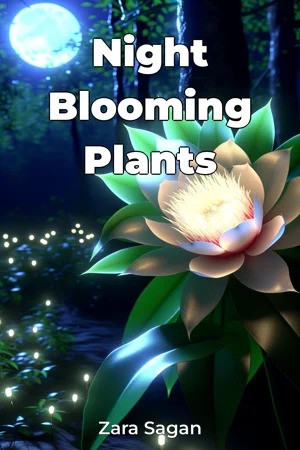
**Title:** *Night Blooming Plants: Coevolution, Pollination, and the Hidden Rhythms of Nature* **Opening Hook:** What happens in the natural world when daylight fades? While most plants retreat into shadow, a select few unfold their petals, releasing intoxicating scents and nectar under the moonlit sky. *Night Blooming Plants* invites readers into this enigmatic realm, where flowers and their pollinators engage in a dance shaped by millions of years of evolution—a dance critical to ecosystems yet often overlooked by science. **Main Topics and Significance:** The book examines three pillars: (1) the diversity of nocturnal flowering species and their specialized adaptations, (2) the ecology of night-active pollinators—from moths and bats to beetles—and (3) the evolutionary pressures driving these relationships. These topics illuminate how life thrives in darkness, challenging assumptions about pollination’s reliance on daylight and underscoring the fragility of ecosystems dependent on these interactions. **Context and Background:** Botanical studies have long prioritized diurnal species, leaving nocturnal systems understudied until recent advances in night-vision technology and genetic analysis. The book contextualizes nocturnal pollination within broader ecological history, tracing its roots to the Cretaceous period, when early flowers diversified alongside nocturnal insects. Basic familiarity with plant biology and ecosystem dynamics is sufficient for readers to engage with the material. **Central Thesis:** Nocturnal flowering plants and their pollinators represent a parallel evolutionary narrative, one that highlights adaptability and resilience in environments where daylight resources are scarce. Understanding these systems is not merely academic; it is vital for conserving biodiversity amid habitat loss and climate change. **Content Overview:** The book opens with an overview of plant-pollinator coevolution, followed by chapters dissecting floral adaptations (e.g., reflective petals, timed nectar production), pollinator behavior (e.g., sensory specialization in moths), and fossil/genetic evidence tracing these traits across millennia. The final sections address human impacts, from light pollution disrupting nocturnal activity to conservation strategies prioritizing these species. **Evidence and Research:** Drawing on field studies from deserts in Namibia to rainforests in Costa Rica, the book synthesizes data from motion-triggered infrared cameras, DNA barcoding of pollen loads, and fossilized flower specimens. Citizen science initiatives, such as crowd-sourced observations of night-blooming cacti, supplement academic research. **Interdisciplinary Connections:** 1. **Climate Science:** Nocturnal pollinators’ sensitivity to temperature shifts offers biomarkers for ecosystem health. 2. **Agricultural Studies:** Night-blooming crops like vanilla rely on specific pollinators, highlighting risks of pollinator decline. 3. **Anthropology:** Some cultures revere night-blooming species as symbols of renewal, linking biology to human tradition. **Unique Approach:** The book juxtaposes macro-scale evolutionary patterns with micro-level case studies, such as the *Datura* genus’s reliance on hawk moths. This dual lens bridges ecological theory with tangible examples, while global fieldwork highlights universal principles and regional nuances. **Tone and Style:** Written in accessible, narrative-driven prose, the book balances scientific rigor with vivid descriptions of nocturnal ecosystems. Technical terms are clearly defined, and firsthand accounts from researchers add a human dimension. **Target Audience:** Ideal for biology enthusiasts, conservation practitioners, and educators, the book serves as a primer on nocturnal ecology while offering fresh insights for specialists. Its emphasis on understudied species appeals to readers seeking to expand their understanding of biodiversity. **Genre-Specific Elements:** Aligned with science non-fiction conventions, the book prioritizes empirical evidence, cites peer-reviewed studies, and includes diagrams of floral morphology and pollinator pathways. **Scope and Limitations:** Focusing on angiosperms (flowering plants), the book acknowledges gaps in fungal and non-flowering nocturnal plant research. Geographic coverage emphasizes tropical and arid regions, where nocturnal pollination is most prevalent. **Real-World Applications:** Gardeners can cultivate night-blooming species to support local pollinators, while policymakers are urged to regulate artificial lighting in protected areas. The text also provides guidelines for documenting nocturnal species in urban environments. **Controversies and Debates:** The book addresses ongoing debates about the ecological redundancy of nocturnal pollinators and critiques anthropocentric frameworks that undervalue darkness-adapted species. **Conclusion:** *Night Blooming Plants* redefines our understanding of life after dark, arguing that the survival of these species is inseparable from our own. By illuminating the hidden interplay of flora and fauna, the book calls for a broader, more inclusive vision of conservation—one that embraces the night as a realm of vital biological innovation.
**Title:** *Night Blooming Plants: Coevolution, Pollination, and the Hidden Rhythms of Nature* **Opening Hook:** What happens in the natural world when daylight fades? While most plants retreat into shadow, a select few unfold their petals, releasing intoxicating scents and nectar under the moonlit sky. *Night Blooming Plants* invites readers into this enigmatic realm, where flowers and their pollinators engage in a dance shaped by millions of years of evolution—a dance critical to ecosystems yet often overlooked by science. **Main Topics and Significance:** The book examines three pillars: (1) the diversity of nocturnal flowering species and their specialized adaptations, (2) the ecology of night-active pollinators—from moths and bats to beetles—and (3) the evolutionary pressures driving these relationships. These topics illuminate how life thrives in darkness, challenging assumptions about pollination’s reliance on daylight and underscoring the fragility of ecosystems dependent on these interactions. **Context and Background:** Botanical studies have long prioritized diurnal species, leaving nocturnal systems understudied until recent advances in night-vision technology and genetic analysis. The book contextualizes nocturnal pollination within broader ecological history, tracing its roots to the Cretaceous period, when early flowers diversified alongside nocturnal insects. Basic familiarity with plant biology and ecosystem dynamics is sufficient for readers to engage with the material. **Central Thesis:** Nocturnal flowering plants and their pollinators represent a parallel evolutionary narrative, one that highlights adaptability and resilience in environments where daylight resources are scarce. Understanding these systems is not merely academic; it is vital for conserving biodiversity amid habitat loss and climate change. **Content Overview:** The book opens with an overview of plant-pollinator coevolution, followed by chapters dissecting floral adaptations (e.g., reflective petals, timed nectar production), pollinator behavior (e.g., sensory specialization in moths), and fossil/genetic evidence tracing these traits across millennia. The final sections address human impacts, from light pollution disrupting nocturnal activity to conservation strategies prioritizing these species. **Evidence and Research:** Drawing on field studies from deserts in Namibia to rainforests in Costa Rica, the book synthesizes data from motion-triggered infrared cameras, DNA barcoding of pollen loads, and fossilized flower specimens. Citizen science initiatives, such as crowd-sourced observations of night-blooming cacti, supplement academic research. **Interdisciplinary Connections:** 1. **Climate Science:** Nocturnal pollinators’ sensitivity to temperature shifts offers biomarkers for ecosystem health. 2. **Agricultural Studies:** Night-blooming crops like vanilla rely on specific pollinators, highlighting risks of pollinator decline. 3. **Anthropology:** Some cultures revere night-blooming species as symbols of renewal, linking biology to human tradition. **Unique Approach:** The book juxtaposes macro-scale evolutionary patterns with micro-level case studies, such as the *Datura* genus’s reliance on hawk moths. This dual lens bridges ecological theory with tangible examples, while global fieldwork highlights universal principles and regional nuances. **Tone and Style:** Written in accessible, narrative-driven prose, the book balances scientific rigor with vivid descriptions of nocturnal ecosystems. Technical terms are clearly defined, and firsthand accounts from researchers add a human dimension. **Target Audience:** Ideal for biology enthusiasts, conservation practitioners, and educators, the book serves as a primer on nocturnal ecology while offering fresh insights for specialists. Its emphasis on understudied species appeals to readers seeking to expand their understanding of biodiversity. **Genre-Specific Elements:** Aligned with science non-fiction conventions, the book prioritizes empirical evidence, cites peer-reviewed studies, and includes diagrams of floral morphology and pollinator pathways. **Scope and Limitations:** Focusing on angiosperms (flowering plants), the book acknowledges gaps in fungal and non-flowering nocturnal plant research. Geographic coverage emphasizes tropical and arid regions, where nocturnal pollination is most prevalent. **Real-World Applications:** Gardeners can cultivate night-blooming species to support local pollinators, while policymakers are urged to regulate artificial lighting in protected areas. The text also provides guidelines for documenting nocturnal species in urban environments. **Controversies and Debates:** The book addresses ongoing debates about the ecological redundancy of nocturnal pollinators and critiques anthropocentric frameworks that undervalue darkness-adapted species. **Conclusion:** *Night Blooming Plants* redefines our understanding of life after dark, arguing that the survival of these species is inseparable from our own. By illuminating the hidden interplay of flora and fauna, the book calls for a broader, more inclusive vision of conservation—one that embraces the night as a realm of vital biological innovation.
*Night Blooming Plants: Coevolution, Pollination, and the Hidden Rhythms of Nature* unveils the secret world of flora and fauna that thrive after sunset. The book explores how nocturnal plants—like moonflowers and century plants—evolved dazzling adaptations, such as reflective petals and intoxicating nighttime scents, to attract pollinators like moths, bats, and beetles. These relationships, forged over millions of years, form a parallel evolutionary story where darkness drives innovation. For instance, certain flowers time nectar production to match pollinator activity, while moths navigate using ultraviolet patterns invisible to humans. Fossil evidence traces these interactions to the Cretaceous period, revealing how night-blooming species filled ecological niches as daylight plants dominated. The book bridges ecological history with urgent modern challenges. Light pollution disrupts moth navigation, while climate change threatens synchronized blooming and pollinator cycles. Case studies, like vanilla orchids relying on specific night-active bees, underscore the fragility of these systems. Blending fieldwork from deserts to rainforests, the author uses motion-sensor cameras and DNA analysis to decode nocturnal ecosystems. Practical insights emerge: gardeners can support biodiversity by planting night-blooming species, while policymakers must rethink artificial lighting. By framing darkness as a cradle of life, *Night Blooming Plants* redefines conservation, urging readers to see the night not as empty, but as a vital theater of resilience and coevolution.
Book Details
ISBN
9788233953829
Publisher
Publifye AS
Your Licenses
You don't own any licenses for this book
Purchase a license below to unlock this book and download the EPUB.
Purchase License
Select a tier to unlock this book
Need bulk licensing?
Contact us for enterprise agreements.