
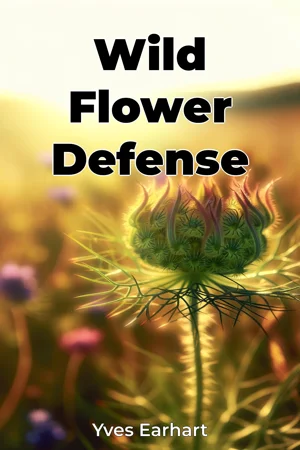
About This Book
**Title:** *Wild Flower Defense: The Hidden Strategies of Survival in Bloom* **Opening Hook:** What if the vibrant petals and delicate stems of wildflowers concealed a silent, sophisticated arsenal? When a deer recoils from a seemingly innocuous bloom or aphids mysteriously avoid certain plants, unseen battles are unfolding—ones that shape ecosystems and challenge our understanding of plant passivity. **Main Topics & Significance:** This book explores three core mechanisms underpinning wildflower survival: **chemical deterrents**, **symbiotic insect relationships**, and **structural adaptations**. These topics reveal how plants actively defend themselves, sustain biodiversity, and stabilize ecosystems—a subject critical to conservation efforts and understanding ecological resilience in a changing climate. **Context & Background:** For centuries, botanical studies focused on plant morphology and taxonomy, often overlooking dynamic survival strategies. Modern research, however, integrates ecology, biochemistry, and environmental science to decode how wildflowers interact with their surroundings. Readers need no specialized prior knowledge; foundational concepts in ecology and plant biology are introduced with clarity. **Central Thesis:** Wildflowers are not passive victims of predation or environmental stress. Through evolved chemical, biological, and physical defenses, they engage in complex ecological dialogues that ensure their survival and regulate ecosystem health. Recognizing these strategies is vital to preserving plant diversity and addressing anthropogenic threats to natural habitats. **Content Overview:** 1. **Introduction**: Challenges the notion of plant passivity, framing wildflowers as active participants in their survival. 2. **Chemical Warfare**: Examines alkaloids, phenolics, and volatile organic compounds used to deter herbivores and suppress competitors. 3. **Symbiotic Alliances**: Explores mutualistic relationships with ants, beetles, and pollinators that offer protection in exchange for nutrients or shelter. 4. **Structural Adaptations**: Analyzes thorns, trichomes, and timed flowering cycles that physically or temporally evade threats. 5. **Ecological & Human Implications**: Discusses how these defenses influence food webs, soil health, and sustainable agricultural practices. **Evidence & Research:** The book synthesizes peer-reviewed studies, field experiments, and laboratory analyses—such as gas chromatography to identify chemical compounds and ecological modeling to map symbiotic networks. Case studies include *Dalechampia* vines deploying resin rewards for protective ants and *Nicotiana* species altering nectar chemistry to repel destructive moths. **Interdisciplinary Connections:** 1. **Biochemistry**: Unravels the synthesis and ecological role of plant secondary metabolites. 2. **Environmental Science**: Links wildflower resilience to broader ecosystem stability. 3. **Agriculture**: Inspires bio-inspired pest management, reducing reliance on synthetic chemicals. **Unique Approach:** The book bridges laboratory findings with ecological fieldwork, emphasizing plant agency. It challenges anthropocentric narratives by framing defenses as adaptive dialogues rather than mere reactions, supported by cutting-edge research on plant communication via root networks and airborne signals. **Tone & Style:** Written in clear, accessible prose, the book balances scientific rigor with narrative storytelling. Technical terms are defined contextually, and real-world examples—such as prairie restoration projects—anchor abstract concepts. **Target Audience:** Ideal for botanists, ecologists, gardeners, and conservationists, the book also appeals to general readers interested in natural history. Its practical insights into sustainable gardening and habitat preservation offer actionable takeaways. **Genre-Specific Elements:** Aligned with life sciences literature, the book prioritizes empirical evidence while employing vivid descriptions of plant behaviors. It adheres to non-fiction conventions by citing diverse sources, from 19th-century botanical illustrations to contemporary genomic studies. **Scope & Limitations:** Focusing exclusively on wildflowers (not cultivated species), the book acknowledges gaps in understanding certain tropical species’ defenses and avoids speculative claims about plant cognition. **Real-World Applications:** Readers will learn to apply these insights to create pollinator-friendly gardens, leverage natural deterrents in agriculture, and advocate for conservation policies that protect plant-insect interactions. **Controversies & Debates:** The book addresses ongoing debates, such as the ethics of manipulating plant-insect relationships for crop protection and disagreements over the extent of plant “intentionality” in defense behaviors. **Conclusion:** *Wild Flower Defense* redefines wildflowers as strategic survivors, offering a fresh lens to appreciate their role in ecosystems. By illuminating their hidden battles, the book underscores the urgency of ecological stewardship in an era of biodiversity loss.
**Title:** *Wild Flower Defense: The Hidden Strategies of Survival in Bloom* **Opening Hook:** What if the vibrant petals and delicate stems of wildflowers concealed a silent, sophisticated arsenal? When a deer recoils from a seemingly innocuous bloom or aphids mysteriously avoid certain plants, unseen battles are unfolding—ones that shape ecosystems and challenge our understanding of plant passivity. **Main Topics & Significance:** This book explores three core mechanisms underpinning wildflower survival: **chemical deterrents**, **symbiotic insect relationships**, and **structural adaptations**. These topics reveal how plants actively defend themselves, sustain biodiversity, and stabilize ecosystems—a subject critical to conservation efforts and understanding ecological resilience in a changing climate. **Context & Background:** For centuries, botanical studies focused on plant morphology and taxonomy, often overlooking dynamic survival strategies. Modern research, however, integrates ecology, biochemistry, and environmental science to decode how wildflowers interact with their surroundings. Readers need no specialized prior knowledge; foundational concepts in ecology and plant biology are introduced with clarity. **Central Thesis:** Wildflowers are not passive victims of predation or environmental stress. Through evolved chemical, biological, and physical defenses, they engage in complex ecological dialogues that ensure their survival and regulate ecosystem health. Recognizing these strategies is vital to preserving plant diversity and addressing anthropogenic threats to natural habitats. **Content Overview:** 1. **Introduction**: Challenges the notion of plant passivity, framing wildflowers as active participants in their survival. 2. **Chemical Warfare**: Examines alkaloids, phenolics, and volatile organic compounds used to deter herbivores and suppress competitors. 3. **Symbiotic Alliances**: Explores mutualistic relationships with ants, beetles, and pollinators that offer protection in exchange for nutrients or shelter. 4. **Structural Adaptations**: Analyzes thorns, trichomes, and timed flowering cycles that physically or temporally evade threats. 5. **Ecological & Human Implications**: Discusses how these defenses influence food webs, soil health, and sustainable agricultural practices. **Evidence & Research:** The book synthesizes peer-reviewed studies, field experiments, and laboratory analyses—such as gas chromatography to identify chemical compounds and ecological modeling to map symbiotic networks. Case studies include *Dalechampia* vines deploying resin rewards for protective ants and *Nicotiana* species altering nectar chemistry to repel destructive moths. **Interdisciplinary Connections:** 1. **Biochemistry**: Unravels the synthesis and ecological role of plant secondary metabolites. 2. **Environmental Science**: Links wildflower resilience to broader ecosystem stability. 3. **Agriculture**: Inspires bio-inspired pest management, reducing reliance on synthetic chemicals. **Unique Approach:** The book bridges laboratory findings with ecological fieldwork, emphasizing plant agency. It challenges anthropocentric narratives by framing defenses as adaptive dialogues rather than mere reactions, supported by cutting-edge research on plant communication via root networks and airborne signals. **Tone & Style:** Written in clear, accessible prose, the book balances scientific rigor with narrative storytelling. Technical terms are defined contextually, and real-world examples—such as prairie restoration projects—anchor abstract concepts. **Target Audience:** Ideal for botanists, ecologists, gardeners, and conservationists, the book also appeals to general readers interested in natural history. Its practical insights into sustainable gardening and habitat preservation offer actionable takeaways. **Genre-Specific Elements:** Aligned with life sciences literature, the book prioritizes empirical evidence while employing vivid descriptions of plant behaviors. It adheres to non-fiction conventions by citing diverse sources, from 19th-century botanical illustrations to contemporary genomic studies. **Scope & Limitations:** Focusing exclusively on wildflowers (not cultivated species), the book acknowledges gaps in understanding certain tropical species’ defenses and avoids speculative claims about plant cognition. **Real-World Applications:** Readers will learn to apply these insights to create pollinator-friendly gardens, leverage natural deterrents in agriculture, and advocate for conservation policies that protect plant-insect interactions. **Controversies & Debates:** The book addresses ongoing debates, such as the ethics of manipulating plant-insect relationships for crop protection and disagreements over the extent of plant “intentionality” in defense behaviors. **Conclusion:** *Wild Flower Defense* redefines wildflowers as strategic survivors, offering a fresh lens to appreciate their role in ecosystems. By illuminating their hidden battles, the book underscores the urgency of ecological stewardship in an era of biodiversity loss.
*Wild Flower Defense: The Hidden Strategies of Survival in Bloom* reimagines wildflowers as master strategists in a hidden battlefield of survival. The book dismantles the myth of plant passivity, revealing how wildflowers deploy chemical deterrents like alkaloids and volatile organic compounds to repel herbivores—think of a sunflower silently releasing toxins that make deer recoil. It also uncovers symbiotic partnerships, such as ants defending *Dalechampia* vines in exchange for resin, showcasing nature’s barter system. These strategies aren’t just about individual survival; they underpin biodiversity and ecological resilience, making wildflowers unsung heroes in stabilizing ecosystems. The book progresses from dissecting molecular warfare to exploring physical adaptations like thorns and timed flowering cycles, weaving biochemistry with ecology. Case studies, such as *Nicotiana* plants altering nectar chemistry to deter moths, ground abstract concepts in relatable examples. What sets this work apart is its interdisciplinary lens—linking lab research on plant communication to real-world applications like sustainable agriculture. By framing defenses as dynamic dialogues rather than static traits, it challenges readers to see plants as active participants in their ecosystems. Accessible yet rigorous, *Wild Flower Defense* bridges academic study and practical stewardship. Its final chapters connect wildflower resilience to human impacts, offering actionable insights for gardeners and policymakers alike. Whether explaining how prairie restoration bolsters soil health or how natural pest deterrents could reduce synthetic pesticides, the book transforms curiosity into ecological advocacy—one bloom at a time.
Book Details
ISBN
9788233953805
Publisher
Publifye AS
Your Licenses
You don't own any licenses for this book
Purchase a license below to unlock this book and download the EPUB.
Purchase License
Select a tier to unlock this book
Need bulk licensing?
Contact us for enterprise agreements.