
About This Book
**Opening Hook:** How do delicate, vibrant flowers not only survive but flourish in the thin air, relentless winds, and freezing temperatures of Earth’s highest mountain ranges? *Alpine Flower Survival* delves into this paradox, unraveling the unseen battles and biological ingenuity that enable these plants to persist in environments hostile to most life. **Main Topics and Significance:** The book explores three core themes: the physiological adaptations of alpine flora, the ecological networks sustaining mountain ecosystems, and the looming threat of climate change on these fragile habitats. These topics illuminate how life thrives at extremes, offer insights into ecosystem resilience, and underscore the urgency of conserving biodiversity in rapidly warming regions. **Context and Background:** Alpine ecosystems, occupying just 3% of Earth’s land surface, are among the least studied yet most vulnerable environments. Early 20th-century botanists documented alpine species as curiosities, but modern tools—genetic sequencing, microclimate sensors, and satellite mapping—have revealed their critical role in global biodiversity. The book assumes no prior expertise, introducing foundational concepts like photosynthesis constraints at altitude and soil nutrient dynamics in glacial valleys. **Central Thesis:** The book argues that alpine flowers are not merely survivors but innovators, evolving strategies that challenge traditional assumptions about plant resilience. Their adaptations—from microscopic leaf structures to symbiotic fungal partnerships—provide a blueprint for understanding ecological stability in an era of environmental upheaval. **Content Overview:** 1. **Foundations**: Introduces alpine zones, defining their climatic and geological boundaries, and outlines key challenges like UV radiation and temperature volatility. 2. **Adaptive Mechanisms**: Examines traits such as dwarfism, hairy stems for insulation, and antifreeze proteins, linking these features to genetic and metabolic processes. 3. **Ecological Interdependence**: Explores pollination networks, soil microbial communities, and the role of flowers in stabilizing slopes and water cycles. 4. **Climate Pressures**: Analyzes how shifting temperature gradients and invasive species disrupt alpine habitats, with case studies from the Himalayas, Andes, and Rockies. 5. **Conservation Frameworks**: Proposes strategies for habitat preservation, emphasizing community-led initiatives and adaptive management. **Evidence and Research:** The book synthesizes field studies from high-altitude research stations, laboratory experiments on cold tolerance, and indigenous knowledge of plant uses. Unique datasets include decade-long phenological records tracking bloom cycles and genomic analyses pinpointing stress-response genes. **Interdisciplinary Connections:** 1. **Climatology**: Alpine plants serve as bioindicators of atmospheric changes, informing climate models. 2. **Ethnobotany**: Traditional practices, such as Tibetan use of *Saussurea* species in medicine, reveal human-plant coadaptation. 3. **Materials Science**: Biomimicry of alpine flower structures inspires innovations in thermal insulation and water retention technologies. **Unique Approach:** The book bridges scales—from cellular biochemistry to landscape ecology—and integrates Western scientific methods with Indigenous ecological knowledge. This dual lens challenges the dichotomy between “pristine” wilderness and human-influenced landscapes. **Tone and Style:** Written in clear, jargon-free prose, the book balances academic rigor with narrative storytelling. Profiles of field scientists and vignettes of specific species, like the glacier buttercup (*Ranunculus glacialis*), ground abstract concepts in tangible examples. **Target Audience:** Ecologists, conservation practitioners, and students of botany will find actionable data, while outdoor enthusiasts and educators gain accessible insights into alpine biodiversity. Policymakers are offered frameworks for balancing tourism and preservation. **Genre-Specific Elements:** Aligned with mountain ecology and life sciences genres, the book emphasizes empirical research, ecosystem dynamics, and species interactions. It adheres to non-fiction conventions by citing peer-reviewed studies and prioritizing measurable phenomena over speculative claims. **Scope and Limitations:** Focusing exclusively on flowering plants (angiosperms), the book acknowledges but does not detail alpine fauna or non-vascular species. Geographically, it prioritizes well-researched regions, noting data gaps in understudied ranges like the Ethiopian Highlands. **Real-World Applications:** Findings inform habitat restoration—e.g., selecting resilient species for revegetating eroded trails—and guide predictive models for biodiversity loss. Citizen science projects, such as monitoring bloom times, empower readers to contribute to conservation. **Controversies and Debates:** The book addresses disputes over “assisted migration”—transplanting species to cooler elevations—and critiques simplistic narratives of alpine ecosystems as “canaries in the coal mine” for climate change. Ethical dilemmas, such as prioritizing conservation in resource-limited regions, are examined without prescriptive solutions. **Conclusion:** *Alpine Flower Survival* reframes high-altitude flora as dynamic actors in global ecology, urging a reevaluation of resilience in the face of environmental crisis. By merging cutting-edge science with traditional wisdom, it advocates for a collaborative, multidisciplinary approach to preserving Earth’s highest gardens.
**Opening Hook:** How do delicate, vibrant flowers not only survive but flourish in the thin air, relentless winds, and freezing temperatures of Earth’s highest mountain ranges? *Alpine Flower Survival* delves into this paradox, unraveling the unseen battles and biological ingenuity that enable these plants to persist in environments hostile to most life. **Main Topics and Significance:** The book explores three core themes: the physiological adaptations of alpine flora, the ecological networks sustaining mountain ecosystems, and the looming threat of climate change on these fragile habitats. These topics illuminate how life thrives at extremes, offer insights into ecosystem resilience, and underscore the urgency of conserving biodiversity in rapidly warming regions. **Context and Background:** Alpine ecosystems, occupying just 3% of Earth’s land surface, are among the least studied yet most vulnerable environments. Early 20th-century botanists documented alpine species as curiosities, but modern tools—genetic sequencing, microclimate sensors, and satellite mapping—have revealed their critical role in global biodiversity. The book assumes no prior expertise, introducing foundational concepts like photosynthesis constraints at altitude and soil nutrient dynamics in glacial valleys. **Central Thesis:** The book argues that alpine flowers are not merely survivors but innovators, evolving strategies that challenge traditional assumptions about plant resilience. Their adaptations—from microscopic leaf structures to symbiotic fungal partnerships—provide a blueprint for understanding ecological stability in an era of environmental upheaval. **Content Overview:** 1. **Foundations**: Introduces alpine zones, defining their climatic and geological boundaries, and outlines key challenges like UV radiation and temperature volatility. 2. **Adaptive Mechanisms**: Examines traits such as dwarfism, hairy stems for insulation, and antifreeze proteins, linking these features to genetic and metabolic processes. 3. **Ecological Interdependence**: Explores pollination networks, soil microbial communities, and the role of flowers in stabilizing slopes and water cycles. 4. **Climate Pressures**: Analyzes how shifting temperature gradients and invasive species disrupt alpine habitats, with case studies from the Himalayas, Andes, and Rockies. 5. **Conservation Frameworks**: Proposes strategies for habitat preservation, emphasizing community-led initiatives and adaptive management. **Evidence and Research:** The book synthesizes field studies from high-altitude research stations, laboratory experiments on cold tolerance, and indigenous knowledge of plant uses. Unique datasets include decade-long phenological records tracking bloom cycles and genomic analyses pinpointing stress-response genes. **Interdisciplinary Connections:** 1. **Climatology**: Alpine plants serve as bioindicators of atmospheric changes, informing climate models. 2. **Ethnobotany**: Traditional practices, such as Tibetan use of *Saussurea* species in medicine, reveal human-plant coadaptation. 3. **Materials Science**: Biomimicry of alpine flower structures inspires innovations in thermal insulation and water retention technologies. **Unique Approach:** The book bridges scales—from cellular biochemistry to landscape ecology—and integrates Western scientific methods with Indigenous ecological knowledge. This dual lens challenges the dichotomy between “pristine” wilderness and human-influenced landscapes. **Tone and Style:** Written in clear, jargon-free prose, the book balances academic rigor with narrative storytelling. Profiles of field scientists and vignettes of specific species, like the glacier buttercup (*Ranunculus glacialis*), ground abstract concepts in tangible examples. **Target Audience:** Ecologists, conservation practitioners, and students of botany will find actionable data, while outdoor enthusiasts and educators gain accessible insights into alpine biodiversity. Policymakers are offered frameworks for balancing tourism and preservation. **Genre-Specific Elements:** Aligned with mountain ecology and life sciences genres, the book emphasizes empirical research, ecosystem dynamics, and species interactions. It adheres to non-fiction conventions by citing peer-reviewed studies and prioritizing measurable phenomena over speculative claims. **Scope and Limitations:** Focusing exclusively on flowering plants (angiosperms), the book acknowledges but does not detail alpine fauna or non-vascular species. Geographically, it prioritizes well-researched regions, noting data gaps in understudied ranges like the Ethiopian Highlands. **Real-World Applications:** Findings inform habitat restoration—e.g., selecting resilient species for revegetating eroded trails—and guide predictive models for biodiversity loss. Citizen science projects, such as monitoring bloom times, empower readers to contribute to conservation. **Controversies and Debates:** The book addresses disputes over “assisted migration”—transplanting species to cooler elevations—and critiques simplistic narratives of alpine ecosystems as “canaries in the coal mine” for climate change. Ethical dilemmas, such as prioritizing conservation in resource-limited regions, are examined without prescriptive solutions. **Conclusion:** *Alpine Flower Survival* reframes high-altitude flora as dynamic actors in global ecology, urging a reevaluation of resilience in the face of environmental crisis. By merging cutting-edge science with traditional wisdom, it advocates for a collaborative, multidisciplinary approach to preserving Earth’s highest gardens.
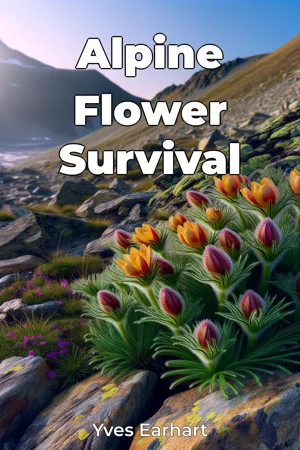
"Alpine Flower Survival" explores the remarkable resilience and ingenuity of alpine flora, thriving in some of Earth’s most extreme environments. The book delves into how these delicate flowers endure harsh conditions like freezing temperatures, thin air, and relentless winds through unique adaptations such as dwarfism, hairy stems for insulation, and antifreeze proteins. It also highlights their critical role in mountain ecosystems, from stabilizing slopes to supporting intricate pollination networks and soil microbial communities. The book uniquely bridges scientific research and Indigenous knowledge, offering a holistic view of alpine ecosystems. It examines the growing threats posed by climate change, such as shifting temperature gradients and invasive species, while proposing practical conservation strategies. Through vivid storytelling and accessible language, it connects cellular-level adaptations to broader ecological dynamics, making complex concepts relatable. By combining cutting-edge science with traditional wisdom, "Alpine Flower Survival" not only celebrates the beauty and resilience of high-altitude flora but also underscores the urgent need to protect these fragile habitats in a rapidly changing world. It’s a compelling read for ecologists, conservationists, and anyone fascinated by the intersection of biology and environmental science.
Book Details
ISBN
9788233953799
Publisher
Publifye AS
Your Licenses
You don't own any licenses for this book
Purchase a license below to unlock this book and download the EPUB.
Purchase License
Select a tier to unlock this book
Need bulk licensing?
Contact us for enterprise agreements.