
About This Book
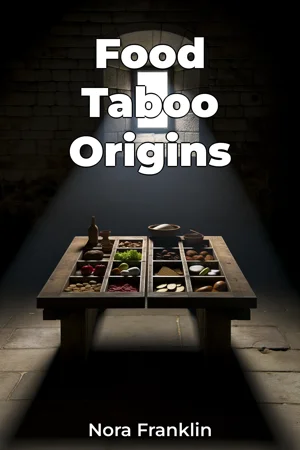
"Food Taboo Origins" explores the complex web of dietary restrictions that have shaped human societies throughout history, examining how seemingly arbitrary food prohibitions evolved into powerful cultural institutions that continue to influence global eating habits and economic systems today. The book presents three primary themes: the anthropological foundations of food taboos across cultures, the socioeconomic mechanisms that perpetuate these restrictions, and the evolutionary adaptation of food prohibitions in response to changing societies. Through careful analysis of historical records, anthropological studies, and contemporary research, it demonstrates how food taboos serve multiple functions beyond religious or cultural identity. Drawing from extensive field research and historical documentation spanning six continents, the work establishes that food prohibitions often emerged from practical concerns about food safety, resource management, and social cohesion. The author presents evidence showing how these initial practical measures transformed into cultural institutions that gained religious and social significance over time. The book's central argument posits that food taboos represent a sophisticated system of cultural adaptation that helped societies navigate environmental challenges, maintain social order, and establish group identity. This thesis is supported through examination of archaeological evidence, religious texts, and contemporary anthropological studies. Structured in three main sections, the work first establishes a theoretical framework for understanding food prohibitions, then examines specific case studies from various cultures, and concludes with an analysis of how these historical patterns influence modern global food systems and dietary choices. The research methodology combines traditional anthropological fieldwork with historical analysis, economic data, and modern food science. It features previously unpublished research from remote communities and newly translated historical documents that provide fresh insights into the evolution of dietary restrictions. The book connects anthropology, economics, and public health, demonstrating how food taboos influence modern market dynamics, public health policies, and global trade patterns. These interdisciplinary connections help readers understand the lasting impact of historical food prohibitions on contemporary society. Written in an academic yet accessible style, the work maintains scholarly rigor while ensuring key concepts are comprehensible to general readers interested in food history, cultural studies, or anthropology. It serves both as a comprehensive reference for academics and an informative resource for general readers seeking to understand the origins of modern dietary practices. The target audience includes anthropologists, food historians, public health professionals, and educated general readers interested in the intersection of food, culture, and society. The book provides practical insights for food industry professionals, policy makers, and cultural researchers working with diverse populations. Within the scope of food writing and social science, the work focuses specifically on the development and propagation of food taboos, while acknowledging that individual dietary choices and modern food movements lie beyond its purview. It addresses ongoing debates about the role of traditional food restrictions in modern society and their relevance to contemporary public health issues. The book provides valuable insights for modern food policy development, cross-cultural communication, and understanding consumer behavior in global food markets. It offers practical frameworks for analyzing and navigating cultural differences in food preferences and restrictions, particularly useful for international business and public health initiatives. Throughout the work, the author maintains an objective, evidence-based approach to examining these cultural practices, neither advocating for nor dismissing traditional food prohibitions, but rather analyzing their origins, evolution, and lasting impact on human society.
"Food Taboo Origins" explores the complex web of dietary restrictions that have shaped human societies throughout history, examining how seemingly arbitrary food prohibitions evolved into powerful cultural institutions that continue to influence global eating habits and economic systems today. The book presents three primary themes: the anthropological foundations of food taboos across cultures, the socioeconomic mechanisms that perpetuate these restrictions, and the evolutionary adaptation of food prohibitions in response to changing societies. Through careful analysis of historical records, anthropological studies, and contemporary research, it demonstrates how food taboos serve multiple functions beyond religious or cultural identity. Drawing from extensive field research and historical documentation spanning six continents, the work establishes that food prohibitions often emerged from practical concerns about food safety, resource management, and social cohesion. The author presents evidence showing how these initial practical measures transformed into cultural institutions that gained religious and social significance over time. The book's central argument posits that food taboos represent a sophisticated system of cultural adaptation that helped societies navigate environmental challenges, maintain social order, and establish group identity. This thesis is supported through examination of archaeological evidence, religious texts, and contemporary anthropological studies. Structured in three main sections, the work first establishes a theoretical framework for understanding food prohibitions, then examines specific case studies from various cultures, and concludes with an analysis of how these historical patterns influence modern global food systems and dietary choices. The research methodology combines traditional anthropological fieldwork with historical analysis, economic data, and modern food science. It features previously unpublished research from remote communities and newly translated historical documents that provide fresh insights into the evolution of dietary restrictions. The book connects anthropology, economics, and public health, demonstrating how food taboos influence modern market dynamics, public health policies, and global trade patterns. These interdisciplinary connections help readers understand the lasting impact of historical food prohibitions on contemporary society. Written in an academic yet accessible style, the work maintains scholarly rigor while ensuring key concepts are comprehensible to general readers interested in food history, cultural studies, or anthropology. It serves both as a comprehensive reference for academics and an informative resource for general readers seeking to understand the origins of modern dietary practices. The target audience includes anthropologists, food historians, public health professionals, and educated general readers interested in the intersection of food, culture, and society. The book provides practical insights for food industry professionals, policy makers, and cultural researchers working with diverse populations. Within the scope of food writing and social science, the work focuses specifically on the development and propagation of food taboos, while acknowledging that individual dietary choices and modern food movements lie beyond its purview. It addresses ongoing debates about the role of traditional food restrictions in modern society and their relevance to contemporary public health issues. The book provides valuable insights for modern food policy development, cross-cultural communication, and understanding consumer behavior in global food markets. It offers practical frameworks for analyzing and navigating cultural differences in food preferences and restrictions, particularly useful for international business and public health initiatives. Throughout the work, the author maintains an objective, evidence-based approach to examining these cultural practices, neither advocating for nor dismissing traditional food prohibitions, but rather analyzing their origins, evolution, and lasting impact on human society.
"Food Taboo Origins" presents a fascinating exploration of how dietary restrictions have evolved from practical necessities into powerful cultural institutions that continue to shape our modern food systems. Through a comprehensive analysis spanning six continents, the book reveals how food prohibitions originally emerged from pragmatic concerns about food safety and resource management before developing into deeply embedded cultural and religious practices. The work uniquely combines traditional anthropological research with economic data and modern food science to demonstrate how food taboos serve as sophisticated systems of cultural adaptation. Drawing from previously unpublished research and newly translated historical documents, it examines specific case studies that illustrate how societies used dietary restrictions to navigate environmental challenges and maintain social cohesion. The author's analysis reveals surprising connections between ancient food prohibitions and contemporary market dynamics, showing how historical dietary practices continue to influence global trade patterns and public health policies. Written in an accessible yet scholarly style, the book progresses from establishing a theoretical framework for understanding food prohibitions to examining specific cultural case studies, before concluding with an analysis of their impact on modern society. This interdisciplinary approach makes complex anthropological concepts understandable to general readers while maintaining academic rigor, offering valuable insights for both scholars and those interested in the intersection of food, culture, and society.
Book Details
ISBN
9788233953645
Publisher
Publifye AS
Your Licenses
You don't own any licenses for this book
Purchase a license below to unlock this book and download the EPUB.
Purchase License
Select a tier to unlock this book
Need bulk licensing?
Contact us for enterprise agreements.