
About This Book
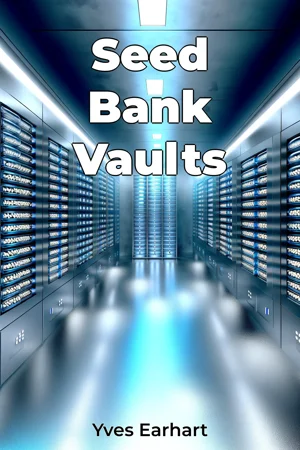
"Seed Bank Vaults" opens with a stark reality: within the frigid depths of secure facilities around the world lie humanity's insurance policy against agricultural collapse. This comprehensive examination of global seed preservation networks reveals how these facilities safeguard the genetic diversity of our food supply against climate change, disease, and human conflict. The book presents three primary areas of focus: the technical aspects of seed preservation, the global network of seed vault facilities, and the critical role these installations play in maintaining worldwide food security. Through detailed analysis, it demonstrates how seed banks serve as both time capsules of agricultural heritage and vital resources for future crop development. Starting with historical context, the work traces the evolution of seed preservation from ancient farming practices to modern cryogenic storage technologies. It examines watershed moments, including the establishment of the first modern seed banks in the 1920s and the development of the Svalbard Global Seed Vault in 2008, demonstrating how agricultural challenges have shaped preservation strategies. The central thesis maintains that seed banks represent a crucial intersection of conservation biology, agricultural science, and global food security. The book systematically builds this argument through examination of collection methodologies, preservation techniques, and international cooperation frameworks. Structured in three main sections, the content progresses from technical fundamentals to global implications. The first section details preservation methods, including optimal storage conditions, viability testing, and regeneration protocols. The second explores the network of international facilities, their specializations, and operational procedures. The final section addresses the role of seed banks in addressing contemporary challenges such as climate adaptation and genetic resource conservation. The research draws from institutional databases, scientific studies, and first-hand accounts from facility operators and scientists. It incorporates data from major agricultural research centers and international conservation organizations, providing comprehensive coverage of current preservation practices and emerging technologies. The work connects multiple disciplines, linking agriculture with climate science, international law, and conservation biology. These intersections highlight how seed preservation influences global food policy, genetic research, and environmental protection efforts. Written in a scientific yet accessible style, the book maintains technical accuracy while ensuring comprehension for readers with basic scientific literacy. It employs clear explanations of complex concepts, supported by relevant examples and case studies. The target audience includes agricultural scientists, conservation biologists, policy makers, and informed general readers interested in food security and biodiversity conservation. The content serves both as a technical reference and an informative overview of this critical field. The book addresses current debates in the seed preservation community, including access rights to genetic resources, the role of traditional farming communities in preservation efforts, and the balance between conservation and utilization of stored materials. Practical applications include protocols for small-scale seed storage, guidelines for participating in seed preservation networks, and frameworks for understanding the impact of genetic diversity on food security. While focused primarily on major seed bank facilities and their operations, the book acknowledges limitations in coverage of smaller, regional preservation efforts and emerging preservation technologies still under development. The work maintains scientific objectivity while emphasizing the urgency of seed preservation efforts in the context of current environmental challenges. It provides a thorough examination of how these facilities operate as crucial safeguards for global agricultural stability and food security.
"Seed Bank Vaults" opens with a stark reality: within the frigid depths of secure facilities around the world lie humanity's insurance policy against agricultural collapse. This comprehensive examination of global seed preservation networks reveals how these facilities safeguard the genetic diversity of our food supply against climate change, disease, and human conflict. The book presents three primary areas of focus: the technical aspects of seed preservation, the global network of seed vault facilities, and the critical role these installations play in maintaining worldwide food security. Through detailed analysis, it demonstrates how seed banks serve as both time capsules of agricultural heritage and vital resources for future crop development. Starting with historical context, the work traces the evolution of seed preservation from ancient farming practices to modern cryogenic storage technologies. It examines watershed moments, including the establishment of the first modern seed banks in the 1920s and the development of the Svalbard Global Seed Vault in 2008, demonstrating how agricultural challenges have shaped preservation strategies. The central thesis maintains that seed banks represent a crucial intersection of conservation biology, agricultural science, and global food security. The book systematically builds this argument through examination of collection methodologies, preservation techniques, and international cooperation frameworks. Structured in three main sections, the content progresses from technical fundamentals to global implications. The first section details preservation methods, including optimal storage conditions, viability testing, and regeneration protocols. The second explores the network of international facilities, their specializations, and operational procedures. The final section addresses the role of seed banks in addressing contemporary challenges such as climate adaptation and genetic resource conservation. The research draws from institutional databases, scientific studies, and first-hand accounts from facility operators and scientists. It incorporates data from major agricultural research centers and international conservation organizations, providing comprehensive coverage of current preservation practices and emerging technologies. The work connects multiple disciplines, linking agriculture with climate science, international law, and conservation biology. These intersections highlight how seed preservation influences global food policy, genetic research, and environmental protection efforts. Written in a scientific yet accessible style, the book maintains technical accuracy while ensuring comprehension for readers with basic scientific literacy. It employs clear explanations of complex concepts, supported by relevant examples and case studies. The target audience includes agricultural scientists, conservation biologists, policy makers, and informed general readers interested in food security and biodiversity conservation. The content serves both as a technical reference and an informative overview of this critical field. The book addresses current debates in the seed preservation community, including access rights to genetic resources, the role of traditional farming communities in preservation efforts, and the balance between conservation and utilization of stored materials. Practical applications include protocols for small-scale seed storage, guidelines for participating in seed preservation networks, and frameworks for understanding the impact of genetic diversity on food security. While focused primarily on major seed bank facilities and their operations, the book acknowledges limitations in coverage of smaller, regional preservation efforts and emerging preservation technologies still under development. The work maintains scientific objectivity while emphasizing the urgency of seed preservation efforts in the context of current environmental challenges. It provides a thorough examination of how these facilities operate as crucial safeguards for global agricultural stability and food security.
"Seed Bank Vaults" explores humanity's critical insurance policy against agricultural disaster through the lens of global seed preservation networks. This comprehensive examination reveals how specialized facilities around the world safeguard our food supply's genetic diversity by preserving millions of seed varieties against threats like climate change, disease outbreaks, and human conflict. The book uniquely bridges the gap between technical preservation methods and their broader implications for global food security, making complex concepts accessible to both scientific professionals and engaged general readers. Through a carefully structured approach, the book begins with the historical evolution of seed preservation, from ancient farming practices to modern cryogenic storage technologies. The narrative then expands to examine the intricate network of international facilities, with special attention given to landmark achievements like the Svalbard Global Seed Vault. Readers gain insight into the sophisticated preservation techniques employed by these facilities, including optimal storage conditions, viability testing, and regeneration protocols that ensure the longevity of stored genetic resources. The final section of the book addresses contemporary challenges in agricultural preservation, examining how seed banks contribute to climate adaptation strategies and genetic resource conservation. By incorporating data from major agricultural research centers and first-hand accounts from facility operators, the book presents a compelling case for the vital role of seed preservation in maintaining agricultural heritage while securing future food production capabilities. This comprehensive treatment makes the book an invaluable resource for anyone interested in the intersection of conservation biology, agricultural science, and global food security.
Book Details
ISBN
9788233953614
Publisher
Publifye AS
Your Licenses
You don't own any licenses for this book
Purchase a license below to unlock this book and download the EPUB.
Purchase License
Select a tier to unlock this book
Need bulk licensing?
Contact us for enterprise agreements.