
About This Book
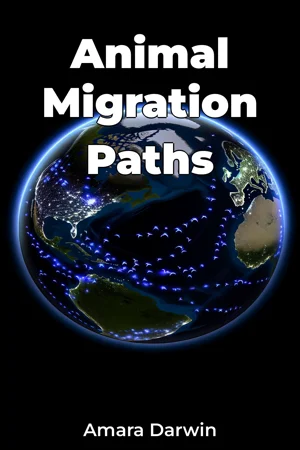
"Animal Migration Paths" uncovers the hidden narratives of global wildlife movement through the lens of modern tracking technology. By integrating satellite data, GPS tracking, and marine sensors, this comprehensive work reveals previously unknown migration routes that reshape our understanding of animal behavior and survival strategies. The book presents three core elements: the technological revolution in wildlife tracking, the discovered migration patterns of marine species including whale sharks and leatherback turtles, and the complex aerial navigation systems of migratory birds. These findings demonstrate how animals traverse vast distances with precision, utilizing environmental cues and innate biological mechanisms. Drawing from two decades of field research across six continents, the work builds upon traditional migration studies while incorporating data from over 50 research institutions. The historical context begins with early bird banding techniques from the 1800s, progressing through radio tracking to current satellite-based systems, illustrating the evolution of our ability to study animal movement. The central thesis establishes that migration patterns are more sophisticated and interconnected than previously understood, with species demonstrating adaptive responses to climate change and human activity. This understanding proves crucial for conservation efforts and ecosystem management. The content develops through systematic examination of tracking methodologies, followed by detailed case studies of marine migrations, including previously undocumented deep-ocean routes. The aerial migration section analyzes high-altitude navigation techniques, while the final chapters address conservation implications and future research directions. Research evidence combines quantitative tracking data with behavioral observations, environmental monitoring, and genetic analysis. The methodology integrates multiple data streams to create comprehensive migration maps and behavioral models. The work connects ecology, climatology, and conservation biology, demonstrating how migration patterns indicate ecosystem health and climate change impacts. These interdisciplinary links provide context for understanding broader environmental changes and their effects on wildlife behavior. Written in a technical yet accessible style, the book maintains scientific rigor while ensuring clarity for readers with basic biological knowledge. The target audience includes conservation professionals, wildlife researchers, and informed readers interested in animal behavior and environmental science. The book's scope encompasses both macro-level migration patterns and detailed individual tracking cases, though it acknowledges limitations in tracking technology for smaller species. The practical applications extend to protected area planning, shipping route adjustments to avoid marine migration corridors, and timing of wind farm operations around bird migrations. Current debates addressed include the impact of changing ocean temperatures on marine migration routes and the effects of artificial light pollution on bird navigation. The work presents empirical evidence while acknowledging areas requiring further research. The book delivers its findings through data visualizations, detailed maps, and case studies, maintaining focus on verified observations rather than speculation. It concludes with specific recommendations for conservation practices and future research directions, emphasizing the practical application of these discoveries for wildlife protection and ecosystem management. This research contributes to both scientific understanding and conservation planning, offering insights for researchers, policy makers, and conservation practitioners while maintaining accessibility for engaged general readers interested in wildlife behavior and environmental science.
"Animal Migration Paths" uncovers the hidden narratives of global wildlife movement through the lens of modern tracking technology. By integrating satellite data, GPS tracking, and marine sensors, this comprehensive work reveals previously unknown migration routes that reshape our understanding of animal behavior and survival strategies. The book presents three core elements: the technological revolution in wildlife tracking, the discovered migration patterns of marine species including whale sharks and leatherback turtles, and the complex aerial navigation systems of migratory birds. These findings demonstrate how animals traverse vast distances with precision, utilizing environmental cues and innate biological mechanisms. Drawing from two decades of field research across six continents, the work builds upon traditional migration studies while incorporating data from over 50 research institutions. The historical context begins with early bird banding techniques from the 1800s, progressing through radio tracking to current satellite-based systems, illustrating the evolution of our ability to study animal movement. The central thesis establishes that migration patterns are more sophisticated and interconnected than previously understood, with species demonstrating adaptive responses to climate change and human activity. This understanding proves crucial for conservation efforts and ecosystem management. The content develops through systematic examination of tracking methodologies, followed by detailed case studies of marine migrations, including previously undocumented deep-ocean routes. The aerial migration section analyzes high-altitude navigation techniques, while the final chapters address conservation implications and future research directions. Research evidence combines quantitative tracking data with behavioral observations, environmental monitoring, and genetic analysis. The methodology integrates multiple data streams to create comprehensive migration maps and behavioral models. The work connects ecology, climatology, and conservation biology, demonstrating how migration patterns indicate ecosystem health and climate change impacts. These interdisciplinary links provide context for understanding broader environmental changes and their effects on wildlife behavior. Written in a technical yet accessible style, the book maintains scientific rigor while ensuring clarity for readers with basic biological knowledge. The target audience includes conservation professionals, wildlife researchers, and informed readers interested in animal behavior and environmental science. The book's scope encompasses both macro-level migration patterns and detailed individual tracking cases, though it acknowledges limitations in tracking technology for smaller species. The practical applications extend to protected area planning, shipping route adjustments to avoid marine migration corridors, and timing of wind farm operations around bird migrations. Current debates addressed include the impact of changing ocean temperatures on marine migration routes and the effects of artificial light pollution on bird navigation. The work presents empirical evidence while acknowledging areas requiring further research. The book delivers its findings through data visualizations, detailed maps, and case studies, maintaining focus on verified observations rather than speculation. It concludes with specific recommendations for conservation practices and future research directions, emphasizing the practical application of these discoveries for wildlife protection and ecosystem management. This research contributes to both scientific understanding and conservation planning, offering insights for researchers, policy makers, and conservation practitioners while maintaining accessibility for engaged general readers interested in wildlife behavior and environmental science.
"Animal Migration Paths" offers a groundbreaking exploration of global wildlife movement through the lens of modern tracking technology, revealing previously unknown patterns that reshape our understanding of animal behavior. By combining satellite data, GPS tracking, and marine sensors, the book uncovers how diverse species navigate vast distances with remarkable precision, adapting to environmental changes and human activities along the way. The book's journey begins with historical tracking methods from the 1800s and progresses to cutting-edge satellite systems, demonstrating how our ability to study animal movement has evolved. Through comprehensive case studies spanning six continents and drawing from over 50 research institutions, readers discover fascinating insights about whale sharks' deep-ocean routes, leatherback turtles' marine migrations, and birds' sophisticated high-altitude navigation systems. This research reveals migration patterns to be far more complex and interconnected than previously understood. Written in an accessible yet scientifically rigorous style, the work seamlessly connects ecology, climatology, and conservation biology. The book presents its findings through detailed maps, data visualizations, and real-world examples, making it valuable for both professionals and informed readers interested in wildlife behavior. By examining how migration patterns indicate ecosystem health and climate change impacts, it provides crucial insights for conservation planning while highlighting the urgent need to protect these ancient migration routes for future generations.
Book Details
ISBN
9788233953577
Publisher
Publifye AS
Your Licenses
You don't own any licenses for this book
Purchase a license below to unlock this book and download the EPUB.
Purchase License
Select a tier to unlock this book
Need bulk licensing?
Contact us for enterprise agreements.