
About This Book
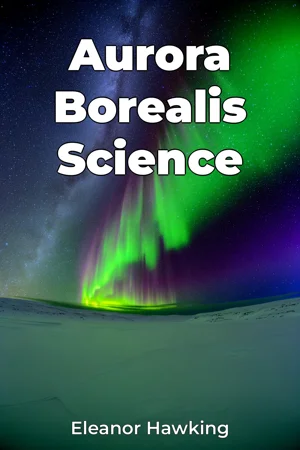
"Aurora Borealis Science" examines the complex interplay between solar activity and Earth's magnetic field that creates one of nature's most studied atmospheric phenomena. This comprehensive analysis bridges the gap between observable auroral displays and the underlying physics that drive them. The book presents three core areas: solar-terrestrial interactions, magnetospheric dynamics, and atmospheric physics. These interconnected topics form the foundation for understanding how charged particles from the Sun create visible light displays in Earth's polar regions. The work systematically explains how solar wind particles, traveling at speeds of 400-800 kilometers per second, interact with Earth's magnetic field to generate the aurora borealis. The historical context begins with early Norse and Indigenous observations, progressing through Kristian Birkeland's terrella experiments in the early 1900s to modern satellite-based research. This progression demonstrates how our understanding of auroral phenomena has evolved from mythological interpretations to precise scientific analysis. The book's central thesis argues that auroral displays serve as visible indicators of space weather conditions and magnetic field interactions, making them crucial for understanding broader patterns in Earth's space environment. This knowledge has practical applications in satellite communications, power grid management, and space exploration. Structured in three main sections, the work first establishes fundamental concepts in plasma physics and electromagnetic theory. The second section explores magnetospheric processes and particle acceleration mechanisms. The final section examines atmospheric chemistry and the specific conditions required for auroral light emission. The research draws from multiple data sources, including satellite measurements, ground-based magnetometer networks, and spectroscopic observations. The book incorporates findings from missions such as THEMIS (Time History of Events and Macroscale Interactions during Substorms) and various ESA and NASA space weather monitoring programs. Interdisciplinary connections link atmospheric physics with space weather forecasting, electromagnetic theory, and climate science. The book demonstrates how auroral research contributes to our understanding of similar phenomena on other planets and solar-planetary interactions throughout the solar system. The writing maintains a technical yet accessible approach, using mathematical descriptions where necessary while providing clear explanations for readers with a basic understanding of physics and earth sciences. This balance makes the content valuable for both advanced undergraduate students and professional researchers in related fields. The target audience includes physics and earth science students, space weather professionals, and researchers in related fields such as atmospheric chemistry and plasma physics. The book serves as both a comprehensive reference and an advanced introduction to auroral physics. The scope encompasses the complete chain of events from solar particle emission to visible light production, while acknowledging the ongoing research into fine-scale auroral structures and magnetosphere-ionosphere coupling mechanisms. It addresses current debates in the field, including the role of magnetic reconnection in auroral substorms and the influence of solar activity cycles on auroral intensity and frequency. Practical applications discussed include space weather prediction methods, satellite operation protocols during auroral events, and techniques for auroral photography and observation. The book also explores how auroral research contributes to our understanding of plasma behavior in both natural and laboratory settings. The work maintains scientific rigor while highlighting the practical significance of auroral research in modern technological systems and space exploration. It provides readers with both theoretical understanding and practical tools for engaging with auroral science in professional and research contexts.
"Aurora Borealis Science" examines the complex interplay between solar activity and Earth's magnetic field that creates one of nature's most studied atmospheric phenomena. This comprehensive analysis bridges the gap between observable auroral displays and the underlying physics that drive them. The book presents three core areas: solar-terrestrial interactions, magnetospheric dynamics, and atmospheric physics. These interconnected topics form the foundation for understanding how charged particles from the Sun create visible light displays in Earth's polar regions. The work systematically explains how solar wind particles, traveling at speeds of 400-800 kilometers per second, interact with Earth's magnetic field to generate the aurora borealis. The historical context begins with early Norse and Indigenous observations, progressing through Kristian Birkeland's terrella experiments in the early 1900s to modern satellite-based research. This progression demonstrates how our understanding of auroral phenomena has evolved from mythological interpretations to precise scientific analysis. The book's central thesis argues that auroral displays serve as visible indicators of space weather conditions and magnetic field interactions, making them crucial for understanding broader patterns in Earth's space environment. This knowledge has practical applications in satellite communications, power grid management, and space exploration. Structured in three main sections, the work first establishes fundamental concepts in plasma physics and electromagnetic theory. The second section explores magnetospheric processes and particle acceleration mechanisms. The final section examines atmospheric chemistry and the specific conditions required for auroral light emission. The research draws from multiple data sources, including satellite measurements, ground-based magnetometer networks, and spectroscopic observations. The book incorporates findings from missions such as THEMIS (Time History of Events and Macroscale Interactions during Substorms) and various ESA and NASA space weather monitoring programs. Interdisciplinary connections link atmospheric physics with space weather forecasting, electromagnetic theory, and climate science. The book demonstrates how auroral research contributes to our understanding of similar phenomena on other planets and solar-planetary interactions throughout the solar system. The writing maintains a technical yet accessible approach, using mathematical descriptions where necessary while providing clear explanations for readers with a basic understanding of physics and earth sciences. This balance makes the content valuable for both advanced undergraduate students and professional researchers in related fields. The target audience includes physics and earth science students, space weather professionals, and researchers in related fields such as atmospheric chemistry and plasma physics. The book serves as both a comprehensive reference and an advanced introduction to auroral physics. The scope encompasses the complete chain of events from solar particle emission to visible light production, while acknowledging the ongoing research into fine-scale auroral structures and magnetosphere-ionosphere coupling mechanisms. It addresses current debates in the field, including the role of magnetic reconnection in auroral substorms and the influence of solar activity cycles on auroral intensity and frequency. Practical applications discussed include space weather prediction methods, satellite operation protocols during auroral events, and techniques for auroral photography and observation. The book also explores how auroral research contributes to our understanding of plasma behavior in both natural and laboratory settings. The work maintains scientific rigor while highlighting the practical significance of auroral research in modern technological systems and space exploration. It provides readers with both theoretical understanding and practical tools for engaging with auroral science in professional and research contexts.
"Aurora Borealis Science" offers a comprehensive exploration of the mesmerizing northern lights phenomenon, delving into the intricate relationship between solar activity and Earth's magnetic field. The book masterfully explains how charged particles from the Sun, traveling at remarkable speeds of 400-800 kilometers per second, interact with our planet's magnetosphere to create the spectacular light displays in polar regions. This scientific journey progresses from ancient Norse and Indigenous observations to cutting-edge satellite-based research, demonstrating humanity's evolving understanding of this atmospheric marvel. The book systematically unfolds across three major sections, beginning with fundamental concepts in plasma physics and electromagnetic theory. It then advances through magnetospheric processes and concludes with a detailed examination of atmospheric chemistry and auroral light emission. Drawing from multiple data sources, including satellite measurements and ground-based observations, the text bridges the gap between observable phenomena and the complex physics driving them. What sets this work apart is its ability to maintain technical accuracy while remaining accessible to readers with basic physics knowledge. Particularly valuable is the book's emphasis on practical applications, from space weather forecasting to satellite communications and power grid management. By connecting atmospheric physics with broader scientific disciplines, it demonstrates how auroral research contributes to our understanding of similar phenomena throughout the solar system. The incorporation of findings from modern space missions like THEMIS and various space weather monitoring programs ensures readers receive the most current scientific perspectives on this fascinating natural phenomenon.
Book Details
ISBN
9788233953072
Publisher
Publifye AS
Your Licenses
You don't own any licenses for this book
Purchase a license below to unlock this book and download the EPUB.
Purchase License
Select a tier to unlock this book
Need bulk licensing?
Contact us for enterprise agreements.