
About This Book
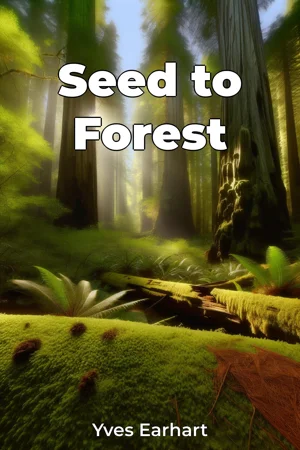
"Seed to Forest" offers readers a comprehensive journey through the intricate processes that transform a single seed into a complex forest ecosystem. The book presents a meticulously researched examination of forest development, combining ecological principles with real-world observations to illuminate the sophisticated progression of woodland environments. The work centers on three primary themes: the biological mechanisms of tree development from seed to maturity, the formation of forest community structures, and the evolution of ecosystem services throughout forest development stages. These interconnected topics provide crucial insights for forestry professionals, environmental scientists, and land managers while remaining accessible to engaged general readers. Drawing from decades of ecological research and long-term forest studies, the book establishes a clear framework for understanding forest succession. The initial chapters examine seed dispersal mechanisms and germination requirements, progressing through detailed analyses of seedling establishment and competitive dynamics. Middle sections explore canopy development, understory relationships, and the gradual accumulation of biological complexity within maturing forests. The text supports its arguments with extensive data from global forest monitoring programs, dendrochronological studies, and soil science research. Notable attention is given to the role of environmental factors—including climate, soil conditions, and species interactions—in shaping forest development trajectories. The book incorporates recent findings from molecular biology and ecosystem modeling to provide current perspectives on forest dynamics. Interdisciplinary connections emerge naturally through discussions of soil chemistry, wildlife biology, and climate science. The author demonstrates how forest development influences watershed protection, carbon sequestration, and biodiversity maintenance. These connections establish forests as critical components of global environmental systems rather than isolated biological communities. The book's unique contribution lies in its integration of traditional forestry knowledge with modern ecological understanding. It presents novel frameworks for analyzing forest development stages and their ecological implications, supported by case studies from temperate, tropical, and boreal forests worldwide. Written in a clear, technical style appropriate for both academic and professional audiences, the text balances scientific rigor with practical applications. Each chapter includes detailed diagrams, data visualizations, and field photographs that illustrate key concepts and developmental stages. The work specifically targets forest managers, ecological researchers, environmental policy makers, and advanced students in environmental sciences. It provides practical tools for forest assessment, restoration planning, and ecosystem management while maintaining scholarly depth. Current debates in forest management—including the role of human intervention in natural succession, climate change adaptation strategies, and optimization of ecosystem services—are addressed through evidence-based analysis. The book acknowledges areas of scientific uncertainty while providing robust frameworks for decision-making. The scope encompasses both natural forest development and managed forest systems, though it primarily focuses on naturally regenerating ecosystems. This approach allows readers to understand baseline ecological processes while considering human influences on forest development. Through its systematic examination of forest development stages, "Seed to Forest" provides essential knowledge for understanding and managing woodland ecosystems in an era of environmental change. The work serves as both a comprehensive reference and a practical guide for those engaged in forest science and management.
"Seed to Forest" offers readers a comprehensive journey through the intricate processes that transform a single seed into a complex forest ecosystem. The book presents a meticulously researched examination of forest development, combining ecological principles with real-world observations to illuminate the sophisticated progression of woodland environments. The work centers on three primary themes: the biological mechanisms of tree development from seed to maturity, the formation of forest community structures, and the evolution of ecosystem services throughout forest development stages. These interconnected topics provide crucial insights for forestry professionals, environmental scientists, and land managers while remaining accessible to engaged general readers. Drawing from decades of ecological research and long-term forest studies, the book establishes a clear framework for understanding forest succession. The initial chapters examine seed dispersal mechanisms and germination requirements, progressing through detailed analyses of seedling establishment and competitive dynamics. Middle sections explore canopy development, understory relationships, and the gradual accumulation of biological complexity within maturing forests. The text supports its arguments with extensive data from global forest monitoring programs, dendrochronological studies, and soil science research. Notable attention is given to the role of environmental factors—including climate, soil conditions, and species interactions—in shaping forest development trajectories. The book incorporates recent findings from molecular biology and ecosystem modeling to provide current perspectives on forest dynamics. Interdisciplinary connections emerge naturally through discussions of soil chemistry, wildlife biology, and climate science. The author demonstrates how forest development influences watershed protection, carbon sequestration, and biodiversity maintenance. These connections establish forests as critical components of global environmental systems rather than isolated biological communities. The book's unique contribution lies in its integration of traditional forestry knowledge with modern ecological understanding. It presents novel frameworks for analyzing forest development stages and their ecological implications, supported by case studies from temperate, tropical, and boreal forests worldwide. Written in a clear, technical style appropriate for both academic and professional audiences, the text balances scientific rigor with practical applications. Each chapter includes detailed diagrams, data visualizations, and field photographs that illustrate key concepts and developmental stages. The work specifically targets forest managers, ecological researchers, environmental policy makers, and advanced students in environmental sciences. It provides practical tools for forest assessment, restoration planning, and ecosystem management while maintaining scholarly depth. Current debates in forest management—including the role of human intervention in natural succession, climate change adaptation strategies, and optimization of ecosystem services—are addressed through evidence-based analysis. The book acknowledges areas of scientific uncertainty while providing robust frameworks for decision-making. The scope encompasses both natural forest development and managed forest systems, though it primarily focuses on naturally regenerating ecosystems. This approach allows readers to understand baseline ecological processes while considering human influences on forest development. Through its systematic examination of forest development stages, "Seed to Forest" provides essential knowledge for understanding and managing woodland ecosystems in an era of environmental change. The work serves as both a comprehensive reference and a practical guide for those engaged in forest science and management.
"Seed to Forest" presents a fascinating exploration of how a single seed develops into a complex forest ecosystem, offering readers a comprehensive understanding of forest development processes. The book masterfully weaves together three core themes: tree development biology, forest community formation, and the evolution of ecosystem services. Through carefully structured chapters, readers journey from the fundamental mechanisms of seed dispersal and germination to the intricate dynamics of mature forest ecosystems. Drawing from extensive global research, including long-term forest studies and dendrochronological data, the book illuminates the sophisticated progression of woodland environments. One of its most compelling aspects is the detailed examination of how environmental factors shape forest development trajectories, incorporating cutting-edge findings from molecular biology and ecosystem modeling. The text successfully bridges traditional forestry knowledge with modern ecological understanding, making complex concepts accessible while maintaining scientific rigor. What sets this work apart is its holistic approach to forest ecology, connecting soil chemistry, wildlife biology, and climate science to demonstrate forests' critical role in global environmental systems. The book provides practical insights for forest management while exploring current debates about human intervention in natural succession and climate change adaptation strategies. Through clear technical writing, detailed diagrams, and real-world case studies from diverse forest types worldwide, it serves as both a comprehensive reference for professionals and an engaging resource for advanced students in environmental sciences.
Book Details
ISBN
9788233953058
Publisher
Publifye AS
Your Licenses
You don't own any licenses for this book
Purchase a license below to unlock this book and download the EPUB.
Purchase License
Select a tier to unlock this book
Need bulk licensing?
Contact us for enterprise agreements.