
About This Book
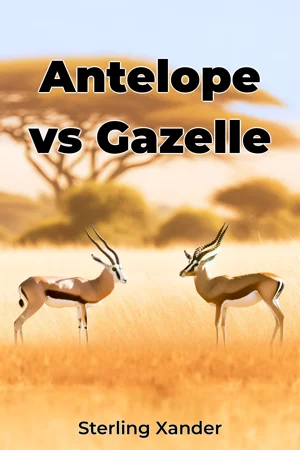
"Antelope vs Gazelle" delves into one of nature's most persistent misconceptions: the interchangeable use of these two distinct herbivore classifications. Through detailed anatomical analysis and behavioral studies, this comprehensive guide illuminates the subtle yet significant differences between these savanna-dwelling mammals. The book presents three core areas of distinction: physical characteristics, behavioral patterns, and evolutionary adaptations. While both animals belong to the family Bovidae, their divergent evolutionary paths have resulted in distinct traits that serve specific survival purposes in their respective ecological niches. Understanding these differences proves crucial for wildlife conservation, ecological research, and habitat management. Drawing from decades of field research across African savannas, the text examines how antelopes, comprising 91 species, differ from the more specialized subset of gazelles, which include 19 species. The historical context spans from early taxonomic classifications to modern DNA analysis, providing readers with essential background in ungulate evolution and classification. The central thesis demonstrates that while all gazelles are antelopes, not all antelopes are gazelles, much like how all squares are rectangles, but not vice versa. This fundamental understanding shapes current wildlife management practices and influences conservation strategies for both groups. The book's structure progresses through three main sections: morphological differences, including horn structure and body composition; behavioral distinctions, focusing on social organization and feeding strategies; and ecological roles, examining each group's impact on savanna ecosystems. Research evidence includes long-term population studies, detailed anatomical comparisons, and behavioral observation data from multiple African wildlife reserves. Interdisciplinary connections link to climate science, examining how environmental changes affect migration patterns, and to evolutionary biology, exploring adaptive radiation in bovids. The text incorporates recent findings in molecular genetics to establish precise taxonomic relationships. The writing maintains an academic foundation while remaining accessible to educated general readers, particularly those interested in wildlife biology, conservation, or African ecosystems. Technical terms are clearly defined, and complex concepts are illustrated through practical examples and field observations. Target readers include wildlife biologists, conservation professionals, university students, and informed nature enthusiasts. The book serves as both a comprehensive reference and an engaging exploration of these distinct animal groups. The scope encompasses current research while acknowledging gaps in scientific understanding, particularly regarding some lesser-studied antelope species. It addresses ongoing debates in classification methodology and conservation priorities, especially concerning habitat preservation strategies for specialized versus generalist species. Practical applications include improved wildlife identification skills, better understanding of ecosystem management, and more effective conservation planning. The book provides identification keys, range maps, and behavioral guides useful for field researchers and wildlife observers. One key debate addressed is the impact of climate change on species adaptation and survival, examining how different traits between antelopes and gazelles might influence their resilience to environmental changes. The text presents various viewpoints while maintaining scientific objectivity. The book's unique contribution lies in its systematic comparison of these often-confused groups, providing clarity through detailed analysis rather than superficial distinctions. It represents a significant addition to the field of ungulate biology and African wildlife studies, filling a notable gap in the existing literature.
"Antelope vs Gazelle" delves into one of nature's most persistent misconceptions: the interchangeable use of these two distinct herbivore classifications. Through detailed anatomical analysis and behavioral studies, this comprehensive guide illuminates the subtle yet significant differences between these savanna-dwelling mammals. The book presents three core areas of distinction: physical characteristics, behavioral patterns, and evolutionary adaptations. While both animals belong to the family Bovidae, their divergent evolutionary paths have resulted in distinct traits that serve specific survival purposes in their respective ecological niches. Understanding these differences proves crucial for wildlife conservation, ecological research, and habitat management. Drawing from decades of field research across African savannas, the text examines how antelopes, comprising 91 species, differ from the more specialized subset of gazelles, which include 19 species. The historical context spans from early taxonomic classifications to modern DNA analysis, providing readers with essential background in ungulate evolution and classification. The central thesis demonstrates that while all gazelles are antelopes, not all antelopes are gazelles, much like how all squares are rectangles, but not vice versa. This fundamental understanding shapes current wildlife management practices and influences conservation strategies for both groups. The book's structure progresses through three main sections: morphological differences, including horn structure and body composition; behavioral distinctions, focusing on social organization and feeding strategies; and ecological roles, examining each group's impact on savanna ecosystems. Research evidence includes long-term population studies, detailed anatomical comparisons, and behavioral observation data from multiple African wildlife reserves. Interdisciplinary connections link to climate science, examining how environmental changes affect migration patterns, and to evolutionary biology, exploring adaptive radiation in bovids. The text incorporates recent findings in molecular genetics to establish precise taxonomic relationships. The writing maintains an academic foundation while remaining accessible to educated general readers, particularly those interested in wildlife biology, conservation, or African ecosystems. Technical terms are clearly defined, and complex concepts are illustrated through practical examples and field observations. Target readers include wildlife biologists, conservation professionals, university students, and informed nature enthusiasts. The book serves as both a comprehensive reference and an engaging exploration of these distinct animal groups. The scope encompasses current research while acknowledging gaps in scientific understanding, particularly regarding some lesser-studied antelope species. It addresses ongoing debates in classification methodology and conservation priorities, especially concerning habitat preservation strategies for specialized versus generalist species. Practical applications include improved wildlife identification skills, better understanding of ecosystem management, and more effective conservation planning. The book provides identification keys, range maps, and behavioral guides useful for field researchers and wildlife observers. One key debate addressed is the impact of climate change on species adaptation and survival, examining how different traits between antelopes and gazelles might influence their resilience to environmental changes. The text presents various viewpoints while maintaining scientific objectivity. The book's unique contribution lies in its systematic comparison of these often-confused groups, providing clarity through detailed analysis rather than superficial distinctions. It represents a significant addition to the field of ungulate biology and African wildlife studies, filling a notable gap in the existing literature.
"Antelope vs Gazelle" tackles a common misconception in wildlife biology by meticulously exploring the distinctions between these two related but different groups of African savanna mammals. While both belong to the family Bovidae, the book reveals how antelopes, with 91 species, represent a broader category that includes gazelles as a specialized subset of 19 species. Through an elegant analogy comparing this relationship to squares and rectangles, readers gain a clear understanding of this crucial taxonomic distinction. The book's systematic approach unfolds across three main sections, examining morphological differences like horn structure, behavioral patterns including social organization, and ecological roles within savanna ecosystems. Drawing from decades of field research, it presents compelling evidence through population studies, anatomical comparisons, and behavioral observations from African wildlife reserves. The text skillfully integrates recent molecular genetics findings while maintaining accessibility for educated general readers. What sets this work apart is its comprehensive examination of how these animals' distinct evolutionary paths have shaped their survival strategies and ecological niches. The book connects these insights to pressing conservation challenges, exploring how climate change might differently affect antelopes and gazelles based on their unique adaptations. For wildlife biologists, conservation professionals, and nature enthusiasts, it serves as both a practical field guide and an authoritative reference, complete with identification keys and range maps that enhance its value for real-world application.
Book Details
ISBN
9788233952983
Publisher
Publifye AS
Your Licenses
You don't own any licenses for this book
Purchase a license below to unlock this book and download the EPUB.
Purchase License
Select a tier to unlock this book
Need bulk licensing?
Contact us for enterprise agreements.