
About This Book
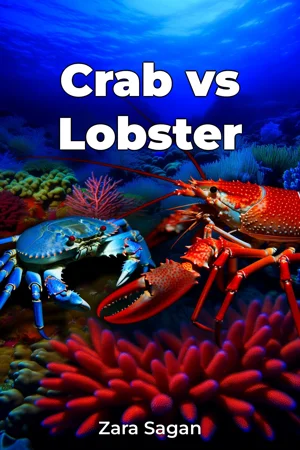
"Crab vs Lobster" examines two of the ocean's most successful crustacean groups, revealing how their evolutionary paths have shaped marine ecosystems across the globe. This comprehensive analysis delves into the intricate lives of these arthropods, comparing their biological adaptations, behavioral patterns, and ecological significance. The book presents three core themes: habitat utilization and adaptation, ecological roles and interactions, and the impact of environmental changes on both species groups. Through detailed comparative analysis, readers discover how these seemingly similar creatures have developed distinct strategies for survival across diverse marine environments, from coastal shores to deep-sea trenches. The work begins by establishing the evolutionary context, tracing both groups' development from their common ancestor approximately 360 million years ago. This foundation helps readers understand how different environmental pressures led to the development of their distinct characteristics. The book examines how crabs, with their laterally compressed bodies, have successfully colonized varied habitats from mangroves to hydrothermal vents, while lobsters have specialized in specific marine zones. Central to the book's argument is the concept that these two groups represent parallel but distinct approaches to marine survival, each contributing uniquely to ecosystem stability. The text supports this through extensive field research data, including long-term population studies, behavioral observations, and marine ecosystem surveys conducted across different geographical regions. The content is structured in three main sections: The first explores morphological and physiological adaptations, the second examines behavioral ecology and social structures, and the third investigates ecosystem roles and environmental interactions. Each section integrates recent research findings with established scientific knowledge, providing readers with current understanding of these species' biology and ecology. The book incorporates research methodologies from multiple disciplines, including marine biology, ecology, evolutionary biology, and environmental science. It features data from underwater observations, laboratory studies, and satellite tracking research, presenting a comprehensive view of how these creatures interact with their environment and each other. The text maintains an academic yet accessible tone, making complex biological concepts understandable to both students and interested general readers. Technical terminology is carefully explained, and concepts are illustrated with real-world examples and case studies from various marine environments worldwide. This work is particularly relevant for marine biology students, environmental scientists, and conservation professionals, offering practical insights for ecosystem management and species conservation. It addresses current challenges facing marine ecosystems, including climate change impacts, habitat degradation, and fishing pressure on both species groups. The book's scope encompasses both shallow and deep-water species, though it focuses primarily on the better-studied coastal and continental shelf populations. It acknowledges gaps in current knowledge, particularly regarding deep-sea species behavior and adaptation. Practical applications include insights for sustainable fisheries management, marine conservation planning, and ecosystem monitoring. The text addresses ongoing debates in marine biology, including questions about species adaptation to ocean acidification and the impact of commercial fishing on population dynamics. The work connects to broader fields including climate science, conservation biology, and resource management, demonstrating how understanding these species' ecology is crucial for marine ecosystem protection and sustainable resource use. This focused examination of crabs and lobsters provides readers with a detailed understanding of how these species maintain marine ecosystem balance, while highlighting the importance of continued research and conservation efforts in ensuring their survival in changing oceanic conditions.
"Crab vs Lobster" examines two of the ocean's most successful crustacean groups, revealing how their evolutionary paths have shaped marine ecosystems across the globe. This comprehensive analysis delves into the intricate lives of these arthropods, comparing their biological adaptations, behavioral patterns, and ecological significance. The book presents three core themes: habitat utilization and adaptation, ecological roles and interactions, and the impact of environmental changes on both species groups. Through detailed comparative analysis, readers discover how these seemingly similar creatures have developed distinct strategies for survival across diverse marine environments, from coastal shores to deep-sea trenches. The work begins by establishing the evolutionary context, tracing both groups' development from their common ancestor approximately 360 million years ago. This foundation helps readers understand how different environmental pressures led to the development of their distinct characteristics. The book examines how crabs, with their laterally compressed bodies, have successfully colonized varied habitats from mangroves to hydrothermal vents, while lobsters have specialized in specific marine zones. Central to the book's argument is the concept that these two groups represent parallel but distinct approaches to marine survival, each contributing uniquely to ecosystem stability. The text supports this through extensive field research data, including long-term population studies, behavioral observations, and marine ecosystem surveys conducted across different geographical regions. The content is structured in three main sections: The first explores morphological and physiological adaptations, the second examines behavioral ecology and social structures, and the third investigates ecosystem roles and environmental interactions. Each section integrates recent research findings with established scientific knowledge, providing readers with current understanding of these species' biology and ecology. The book incorporates research methodologies from multiple disciplines, including marine biology, ecology, evolutionary biology, and environmental science. It features data from underwater observations, laboratory studies, and satellite tracking research, presenting a comprehensive view of how these creatures interact with their environment and each other. The text maintains an academic yet accessible tone, making complex biological concepts understandable to both students and interested general readers. Technical terminology is carefully explained, and concepts are illustrated with real-world examples and case studies from various marine environments worldwide. This work is particularly relevant for marine biology students, environmental scientists, and conservation professionals, offering practical insights for ecosystem management and species conservation. It addresses current challenges facing marine ecosystems, including climate change impacts, habitat degradation, and fishing pressure on both species groups. The book's scope encompasses both shallow and deep-water species, though it focuses primarily on the better-studied coastal and continental shelf populations. It acknowledges gaps in current knowledge, particularly regarding deep-sea species behavior and adaptation. Practical applications include insights for sustainable fisheries management, marine conservation planning, and ecosystem monitoring. The text addresses ongoing debates in marine biology, including questions about species adaptation to ocean acidification and the impact of commercial fishing on population dynamics. The work connects to broader fields including climate science, conservation biology, and resource management, demonstrating how understanding these species' ecology is crucial for marine ecosystem protection and sustainable resource use. This focused examination of crabs and lobsters provides readers with a detailed understanding of how these species maintain marine ecosystem balance, while highlighting the importance of continued research and conservation efforts in ensuring their survival in changing oceanic conditions.
"Crab vs Lobster" presents a fascinating exploration of two dominant crustacean groups that have shaped marine ecosystems worldwide through their distinct evolutionary journeys. This comprehensive analysis reveals how these seemingly similar creatures have developed remarkably different survival strategies across diverse ocean environments, from coastal mangroves to deep-sea thermal vents, since their divergence roughly 360 million years ago. The book masterfully breaks down the comparison into three main sections, examining morphological adaptations, behavioral ecology, and ecosystem roles. Through a combination of field research data, laboratory studies, and satellite tracking, readers discover how crabs' laterally compressed bodies allow them to colonize varied habitats, while lobsters have specialized in specific marine zones. The text particularly shines in its presentation of long-term population studies and behavioral observations, making complex biological concepts accessible to both students and general readers interested in marine science. Drawing from multiple disciplines including marine biology, ecology, and environmental science, the book addresses crucial contemporary challenges facing these species, such as climate change and habitat degradation. It serves as an invaluable resource for understanding marine ecosystem dynamics, offering practical insights for conservation efforts and sustainable fisheries management while acknowledging the continuing mysteries of deep-sea species behavior and adaptation.
Book Details
ISBN
9788233952976
Publisher
Publifye AS
Your Licenses
You don't own any licenses for this book
Purchase a license below to unlock this book and download the EPUB.
Purchase License
Select a tier to unlock this book
Need bulk licensing?
Contact us for enterprise agreements.