
About This Book
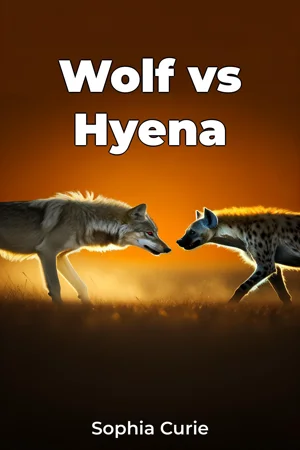
"Wolf vs Hyena" presents a rigorous scientific examination of two apex predators whose social behaviors and hunting strategies have shaped their evolution and survival. Through detailed field research and comparative analysis, this book illuminates the parallel yet distinct developments of wolves and hyenas, challenging common misconceptions about these sophisticated carnivores. The book begins by establishing the evolutionary history of both species, tracing their divergent paths from common ancestors to their current forms. This foundation sets up the book's central thesis: that wolves and hyenas represent a remarkable case of convergent evolution in social structure and hunting tactics, despite their separate evolutionary lineages. Through three main sections, the text explores the intricate dynamics of pack and clan life, hunting strategies, and territorial behaviors. The first section examines social hierarchies, comparing the wolf pack's alpha-based structure with the matriarchal organization of hyena clans. The second focuses on hunting methodologies, analyzing how both species utilize group coordination and communication to take down prey larger than themselves. The final section investigates their roles as ecosystem engineers, showing how their presence influences entire food webs and shapes animal communities. The research presented draws from decades of field studies across multiple continents, incorporating data from GPS tracking, behavioral observations, and genetic analysis. Recent findings from long-term studies in Yellowstone National Park and the Masai Mara provide fresh insights into pack dynamics and territorial behaviors. This work connects biology with ecology, behavioral science, and evolutionary theory, demonstrating how these disciplines intersect in understanding predator behavior. The book employs a systematic approach to compare hunting success rates, pack coordination, and social learning between the species, using quantitative data to support its arguments. The text maintains an academic tone while remaining accessible to informed general readers, presenting complex concepts with clarity and precision. It addresses current debates in behavioral ecology, including questions about the evolution of cooperative hunting and the impact of human activity on predator populations. The book is particularly relevant for wildlife biologists, ecology students, and conservation professionals, offering practical insights for predator management and conservation strategies. It also serves as a valuable resource for those interested in animal behavior and ecosystem dynamics. Each chapter includes detailed case studies, behavorial maps, and statistical analyses, providing readers with concrete evidence for the book's comparative analysis. The work acknowledges the limitations of current research while identifying areas requiring further study. The book concludes by examining conservation challenges facing both species, including habitat fragmentation and human-wildlife conflict. It provides evidence-based recommendations for conservation strategies that consider the complex social needs of these predators. This comprehensive examination of wolves and hyenas fills a crucial gap in comparative predator behavior literature, offering new perspectives on how similar ecological pressures can produce comparable adaptations in distinct species. By analyzing these predators' roles in their respective ecosystems, the book contributes to our understanding of carnivore conservation and behavioral evolution.
"Wolf vs Hyena" presents a rigorous scientific examination of two apex predators whose social behaviors and hunting strategies have shaped their evolution and survival. Through detailed field research and comparative analysis, this book illuminates the parallel yet distinct developments of wolves and hyenas, challenging common misconceptions about these sophisticated carnivores. The book begins by establishing the evolutionary history of both species, tracing their divergent paths from common ancestors to their current forms. This foundation sets up the book's central thesis: that wolves and hyenas represent a remarkable case of convergent evolution in social structure and hunting tactics, despite their separate evolutionary lineages. Through three main sections, the text explores the intricate dynamics of pack and clan life, hunting strategies, and territorial behaviors. The first section examines social hierarchies, comparing the wolf pack's alpha-based structure with the matriarchal organization of hyena clans. The second focuses on hunting methodologies, analyzing how both species utilize group coordination and communication to take down prey larger than themselves. The final section investigates their roles as ecosystem engineers, showing how their presence influences entire food webs and shapes animal communities. The research presented draws from decades of field studies across multiple continents, incorporating data from GPS tracking, behavioral observations, and genetic analysis. Recent findings from long-term studies in Yellowstone National Park and the Masai Mara provide fresh insights into pack dynamics and territorial behaviors. This work connects biology with ecology, behavioral science, and evolutionary theory, demonstrating how these disciplines intersect in understanding predator behavior. The book employs a systematic approach to compare hunting success rates, pack coordination, and social learning between the species, using quantitative data to support its arguments. The text maintains an academic tone while remaining accessible to informed general readers, presenting complex concepts with clarity and precision. It addresses current debates in behavioral ecology, including questions about the evolution of cooperative hunting and the impact of human activity on predator populations. The book is particularly relevant for wildlife biologists, ecology students, and conservation professionals, offering practical insights for predator management and conservation strategies. It also serves as a valuable resource for those interested in animal behavior and ecosystem dynamics. Each chapter includes detailed case studies, behavorial maps, and statistical analyses, providing readers with concrete evidence for the book's comparative analysis. The work acknowledges the limitations of current research while identifying areas requiring further study. The book concludes by examining conservation challenges facing both species, including habitat fragmentation and human-wildlife conflict. It provides evidence-based recommendations for conservation strategies that consider the complex social needs of these predators. This comprehensive examination of wolves and hyenas fills a crucial gap in comparative predator behavior literature, offering new perspectives on how similar ecological pressures can produce comparable adaptations in distinct species. By analyzing these predators' roles in their respective ecosystems, the book contributes to our understanding of carnivore conservation and behavioral evolution.
"Wolf vs Hyena" presents a fascinating scientific exploration of two remarkable apex predators, examining how their social structures and hunting behaviors have evolved despite distinct evolutionary paths. This comprehensive study reveals how wolves and hyenas, though separated by millions of years of evolution, have developed strikingly similar strategies for survival, demonstrating a compelling case of convergent evolution in predator behavior. Through meticulous research spanning multiple continents, the book unravels the complexities of pack dynamics, comparing the wolf's alpha-based hierarchy with the matriarchal organization of hyena clans. Drawing from extensive field studies in locations like Yellowstone National Park and the Masai Mara, it presents groundbreaking insights into hunting methodologies, territorial behaviors, and social learning patterns. The research employs modern tracking technologies and genetic analysis to provide concrete evidence for its comparative analysis. The book progresses logically through three main sections, examining social structures, hunting strategies, and ecosystem impacts. What sets this work apart is its systematic approach to comparing these predators, backed by decades of field research and quantitative data. While maintaining academic rigor, it remains accessible to informed readers, making complex ecological concepts understandable through detailed case studies and behavioral maps. The conclusion addresses crucial conservation challenges, offering practical insights for wildlife management and preservation efforts.
Book Details
ISBN
9788233952952
Publisher
Publifye AS
Your Licenses
You don't own any licenses for this book
Purchase a license below to unlock this book and download the EPUB.
Purchase License
Select a tier to unlock this book
Need bulk licensing?
Contact us for enterprise agreements.