
About This Book
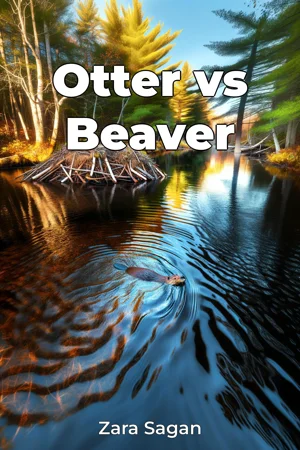
"Otter vs Beaver" presents a detailed comparative analysis of two semi-aquatic mammals that have independently evolved to master life both in water and on land. Through careful examination of their behaviors, adaptations, and ecological roles, this book reveals how these two species serve as prime examples of convergent evolution while maintaining distinct characteristics that set them apart. The book begins by examining the evolutionary pathways that led these mammals to develop similar aquatic adaptations despite belonging to different families - otters to Mustelidae (weasel family) and beavers to Castoridae. This scientific foundation sets the stage for understanding how environmental pressures shape species development over time. Through three main sections, the text explores the parallel yet distinct lives of these animals. The first section focuses on physical adaptations, detailing how each species developed specialized features for aquatic life, from the beaver's paddle-like tail to the otter's sophisticated whiskers for underwater navigation. The second section examines behavioral patterns, contrasting the beaver's architectural abilities and territorial nature with the otter's social dynamics and hunting prowess. The final section investigates their ecological impacts, particularly how beaver dam construction and otter predation patterns influence river ecosystems. Research presented in the book draws from recent field studies, including underwater photography, GPS tracking data, and long-term population surveys across North America and Europe. The text incorporates findings from multiple disciplines, connecting biology with hydrology, ecosystem management, and behavioral science to provide a comprehensive understanding of these species' roles in their environments. The book takes a systematic approach to comparing these animals, using side-by-side analyses of various aspects of their lives, from diet composition to social structure. This method helps readers understand how different evolutionary strategies can solve similar environmental challenges. For instance, while beavers modify their environment to create safe havens, otters have developed superior swimming abilities to escape predators. Written in an analytical style that balances technical accuracy with accessibility, the text serves both academic and general audiences interested in wildlife biology. Each chapter includes detailed diagrams, range maps, and behavioral charts that support the written content. The book maintains scientific rigor while explaining complex concepts in clear terms. The work addresses current conservation challenges facing both species, including habitat loss and water pollution. It examines how human activities affect these animals differently, with beavers often facing conflict due to their landscape-altering activities, while otters struggle with water quality issues affecting their prey populations. This book is particularly relevant for wildlife biologists, environmental scientists, and conservation practitioners, but also appeals to natural history enthusiasts and students of ecology. It provides practical insights for wildlife management professionals while offering general readers a deeper understanding of how seemingly similar species can fill vastly different ecological niches. The scope focuses primarily on North American and European species, acknowledging geographical variations in behavior and adaptation. The text avoids anthropomorphizing these animals, instead presenting their behaviors and characteristics through a scientific lens while maintaining reader engagement through clear, precise language and evidence-based observations.
"Otter vs Beaver" presents a detailed comparative analysis of two semi-aquatic mammals that have independently evolved to master life both in water and on land. Through careful examination of their behaviors, adaptations, and ecological roles, this book reveals how these two species serve as prime examples of convergent evolution while maintaining distinct characteristics that set them apart. The book begins by examining the evolutionary pathways that led these mammals to develop similar aquatic adaptations despite belonging to different families - otters to Mustelidae (weasel family) and beavers to Castoridae. This scientific foundation sets the stage for understanding how environmental pressures shape species development over time. Through three main sections, the text explores the parallel yet distinct lives of these animals. The first section focuses on physical adaptations, detailing how each species developed specialized features for aquatic life, from the beaver's paddle-like tail to the otter's sophisticated whiskers for underwater navigation. The second section examines behavioral patterns, contrasting the beaver's architectural abilities and territorial nature with the otter's social dynamics and hunting prowess. The final section investigates their ecological impacts, particularly how beaver dam construction and otter predation patterns influence river ecosystems. Research presented in the book draws from recent field studies, including underwater photography, GPS tracking data, and long-term population surveys across North America and Europe. The text incorporates findings from multiple disciplines, connecting biology with hydrology, ecosystem management, and behavioral science to provide a comprehensive understanding of these species' roles in their environments. The book takes a systematic approach to comparing these animals, using side-by-side analyses of various aspects of their lives, from diet composition to social structure. This method helps readers understand how different evolutionary strategies can solve similar environmental challenges. For instance, while beavers modify their environment to create safe havens, otters have developed superior swimming abilities to escape predators. Written in an analytical style that balances technical accuracy with accessibility, the text serves both academic and general audiences interested in wildlife biology. Each chapter includes detailed diagrams, range maps, and behavioral charts that support the written content. The book maintains scientific rigor while explaining complex concepts in clear terms. The work addresses current conservation challenges facing both species, including habitat loss and water pollution. It examines how human activities affect these animals differently, with beavers often facing conflict due to their landscape-altering activities, while otters struggle with water quality issues affecting their prey populations. This book is particularly relevant for wildlife biologists, environmental scientists, and conservation practitioners, but also appeals to natural history enthusiasts and students of ecology. It provides practical insights for wildlife management professionals while offering general readers a deeper understanding of how seemingly similar species can fill vastly different ecological niches. The scope focuses primarily on North American and European species, acknowledging geographical variations in behavior and adaptation. The text avoids anthropomorphizing these animals, instead presenting their behaviors and characteristics through a scientific lens while maintaining reader engagement through clear, precise language and evidence-based observations.
"Otter vs Beaver" offers a fascinating exploration of two semi-aquatic mammals that have independently evolved to thrive in both aquatic and terrestrial environments. Through detailed comparative analysis, the book reveals how these seemingly similar creatures have developed distinct strategies for survival, serving as remarkable examples of convergent evolution while maintaining unique characteristics that define their ecological roles. The text progresses systematically through three main sections, beginning with an examination of physical adaptations, such as the beaver's distinctive paddle-like tail and the otter's specialized whiskers for underwater navigation. The second section delves into behavioral patterns, contrasting the beaver's architectural prowess and dam-building activities with the otter's social dynamics and hunting abilities. The final section explores their ecological impacts, particularly focusing on how beaver engineering and otter predation patterns influence river ecosystems. Drawing from recent field studies, including underwater photography and GPS tracking data, the book presents its findings through accessible language while maintaining scientific accuracy. What sets this work apart is its comprehensive side-by-side analysis approach, helping readers understand how different evolutionary strategies can address similar environmental challenges. The inclusion of detailed diagrams, range maps, and behavioral charts makes complex biological concepts accessible to both academic audiences and wildlife enthusiasts, while addressing current conservation challenges facing both species in North American and European contexts.
Book Details
ISBN
9788233952921
Publisher
Publifye AS
Your Licenses
You don't own any licenses for this book
Purchase a license below to unlock this book and download the EPUB.
Purchase License
Select a tier to unlock this book
Need bulk licensing?
Contact us for enterprise agreements.