
About This Book
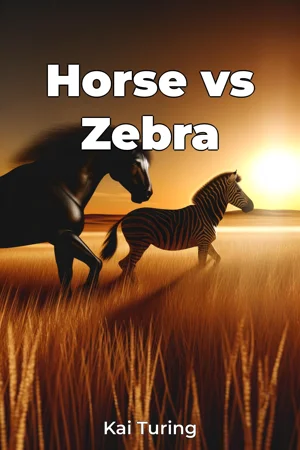
"Horse vs Zebra" presents a detailed comparative analysis of two closely related equine species, examining how their evolutionary paths diverged to create distinct adaptations and relationships with their environments. The book builds upon recent genetic research and behavioral studies to illuminate the fascinating parallels and differences between domestic horses and their wild zebra cousins. The work is structured around three core themes: evolutionary adaptations, social behaviors, and species-environment interactions. Through these lenses, readers discover how horses developed traits suitable for domestication while zebras maintained characteristics essential for survival in African grasslands. The book establishes that understanding these differences provides crucial insights into both natural selection and human-animal relationships. Drawing from paleontological evidence and contemporary research, the text traces the common ancestor of both species before exploring their divergent evolutionary paths. This historical context helps readers understand why horses became crucial partners in human civilization while zebras remained wild, despite numerous domestication attempts throughout history. The book's central thesis demonstrates how environmental pressures and genetic adaptations shaped two distinct survival strategies from a common ancestral blueprint. This argument is supported by extensive field research, including previously unpublished studies on zebra herding patterns and comparative analyses of horse and zebra cognitive development. Chapters progress logically from physical characteristics to behavioral patterns. The first section examines anatomical differences, including the biomechanics of their gaits and the purposes of their distinct coloring. The second part explores social structures, comparing the hierarchical systems of both species. The final section investigates their respective roles in ecosystems and human society. Research evidence includes long-term observational studies from African wildlife preserves, genetic analyses from multiple populations, and documented case studies of horse-human partnerships across cultures. The book incorporates data from veterinary medicine, evolutionary biology, and behavioral science to support its conclusions. The work connects to multiple disciplines, including anthropology through the examination of horse domestication's impact on human civilization, and conservation biology through discussions of zebra habitat preservation. These interdisciplinary connections provide readers with a comprehensive understanding of both species' significance. The book takes an analytical approach while remaining accessible to general readers interested in natural history. Technical concepts are explained clearly, supported by illustrations and comparative diagrams. The writing style maintains scientific accuracy while engaging readers through narrative examples and clear explanations. This work is particularly valuable for biology students, wildlife conservationists, and equine enthusiasts. It provides practical insights for those working with horses while offering crucial information for conservation efforts regarding zebras. The scope encompasses both species' current status while acknowledging limitations in our understanding of their early evolution. The book addresses ongoing debates in the field, including discussions about zebra domestication potential and the impact of climate change on both species' future survival. The text avoids sensationalism, instead focusing on evidence-based observations and documented research. It acknowledges areas where scientific consensus is still developing, particularly regarding the cognitive capabilities of both species and their potential for interspecies communication. By examining these two related but distinct species, the book provides valuable insights into evolution, adaptation, and the complex relationships between animals and their environments, both natural and human-influenced.
"Horse vs Zebra" presents a detailed comparative analysis of two closely related equine species, examining how their evolutionary paths diverged to create distinct adaptations and relationships with their environments. The book builds upon recent genetic research and behavioral studies to illuminate the fascinating parallels and differences between domestic horses and their wild zebra cousins. The work is structured around three core themes: evolutionary adaptations, social behaviors, and species-environment interactions. Through these lenses, readers discover how horses developed traits suitable for domestication while zebras maintained characteristics essential for survival in African grasslands. The book establishes that understanding these differences provides crucial insights into both natural selection and human-animal relationships. Drawing from paleontological evidence and contemporary research, the text traces the common ancestor of both species before exploring their divergent evolutionary paths. This historical context helps readers understand why horses became crucial partners in human civilization while zebras remained wild, despite numerous domestication attempts throughout history. The book's central thesis demonstrates how environmental pressures and genetic adaptations shaped two distinct survival strategies from a common ancestral blueprint. This argument is supported by extensive field research, including previously unpublished studies on zebra herding patterns and comparative analyses of horse and zebra cognitive development. Chapters progress logically from physical characteristics to behavioral patterns. The first section examines anatomical differences, including the biomechanics of their gaits and the purposes of their distinct coloring. The second part explores social structures, comparing the hierarchical systems of both species. The final section investigates their respective roles in ecosystems and human society. Research evidence includes long-term observational studies from African wildlife preserves, genetic analyses from multiple populations, and documented case studies of horse-human partnerships across cultures. The book incorporates data from veterinary medicine, evolutionary biology, and behavioral science to support its conclusions. The work connects to multiple disciplines, including anthropology through the examination of horse domestication's impact on human civilization, and conservation biology through discussions of zebra habitat preservation. These interdisciplinary connections provide readers with a comprehensive understanding of both species' significance. The book takes an analytical approach while remaining accessible to general readers interested in natural history. Technical concepts are explained clearly, supported by illustrations and comparative diagrams. The writing style maintains scientific accuracy while engaging readers through narrative examples and clear explanations. This work is particularly valuable for biology students, wildlife conservationists, and equine enthusiasts. It provides practical insights for those working with horses while offering crucial information for conservation efforts regarding zebras. The scope encompasses both species' current status while acknowledging limitations in our understanding of their early evolution. The book addresses ongoing debates in the field, including discussions about zebra domestication potential and the impact of climate change on both species' future survival. The text avoids sensationalism, instead focusing on evidence-based observations and documented research. It acknowledges areas where scientific consensus is still developing, particularly regarding the cognitive capabilities of both species and their potential for interspecies communication. By examining these two related but distinct species, the book provides valuable insights into evolution, adaptation, and the complex relationships between animals and their environments, both natural and human-influenced.
"Horse vs Zebra" offers a fascinating exploration of how two closely related equine species evolved along dramatically different paths, leading to distinct adaptations and relationships with their environments. Through the lens of evolutionary biology and behavioral science, the book examines why horses became invaluable partners to human civilization while zebras remained wild, despite sharing a common ancestor. The comprehensive analysis draws from cutting-edge genetic research, paleontological evidence, and extensive field studies to illuminate the fascinating divergence between these remarkable species. The book progresses systematically from physical characteristics to complex social behaviors, weaving together multiple scientific disciplines to create a complete picture of both animals. Readers discover intriguing insights about how environmental pressures shaped different survival strategies, from the purpose behind zebras' distinctive stripes to the specific traits that made horses suitable for domestication. Long-term observational studies from African wildlife preserves and documented cases of horse-human partnerships across cultures provide compelling evidence for the book's conclusions. Written in an accessible style that maintains scientific accuracy while engaging general readers, the text seamlessly connects evolutionary biology, anthropology, and conservation biology. This interdisciplinary approach makes complex concepts understandable without sacrificing depth, making it particularly valuable for biology students, wildlife conservationists, and equine enthusiasts. The book's evidence-based observations and clear explanations offer practical insights while contributing to our understanding of evolution, adaptation, and the intricate relationships between animals and their environments.
Book Details
ISBN
9788233952914
Publisher
Publifye AS
Your Licenses
You don't own any licenses for this book
Purchase a license below to unlock this book and download the EPUB.
Purchase License
Select a tier to unlock this book
Need bulk licensing?
Contact us for enterprise agreements.