
About This Book
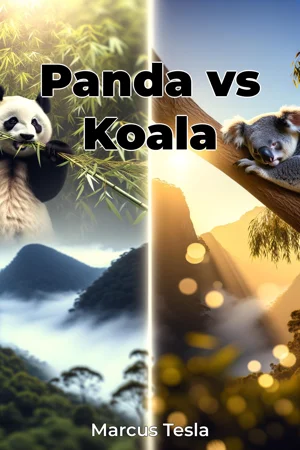
"Panda vs Koala" provides a detailed comparative analysis of two iconic herbivorous mammals that have evolved distinct survival strategies despite facing similar ecological challenges. Through parallel examination of these species, the book reveals how environmental pressures have shaped their biology, behavior, and conservation status in the modern world. The text begins by examining the evolutionary pathways that led these mammals to their specialized dietary preferences: the giant panda's reliance on bamboo in China's mountainous regions, and the koala's adaptation to eucalyptus leaves in Australia's woodland ecosystems. This foundation sets up the book's central thesis: that convergent evolution can produce markedly different solutions to similar biological challenges. Structured in three main sections, the book first explores the anatomical and physiological adaptations of both species. Detailed analyses of their digestive systems, metabolic rates, and sensory capabilities demonstrate how each animal processes its fibrous, low-nutrient diet. The second section examines behavioral patterns and social structures, from the panda's solitary nature to the koala's seemingly simple yet precisely adapted arboreal lifestyle. The final section addresses conservation challenges, examining human impact on their respective habitats and the effectiveness of current protection measures. The research presented draws from multi-decade field studies, including GPS tracking data, dietary analysis, and behavioral observations. The book incorporates recent findings from genomic studies that reveal how these species' genetic makeup supports their specialized lifestyles. Notable contributions come from researchers at leading conservation centers in China and Australia, providing unprecedented access to long-term population data. This work connects multiple scientific disciplines, linking evolutionary biology with ecology, physiology, and conservation science. The authors demonstrate how climate science intersects with species survival, and how economic development impacts habitat preservation. These connections provide readers with a comprehensive understanding of the complex factors affecting species adaptation and survival. The book employs an academic yet accessible approach, using clear language to explain complex biological concepts. Technical terms are carefully introduced and explained, making the content appropriate for both university students and informed general readers interested in wildlife biology or conservation. Practical applications of this research extend to conservation policy development, habitat management strategies, and public education initiatives. The text provides insights valuable to conservation biologists, wildlife managers, and policy makers while remaining relevant to students and wildlife enthusiasts. The scope encompasses both species' complete life cycles, habitat requirements, and conservation status, though it intentionally limits historical coverage to the past century of scientific observation. This focused approach allows for detailed examination of current challenges and future prospects for both species. The book addresses several ongoing debates in conservation biology, including the effectiveness of captive breeding programs, the role of traditional versus modern conservation approaches, and the balance between economic development and habitat preservation. It presents evidence-based assessments of various conservation strategies while acknowledging the complexity of these issues. This comparative study differs from traditional single-species monographs by directly contrasting two seemingly different animals, revealing unexpected parallels in their adaptation strategies and conservation challenges. This approach provides readers with a broader perspective on herbivore evolution and conservation biology while maintaining scientific rigor and factual accuracy.
"Panda vs Koala" provides a detailed comparative analysis of two iconic herbivorous mammals that have evolved distinct survival strategies despite facing similar ecological challenges. Through parallel examination of these species, the book reveals how environmental pressures have shaped their biology, behavior, and conservation status in the modern world. The text begins by examining the evolutionary pathways that led these mammals to their specialized dietary preferences: the giant panda's reliance on bamboo in China's mountainous regions, and the koala's adaptation to eucalyptus leaves in Australia's woodland ecosystems. This foundation sets up the book's central thesis: that convergent evolution can produce markedly different solutions to similar biological challenges. Structured in three main sections, the book first explores the anatomical and physiological adaptations of both species. Detailed analyses of their digestive systems, metabolic rates, and sensory capabilities demonstrate how each animal processes its fibrous, low-nutrient diet. The second section examines behavioral patterns and social structures, from the panda's solitary nature to the koala's seemingly simple yet precisely adapted arboreal lifestyle. The final section addresses conservation challenges, examining human impact on their respective habitats and the effectiveness of current protection measures. The research presented draws from multi-decade field studies, including GPS tracking data, dietary analysis, and behavioral observations. The book incorporates recent findings from genomic studies that reveal how these species' genetic makeup supports their specialized lifestyles. Notable contributions come from researchers at leading conservation centers in China and Australia, providing unprecedented access to long-term population data. This work connects multiple scientific disciplines, linking evolutionary biology with ecology, physiology, and conservation science. The authors demonstrate how climate science intersects with species survival, and how economic development impacts habitat preservation. These connections provide readers with a comprehensive understanding of the complex factors affecting species adaptation and survival. The book employs an academic yet accessible approach, using clear language to explain complex biological concepts. Technical terms are carefully introduced and explained, making the content appropriate for both university students and informed general readers interested in wildlife biology or conservation. Practical applications of this research extend to conservation policy development, habitat management strategies, and public education initiatives. The text provides insights valuable to conservation biologists, wildlife managers, and policy makers while remaining relevant to students and wildlife enthusiasts. The scope encompasses both species' complete life cycles, habitat requirements, and conservation status, though it intentionally limits historical coverage to the past century of scientific observation. This focused approach allows for detailed examination of current challenges and future prospects for both species. The book addresses several ongoing debates in conservation biology, including the effectiveness of captive breeding programs, the role of traditional versus modern conservation approaches, and the balance between economic development and habitat preservation. It presents evidence-based assessments of various conservation strategies while acknowledging the complexity of these issues. This comparative study differs from traditional single-species monographs by directly contrasting two seemingly different animals, revealing unexpected parallels in their adaptation strategies and conservation challenges. This approach provides readers with a broader perspective on herbivore evolution and conservation biology while maintaining scientific rigor and factual accuracy.
"Panda vs Koala" offers a fascinating comparative exploration of two iconic herbivorous mammals that have evolved remarkably different strategies for similar ecological challenges. Through detailed analysis, the book reveals how these beloved species have adapted to their specialized diets - the giant panda with bamboo in China's mountains and the koala with eucalyptus in Australian woodlands - demonstrating how convergent evolution can produce distinct solutions to comparable biological problems. The book progresses logically through three main sections, beginning with anatomical and physiological adaptations, including detailed examinations of their unique digestive systems and metabolic processes. It then delves into behavioral patterns and social structures, before culminating in a comprehensive analysis of modern conservation challenges. Drawing from decades of field studies, GPS tracking data, and genomic research, the text provides unprecedented insights into how these species have adapted to their specialized lifestyles and the challenges they face in today's changing world. What makes this work particularly valuable is its innovative comparative approach, connecting multiple scientific disciplines while remaining accessible to both academic and general audiences. By examining these two species in parallel, readers gain a deeper understanding of herbivore evolution, species adaptation, and conservation biology. The book's analysis of current conservation strategies and habitat preservation efforts provides practical insights for wildlife managers and conservation professionals while engaging anyone interested in wildlife biology and species preservation.
Book Details
ISBN
9788233952891
Publisher
Publifye AS
Your Licenses
You don't own any licenses for this book
Purchase a license below to unlock this book and download the EPUB.
Purchase License
Select a tier to unlock this book
Need bulk licensing?
Contact us for enterprise agreements.