
About This Book
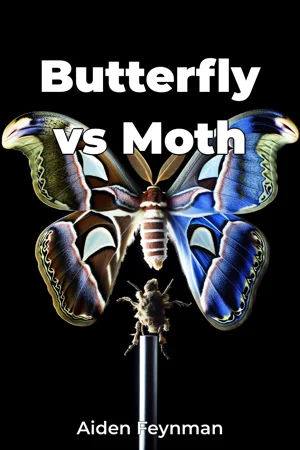
"Butterfly vs Moth" delves into the intricate world of Lepidoptera, examining the often-misunderstood distinctions between these closely related insect groups. While many people can identify a monarch butterfly, fewer can confidently distinguish between a moth and a butterfly when presented with unfamiliar species. The book presents comprehensive research from leading entomologists and evolutionary biologists, structured around three core themes: morphological differences, behavioral patterns, and evolutionary adaptations. Through detailed analysis and current scientific findings, readers discover how these insects have developed distinct characteristics despite their common ancestry. The first section examines physical characteristics, from wing structure and coloration to body composition and antennae formation. Readers learn how butterflies typically possess club-tipped antennae and thin bodies, while moths feature feathered or comb-like antennae and stouter builds. The text includes microscopic imagery and detailed anatomical diagrams to illustrate these differences. The behavioral analysis section explores activity patterns, feeding habits, and reproductive strategies. The book challenges common assumptions, such as the belief that all moths are nocturnal and all butterflies are diurnal, presenting examples of species that defy these generalizations. This section incorporates recent research on moth navigation using lunar light and butterfly migration patterns. The evolutionary biology component traces the development of both groups from their common ancestors, explaining how environmental pressures and adaptation led to their current forms. The text integrates findings from genetic studies and fossil records to construct this evolutionary narrative. Throughout the book, connections are drawn to broader scientific fields, including: - Climate science: How changing environments affect species distribution - Chemistry: The composition and function of wing scales - Physics: The principles behind moth echo-location and butterfly iridescence The content is presented in an academic yet accessible style, utilizing clear language and systematic organization. Each chapter builds upon previous information, creating a logical progression from basic distinctions to complex biological processes. The book serves multiple audiences, from university students studying entomology to naturalists and citizen scientists seeking to enhance their field observation skills. Professional researchers will find value in the comprehensive reference sections and detailed methodology discussions. Supporting evidence comes from peer-reviewed research, field studies, and laboratory experiments. The book includes data from long-term population studies and recent genetic analyses, providing readers with current scientific understanding of these insects. Practical applications include: - Identification guides for field observers - Conservation strategies for endangered species - Garden planning for supporting both butterfly and moth populations - Photography techniques for documenting specimens The text addresses ongoing debates in the field, such as the classification of certain species that exhibit characteristics of both groups, and the impact of artificial light pollution on moth populations. While maintaining scientific rigor, the book acknowledges its limitations, particularly regarding the continuous nature of new discoveries in the field. It focuses primarily on well-documented species while acknowledging that many rare and newly discovered species await further study. The book's scope encompasses both common and unusual species from various global regions, providing readers with a broad understanding of Lepidoptera diversity while maintaining focus on the core distinctions between butterflies and moths.
"Butterfly vs Moth" delves into the intricate world of Lepidoptera, examining the often-misunderstood distinctions between these closely related insect groups. While many people can identify a monarch butterfly, fewer can confidently distinguish between a moth and a butterfly when presented with unfamiliar species. The book presents comprehensive research from leading entomologists and evolutionary biologists, structured around three core themes: morphological differences, behavioral patterns, and evolutionary adaptations. Through detailed analysis and current scientific findings, readers discover how these insects have developed distinct characteristics despite their common ancestry. The first section examines physical characteristics, from wing structure and coloration to body composition and antennae formation. Readers learn how butterflies typically possess club-tipped antennae and thin bodies, while moths feature feathered or comb-like antennae and stouter builds. The text includes microscopic imagery and detailed anatomical diagrams to illustrate these differences. The behavioral analysis section explores activity patterns, feeding habits, and reproductive strategies. The book challenges common assumptions, such as the belief that all moths are nocturnal and all butterflies are diurnal, presenting examples of species that defy these generalizations. This section incorporates recent research on moth navigation using lunar light and butterfly migration patterns. The evolutionary biology component traces the development of both groups from their common ancestors, explaining how environmental pressures and adaptation led to their current forms. The text integrates findings from genetic studies and fossil records to construct this evolutionary narrative. Throughout the book, connections are drawn to broader scientific fields, including: - Climate science: How changing environments affect species distribution - Chemistry: The composition and function of wing scales - Physics: The principles behind moth echo-location and butterfly iridescence The content is presented in an academic yet accessible style, utilizing clear language and systematic organization. Each chapter builds upon previous information, creating a logical progression from basic distinctions to complex biological processes. The book serves multiple audiences, from university students studying entomology to naturalists and citizen scientists seeking to enhance their field observation skills. Professional researchers will find value in the comprehensive reference sections and detailed methodology discussions. Supporting evidence comes from peer-reviewed research, field studies, and laboratory experiments. The book includes data from long-term population studies and recent genetic analyses, providing readers with current scientific understanding of these insects. Practical applications include: - Identification guides for field observers - Conservation strategies for endangered species - Garden planning for supporting both butterfly and moth populations - Photography techniques for documenting specimens The text addresses ongoing debates in the field, such as the classification of certain species that exhibit characteristics of both groups, and the impact of artificial light pollution on moth populations. While maintaining scientific rigor, the book acknowledges its limitations, particularly regarding the continuous nature of new discoveries in the field. It focuses primarily on well-documented species while acknowledging that many rare and newly discovered species await further study. The book's scope encompasses both common and unusual species from various global regions, providing readers with a broad understanding of Lepidoptera diversity while maintaining focus on the core distinctions between butterflies and moths.
"Butterfly vs Moth" offers a fascinating exploration of the intricate distinctions between two remarkable insect groups within the order Lepidoptera. Moving beyond common misconceptions, this comprehensive guide reveals how these closely related insects have evolved distinct characteristics while sharing a common ancestry. The book masterfully combines cutting-edge research with accessible explanations, making complex scientific concepts understandable to both enthusiasts and professionals. The journey begins with detailed examinations of physical differences, such as wing structures and antennae formation, supported by microscopic imagery and anatomical diagrams. The narrative then progresses into fascinating behavioral patterns, challenging popular assumptions about nocturnal and diurnal activities while exploring remarkable phenomena like moth navigation by moonlight and butterfly migration. What makes this book particularly valuable is its integration of evolutionary biology, showing how environmental pressures shaped these insects into their current forms. Through systematic organization and clear language, the book serves multiple audiences, from university students to citizen scientists. It stands out by incorporating practical applications, including identification guides and conservation strategies, while addressing current scientific debates in the field. The comprehensive scope covers species from various global regions, making it an invaluable resource for anyone interested in understanding the remarkable world of Lepidoptera, from basic distinctions to complex biological processes.
Book Details
ISBN
9788233952860
Publisher
Publifye AS
Your Licenses
You don't own any licenses for this book
Purchase a license below to unlock this book and download the EPUB.
Purchase License
Select a tier to unlock this book
Need bulk licensing?
Contact us for enterprise agreements.