
About This Book
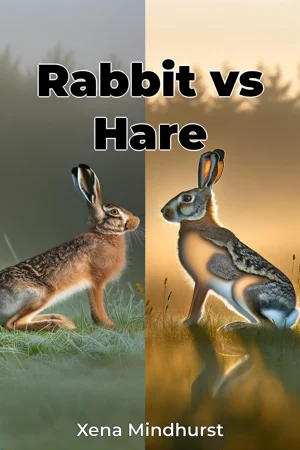
"Rabbit vs Hare" delves into the often-misunderstood distinctions between two seemingly similar species, revealing how subtle differences in biology and behavior have led to diverse evolutionary paths and survival strategies. The book examines three primary areas: physical adaptations, reproductive patterns, and habitat utilization, demonstrating how these factors have shaped each species' success in their respective environments. Through detailed comparative analysis, readers discover why these differences matter for ecosystem balance and species conservation. Drawing from decades of field research and recent DNA studies, the text presents evidence-based comparisons of these lagomorphs. The first section explores anatomical distinctions, including skeletal structure, muscle composition, and sensory capabilities. Readers learn how hares are born fully furred with open eyes, while rabbits emerge blind and hairless, reflecting fundamental differences in survival strategies. The second section focuses on habitat adaptation, detailing how hares prefer open spaces and rely on speed for survival, while rabbits develop complex burrow systems and social structures. This contrast illuminates broader ecological principles about predator-prey relationships and environmental adaptation. The book's central thesis argues that these differences represent distinct evolutionary responses to environmental pressures, challenging the common perception that rabbits and hares are merely variants of the same animal. This understanding has implications for wildlife management, conservation efforts, and ecosystem maintenance. Research evidence includes radio-tracking data, behavioral studies, and comparative anatomical analyses from multiple continents. The text incorporates findings from recent studies in Australia, North America, and Europe, providing a global perspective on these species. The work connects biology with ecology, evolution, and environmental science, demonstrating how species adaptation influences ecosystem dynamics. It also explores the intersection with agricultural science, as both species significantly impact crop systems and land use patterns. The writing maintains a scientific approach while remaining accessible to general readers interested in wildlife biology. Technical concepts are carefully explained through practical examples and clear illustrations. Each chapter builds upon previous information, creating a comprehensive understanding of these species' roles in their ecosystems. This book serves multiple audiences, from university students in biological sciences to wildlife managers and informed nature enthusiasts. It provides practical insights for farmers dealing with crop protection and conservation professionals developing species management plans. The scope encompasses both wild and domestic varieties, though it focuses primarily on wild populations. While addressing global distribution patterns, it emphasizes regions where both species naturally coexist, allowing for direct comparative study. Practical applications include improved wildlife management strategies, better agricultural protection methods, and enhanced conservation planning. The text also discusses how understanding these species' differences aids in habitat preservation and ecosystem management. Current debates addressed include the impact of climate change on species distribution, the role of human land use in population dynamics, and controversies surrounding pest management strategies. Throughout the text, readers gain insight into how seemingly minor biological differences can lead to distinct ecological niches and survival strategies. This understanding contributes to broader conversations about species adaptation, evolution, and the complexity of natural systems.
"Rabbit vs Hare" delves into the often-misunderstood distinctions between two seemingly similar species, revealing how subtle differences in biology and behavior have led to diverse evolutionary paths and survival strategies. The book examines three primary areas: physical adaptations, reproductive patterns, and habitat utilization, demonstrating how these factors have shaped each species' success in their respective environments. Through detailed comparative analysis, readers discover why these differences matter for ecosystem balance and species conservation. Drawing from decades of field research and recent DNA studies, the text presents evidence-based comparisons of these lagomorphs. The first section explores anatomical distinctions, including skeletal structure, muscle composition, and sensory capabilities. Readers learn how hares are born fully furred with open eyes, while rabbits emerge blind and hairless, reflecting fundamental differences in survival strategies. The second section focuses on habitat adaptation, detailing how hares prefer open spaces and rely on speed for survival, while rabbits develop complex burrow systems and social structures. This contrast illuminates broader ecological principles about predator-prey relationships and environmental adaptation. The book's central thesis argues that these differences represent distinct evolutionary responses to environmental pressures, challenging the common perception that rabbits and hares are merely variants of the same animal. This understanding has implications for wildlife management, conservation efforts, and ecosystem maintenance. Research evidence includes radio-tracking data, behavioral studies, and comparative anatomical analyses from multiple continents. The text incorporates findings from recent studies in Australia, North America, and Europe, providing a global perspective on these species. The work connects biology with ecology, evolution, and environmental science, demonstrating how species adaptation influences ecosystem dynamics. It also explores the intersection with agricultural science, as both species significantly impact crop systems and land use patterns. The writing maintains a scientific approach while remaining accessible to general readers interested in wildlife biology. Technical concepts are carefully explained through practical examples and clear illustrations. Each chapter builds upon previous information, creating a comprehensive understanding of these species' roles in their ecosystems. This book serves multiple audiences, from university students in biological sciences to wildlife managers and informed nature enthusiasts. It provides practical insights for farmers dealing with crop protection and conservation professionals developing species management plans. The scope encompasses both wild and domestic varieties, though it focuses primarily on wild populations. While addressing global distribution patterns, it emphasizes regions where both species naturally coexist, allowing for direct comparative study. Practical applications include improved wildlife management strategies, better agricultural protection methods, and enhanced conservation planning. The text also discusses how understanding these species' differences aids in habitat preservation and ecosystem management. Current debates addressed include the impact of climate change on species distribution, the role of human land use in population dynamics, and controversies surrounding pest management strategies. Throughout the text, readers gain insight into how seemingly minor biological differences can lead to distinct ecological niches and survival strategies. This understanding contributes to broader conversations about species adaptation, evolution, and the complexity of natural systems.
"Rabbit vs Hare" offers a fascinating exploration of two commonly confused species, revealing how their distinct biological characteristics and behaviors have shaped their evolution and survival strategies. Through comprehensive analysis, the book illuminates crucial differences between these lagomorphs, from their physical adaptations to their habitat preferences and reproductive patterns, demonstrating how these variations impact ecosystem dynamics and conservation efforts. The book's evidence-based approach combines decades of field research with recent DNA studies to challenge popular misconceptions. One striking revelation is the contrast in newborn characteristics: hares emerge fully furred with open eyes, while rabbits are born blind and hairless. This difference exemplifies their divergent survival strategies, with hares adapted to open spaces and relying on speed, while rabbits develop elaborate burrow systems and complex social structures. Drawing from global research spanning multiple continents, the text progresses from detailed anatomical comparisons to broader ecological implications, making complex biological concepts accessible through practical examples. The book serves both academic and practical purposes, offering valuable insights for wildlife managers, conservationists, and agricultural professionals while maintaining scientific rigor. By examining these species through multiple lenses – from evolutionary biology to ecosystem management – readers gain a deeper understanding of how subtle adaptations can lead to significant ecological distinctions.
Book Details
ISBN
9788233952853
Publisher
Publifye AS
Your Licenses
You don't own any licenses for this book
Purchase a license below to unlock this book and download the EPUB.
Purchase License
Select a tier to unlock this book
Need bulk licensing?
Contact us for enterprise agreements.