
About This Book
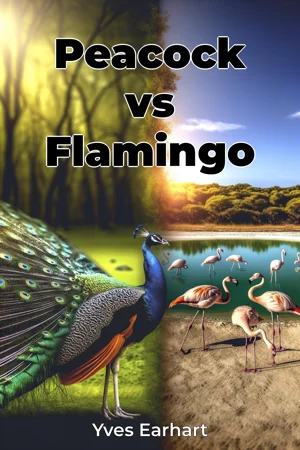
"Peacock vs Flamingo" presents a detailed comparative analysis of two distinctly different avian species that have captured human attention through their visual displays and social behaviors. The book examines how these birds, despite their contrasting evolutionary paths, demonstrate remarkable adaptations that serve similar functions in mate selection and species survival. The work is structured around three core themes: display mechanisms, social dynamics, and habitat adaptation. The initial sections explore the peacock's iridescent train and the flamingo's pink coloration, delving into the biochemistry and physics behind these features. The book explains how the peacock's feathers utilize light-interfering nanostructures, while flamingos obtain their color through carotenoid-rich diets, presenting these as parallel examples of natural selection favoring distinct visual strategies. The research draws from recent field studies across multiple continents, incorporating data from both wild populations and controlled environments. Advanced imaging techniques reveal previously undocumented aspects of peacock feather structure and flamingo feeding mechanisms. The text includes findings from long-term behavioral studies in India's deciduous forests and East Africa's alkaline lakes, providing comprehensive insights into these birds' natural histories. Central to the book's argument is how different evolutionary pressures have produced similar outcomes in social organization. Both species exhibit complex courtship rituals and group behaviors, though through different mechanisms. The peacock's individual display contrasts with the flamingo's synchronized group movements, yet both serve to ensure successful mate selection and reproduction. The content progresses through detailed examinations of physical characteristics, behavior patterns, and environmental interactions. Specific chapters focus on the biomechanics of peacock display fans, the specialized filtering apparatus of flamingo beaks, and the neurological basis for their distinct social behaviors. The work culminates in an analysis of how these adaptations influence species survival in changing environments. Interdisciplinary connections link the research to physics (structural coloration), chemistry (pigmentation), and social psychology (group dynamics). The book employs technical analysis while maintaining accessibility for educated general readers interested in natural history and behavioral biology. The target audience includes biology students, ornithology enthusiasts, and conservation professionals. The content provides practical applications for wildlife photography, bird watching, and habitat conservation efforts. The work addresses current debates in sexual selection theory and the role of visual signals in evolution. Methodologically, the book combines traditional observational techniques with modern analysis tools, including high-speed photography, spectral analysis, and social network mapping. This approach provides readers with both macro and micro perspectives on avian adaptation and behavior. The scope encompasses both species' complete life cycles while focusing particularly on adult behavior and reproduction. Geographic coverage includes all major populations across Asia, Africa, and the Americas, though it emphasizes wild rather than captive populations. The text maintains an academic tone while incorporating narrative elements to illustrate key concepts. It avoids anthropomorphization while making biological concepts accessible to non-specialists. The work contributes to ongoing discussions about convergent evolution, sexual selection, and the impact of climate change on specialized species. This comprehensive examination offers insights into how different evolutionary solutions can address similar biological challenges, providing valuable perspectives for both academic study and practical conservation efforts.
"Peacock vs Flamingo" presents a detailed comparative analysis of two distinctly different avian species that have captured human attention through their visual displays and social behaviors. The book examines how these birds, despite their contrasting evolutionary paths, demonstrate remarkable adaptations that serve similar functions in mate selection and species survival. The work is structured around three core themes: display mechanisms, social dynamics, and habitat adaptation. The initial sections explore the peacock's iridescent train and the flamingo's pink coloration, delving into the biochemistry and physics behind these features. The book explains how the peacock's feathers utilize light-interfering nanostructures, while flamingos obtain their color through carotenoid-rich diets, presenting these as parallel examples of natural selection favoring distinct visual strategies. The research draws from recent field studies across multiple continents, incorporating data from both wild populations and controlled environments. Advanced imaging techniques reveal previously undocumented aspects of peacock feather structure and flamingo feeding mechanisms. The text includes findings from long-term behavioral studies in India's deciduous forests and East Africa's alkaline lakes, providing comprehensive insights into these birds' natural histories. Central to the book's argument is how different evolutionary pressures have produced similar outcomes in social organization. Both species exhibit complex courtship rituals and group behaviors, though through different mechanisms. The peacock's individual display contrasts with the flamingo's synchronized group movements, yet both serve to ensure successful mate selection and reproduction. The content progresses through detailed examinations of physical characteristics, behavior patterns, and environmental interactions. Specific chapters focus on the biomechanics of peacock display fans, the specialized filtering apparatus of flamingo beaks, and the neurological basis for their distinct social behaviors. The work culminates in an analysis of how these adaptations influence species survival in changing environments. Interdisciplinary connections link the research to physics (structural coloration), chemistry (pigmentation), and social psychology (group dynamics). The book employs technical analysis while maintaining accessibility for educated general readers interested in natural history and behavioral biology. The target audience includes biology students, ornithology enthusiasts, and conservation professionals. The content provides practical applications for wildlife photography, bird watching, and habitat conservation efforts. The work addresses current debates in sexual selection theory and the role of visual signals in evolution. Methodologically, the book combines traditional observational techniques with modern analysis tools, including high-speed photography, spectral analysis, and social network mapping. This approach provides readers with both macro and micro perspectives on avian adaptation and behavior. The scope encompasses both species' complete life cycles while focusing particularly on adult behavior and reproduction. Geographic coverage includes all major populations across Asia, Africa, and the Americas, though it emphasizes wild rather than captive populations. The text maintains an academic tone while incorporating narrative elements to illustrate key concepts. It avoids anthropomorphization while making biological concepts accessible to non-specialists. The work contributes to ongoing discussions about convergent evolution, sexual selection, and the impact of climate change on specialized species. This comprehensive examination offers insights into how different evolutionary solutions can address similar biological challenges, providing valuable perspectives for both academic study and practical conservation efforts.
"Peacock vs Flamingo" offers a fascinating exploration of two visually striking birds that have evolved remarkably different strategies to achieve similar biological goals. Through detailed comparative analysis, the book reveals how these distinctive species have developed unique adaptations for mate selection, survival, and social behavior, despite their contrasting evolutionary paths. The book masterfully unpacks the science behind their most captivating features: the peacock's iridescent train with its light-interfering nanostructures, and the flamingo's pink coloration derived from carotenoid-rich diets. Drawing from recent field studies across multiple continents, it presents groundbreaking insights into previously undocumented aspects of peacock feather structure and flamingo feeding mechanisms. The research combines traditional observation methods with cutting-edge technology, including high-speed photography and spectral analysis, to provide a comprehensive understanding of these remarkable birds. As the narrative progresses, readers discover how different environmental pressures have shaped similar outcomes in social organization, though through distinct mechanisms. The peacock's individual courtship displays and the flamingo's synchronized group behaviors serve as compelling examples of how nature can arrive at similar solutions through different routes. The book's interdisciplinary approach, linking physics, chemistry, and social psychology, makes complex biological concepts accessible while maintaining scientific rigor, making it an invaluable resource for both academics and wildlife enthusiasts.
Book Details
ISBN
9788233952839
Publisher
Publifye AS
Your Licenses
You don't own any licenses for this book
Purchase a license below to unlock this book and download the EPUB.
Purchase License
Select a tier to unlock this book
Need bulk licensing?
Contact us for enterprise agreements.