
About This Book
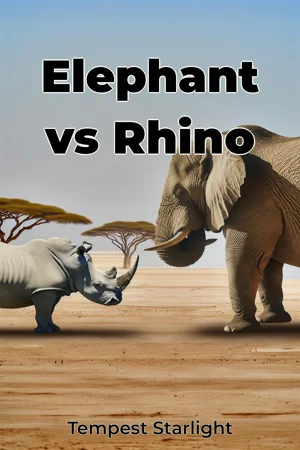
"Elephant vs Rhino" presents a detailed comparative analysis of two of Earth's largest land mammals, examining how their distinct evolutionary paths have led to different yet equally effective survival strategies. The book offers readers a scientific exploration of these megaherbivores through the lens of comparative biology and evolutionary adaptation. The work begins by establishing the evolutionary timeline of both species, tracking their development from smaller ancestors to their current forms over millions of years. This foundation sets up the book's central thesis: that despite sharing similar herbivorous diets and massive size, elephants and rhinoceros have developed markedly different physical features, social structures, and behavioral patterns that optimize their survival in their respective niches. Through three main sections, the book systematically examines these differences. The first section focuses on physical adaptations, comparing the elephants' sophisticated trunk and tusks with the rhinos' horns and protective armor-like skin. The second section delves into social behavior, contrasting the complex matriarchal elephant societies with the more solitary nature of rhinoceros. The third section explores cognitive abilities and environmental impact, particularly highlighting the elephants' advanced problem-solving capabilities and both species' roles as ecosystem engineers. The research presented draws from multiple disciplines, including paleontology, behavioral ecology, and conservation biology. The book incorporates recent field studies, GPS tracking data, and cognitive research to support its comparisons. Notable attention is given to studies conducted in African and Asian habitats, providing comprehensive geographic coverage of both species' ranges. The work connects to various scientific fields, including evolutionary biology, cognitive science, and ecosystem management. These intersections help readers understand how these species' adaptations influence broader ecological systems and what their preservation means for biodiversity conservation. The book maintains an academic yet accessible tone, using technical terminology when necessary but providing clear explanations for complex concepts. It is structured to serve both university students in biological sciences and informed general readers with an interest in wildlife biology. Particular attention is paid to current conservation challenges, examining how habitat loss and poaching affect both species differently and why their preservation requires distinct approaches. The book addresses ongoing debates in conservation biology about the effectiveness of different protection strategies for megaherbivores. Rather than just presenting facts, the work provides practical insights for conservation efforts and wildlife management. It explains how understanding these species' behaviors and needs is crucial for developing effective protection strategies and maintaining ecological balance in their habitats. The scope encompasses both modern observations and evolutionary history, though it primarily focuses on contemporary research and conservation implications. While the book acknowledges the cultural significance of both animals throughout human history, it maintains its focus on scientific analysis rather than cultural interpretation. This systematic comparison provides readers with a thorough understanding of how different evolutionary pressures can produce distinct solutions to similar biological challenges. The work serves as a valuable resource for understanding adaptation, ecology, and the importance of species-specific conservation approaches in maintaining Earth's biodiversity.
"Elephant vs Rhino" presents a detailed comparative analysis of two of Earth's largest land mammals, examining how their distinct evolutionary paths have led to different yet equally effective survival strategies. The book offers readers a scientific exploration of these megaherbivores through the lens of comparative biology and evolutionary adaptation. The work begins by establishing the evolutionary timeline of both species, tracking their development from smaller ancestors to their current forms over millions of years. This foundation sets up the book's central thesis: that despite sharing similar herbivorous diets and massive size, elephants and rhinoceros have developed markedly different physical features, social structures, and behavioral patterns that optimize their survival in their respective niches. Through three main sections, the book systematically examines these differences. The first section focuses on physical adaptations, comparing the elephants' sophisticated trunk and tusks with the rhinos' horns and protective armor-like skin. The second section delves into social behavior, contrasting the complex matriarchal elephant societies with the more solitary nature of rhinoceros. The third section explores cognitive abilities and environmental impact, particularly highlighting the elephants' advanced problem-solving capabilities and both species' roles as ecosystem engineers. The research presented draws from multiple disciplines, including paleontology, behavioral ecology, and conservation biology. The book incorporates recent field studies, GPS tracking data, and cognitive research to support its comparisons. Notable attention is given to studies conducted in African and Asian habitats, providing comprehensive geographic coverage of both species' ranges. The work connects to various scientific fields, including evolutionary biology, cognitive science, and ecosystem management. These intersections help readers understand how these species' adaptations influence broader ecological systems and what their preservation means for biodiversity conservation. The book maintains an academic yet accessible tone, using technical terminology when necessary but providing clear explanations for complex concepts. It is structured to serve both university students in biological sciences and informed general readers with an interest in wildlife biology. Particular attention is paid to current conservation challenges, examining how habitat loss and poaching affect both species differently and why their preservation requires distinct approaches. The book addresses ongoing debates in conservation biology about the effectiveness of different protection strategies for megaherbivores. Rather than just presenting facts, the work provides practical insights for conservation efforts and wildlife management. It explains how understanding these species' behaviors and needs is crucial for developing effective protection strategies and maintaining ecological balance in their habitats. The scope encompasses both modern observations and evolutionary history, though it primarily focuses on contemporary research and conservation implications. While the book acknowledges the cultural significance of both animals throughout human history, it maintains its focus on scientific analysis rather than cultural interpretation. This systematic comparison provides readers with a thorough understanding of how different evolutionary pressures can produce distinct solutions to similar biological challenges. The work serves as a valuable resource for understanding adaptation, ecology, and the importance of species-specific conservation approaches in maintaining Earth's biodiversity.
"Elephant vs Rhino" presents a fascinating scientific comparison of Earth's most impressive land mammals, exploring how these megaherbivores evolved different survival strategies despite their similar size and herbivorous diets. Through comprehensive analysis, the book reveals how evolutionary pressures shaped these species into remarkably distinct creatures, each perfectly adapted to their ecological niches. The book's three-part structure systematically examines physical adaptations, social behaviors, and cognitive abilities, highlighting intriguing contrasts such as the elephant's sophisticated trunk and complex matriarchal society versus the rhinoceros's protective armor-like skin and more solitary nature. Drawing from recent field studies, GPS tracking data, and cognitive research, the work combines findings from paleontology, behavioral ecology, and conservation biology to paint a complete picture of both species' development and current challenges. While maintaining scientific accuracy, the book remains accessible to both academic and general audiences, providing clear explanations of complex concepts and their practical applications in conservation. It emphasizes how understanding these distinct evolutionary paths is crucial for developing effective species-specific conservation strategies, making it an invaluable resource for anyone interested in wildlife biology, ecosystem management, and biodiversity preservation. The work's unique approach to comparing these magnificent creatures offers readers deep insights into the fascinating ways nature solves similar survival challenges through different evolutionary solutions.
Book Details
ISBN
9788233952815
Publisher
Publifye AS
Your Licenses
You don't own any licenses for this book
Purchase a license below to unlock this book and download the EPUB.
Purchase License
Select a tier to unlock this book
Need bulk licensing?
Contact us for enterprise agreements.