
About This Book
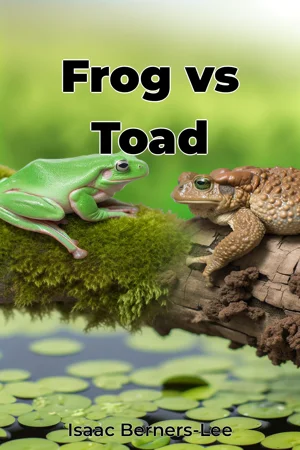
"Frog vs Toad" presents a detailed scientific examination of two commonly confused amphibian groups, addressing the persistent question: what truly distinguishes a frog from a toad? This comprehensive guide delves into the biological characteristics, evolutionary adaptations, and ecological roles of these remarkable amphibians. The book systematically explores three primary areas: physical morphology, habitat preferences, and behavioral patterns. Through detailed comparisons, readers discover how seemingly subtle differences in skin texture, leg length, and body shape serve critical evolutionary purposes. The text examines how frogs' smooth, moist skin and longer legs adapt them to aquatic environments, while toads' warty, drier skin and shorter limbs suit their predominantly terrestrial lifestyle. Building on established biological research, the work presents current scientific understanding of amphibian evolution and adaptation. The author incorporates recent studies from herpetology, ecology, and evolutionary biology, supported by field observations and laboratory research. The evidence includes detailed anatomical comparisons, habitat surveys, and behavioral studies from various global regions. The book's structure progresses from basic identification features to complex ecological relationships. The first section establishes fundamental anatomical differences, followed by chapters on habitat adaptation and behavioral patterns. The final section examines conservation challenges facing both groups in changing environments. Through clear, technical writing accessible to both students and enthusiasts, the text connects herpetology to broader biological concepts. It demonstrates how studying frogs and toads contributes to understanding evolution, adaptation, and ecosystem health. The work includes practical identification guides, habitat maps, and behavioral observation techniques. The interdisciplinary approach connects classical taxonomy with modern conservation biology and environmental science. This integration helps readers understand how these amphibians serve as indicators of ecosystem health and environmental change. The book presents specific examples of how frog and toad populations respond to environmental stressors, making it relevant to current ecological discussions. The content maintains scientific accuracy while remaining accessible to readers with basic biological knowledge. Technical terms are clearly defined, and concepts build progressively from fundamental principles to complex ecological relationships. The text includes detailed illustrations, comparative tables, and field guides for practical application. This work serves multiple audiences, from university students and educators to wildlife professionals and naturalists. It provides valuable resources for field identification, research reference, and environmental education. The systematic organization allows readers to focus on specific aspects of frog and toad biology while understanding their broader ecological context. The book acknowledges ongoing debates in amphibian classification and addresses recent taxonomic revisions. It explores how new genetic research continues to refine our understanding of the relationship between frogs and toads. The text also examines current conservation challenges, including habitat loss and disease impacts on amphibian populations. Within the scope of biology and life sciences, the work maintains focus on observable differences and scientific evidence rather than anecdotal distinctions. It emphasizes the importance of these amphibians in both aquatic and terrestrial ecosystems, their role in food webs, and their value as environmental indicators. The practical applications extend to conservation efforts, environmental monitoring, and education. Readers learn specific techniques for identifying species, understanding habitat requirements, and contributing to citizen science projects focused on amphibian population monitoring.
"Frog vs Toad" presents a detailed scientific examination of two commonly confused amphibian groups, addressing the persistent question: what truly distinguishes a frog from a toad? This comprehensive guide delves into the biological characteristics, evolutionary adaptations, and ecological roles of these remarkable amphibians. The book systematically explores three primary areas: physical morphology, habitat preferences, and behavioral patterns. Through detailed comparisons, readers discover how seemingly subtle differences in skin texture, leg length, and body shape serve critical evolutionary purposes. The text examines how frogs' smooth, moist skin and longer legs adapt them to aquatic environments, while toads' warty, drier skin and shorter limbs suit their predominantly terrestrial lifestyle. Building on established biological research, the work presents current scientific understanding of amphibian evolution and adaptation. The author incorporates recent studies from herpetology, ecology, and evolutionary biology, supported by field observations and laboratory research. The evidence includes detailed anatomical comparisons, habitat surveys, and behavioral studies from various global regions. The book's structure progresses from basic identification features to complex ecological relationships. The first section establishes fundamental anatomical differences, followed by chapters on habitat adaptation and behavioral patterns. The final section examines conservation challenges facing both groups in changing environments. Through clear, technical writing accessible to both students and enthusiasts, the text connects herpetology to broader biological concepts. It demonstrates how studying frogs and toads contributes to understanding evolution, adaptation, and ecosystem health. The work includes practical identification guides, habitat maps, and behavioral observation techniques. The interdisciplinary approach connects classical taxonomy with modern conservation biology and environmental science. This integration helps readers understand how these amphibians serve as indicators of ecosystem health and environmental change. The book presents specific examples of how frog and toad populations respond to environmental stressors, making it relevant to current ecological discussions. The content maintains scientific accuracy while remaining accessible to readers with basic biological knowledge. Technical terms are clearly defined, and concepts build progressively from fundamental principles to complex ecological relationships. The text includes detailed illustrations, comparative tables, and field guides for practical application. This work serves multiple audiences, from university students and educators to wildlife professionals and naturalists. It provides valuable resources for field identification, research reference, and environmental education. The systematic organization allows readers to focus on specific aspects of frog and toad biology while understanding their broader ecological context. The book acknowledges ongoing debates in amphibian classification and addresses recent taxonomic revisions. It explores how new genetic research continues to refine our understanding of the relationship between frogs and toads. The text also examines current conservation challenges, including habitat loss and disease impacts on amphibian populations. Within the scope of biology and life sciences, the work maintains focus on observable differences and scientific evidence rather than anecdotal distinctions. It emphasizes the importance of these amphibians in both aquatic and terrestrial ecosystems, their role in food webs, and their value as environmental indicators. The practical applications extend to conservation efforts, environmental monitoring, and education. Readers learn specific techniques for identifying species, understanding habitat requirements, and contributing to citizen science projects focused on amphibian population monitoring.
"Frog vs Toad" offers a comprehensive exploration of the fundamental differences between these commonly confused amphibian groups, delving deep into their biological characteristics and ecological roles. Through a systematic examination of physical morphology, habitat preferences, and behavioral patterns, the book reveals how seemingly minor variations in features like skin texture and leg length serve crucial evolutionary purposes. The work stands out for its ability to bridge classical taxonomy with modern conservation biology, making complex scientific concepts accessible to both students and nature enthusiasts. The book progresses logically from basic identification features to complex ecological relationships, incorporating recent research from herpetology and evolutionary biology. Readers discover fascinating adaptations, such as how frogs' smooth, moist skin suits aquatic environments, while toads' warty, drier skin enables terrestrial survival. The text expertly weaves together field observations and laboratory research, providing practical identification guides and habitat maps that transform theoretical knowledge into applicable skills. From university students to wildlife professionals, this interdisciplinary approach serves multiple audiences by connecting specific amphibian characteristics to broader ecosystem health indicators. The book's final sections address contemporary conservation challenges, examining how these remarkable creatures respond to environmental stressors and habitat loss. By maintaining scientific rigor while ensuring accessibility, the work establishes itself as both a scholarly resource and a practical guide for anyone interested in understanding these fascinating amphibians.
Book Details
ISBN
9788233952808
Publisher
Publifye AS
Your Licenses
You don't own any licenses for this book
Purchase a license below to unlock this book and download the EPUB.
Purchase License
Select a tier to unlock this book
Need bulk licensing?
Contact us for enterprise agreements.