
About This Book
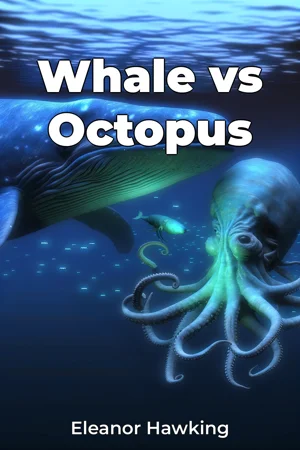
"Whale vs Octopus" presents a scientific examination of two highly successful yet fundamentally different marine species, challenging our understanding of intelligence and adaptation in the ocean's depths. Through detailed comparative analysis, this book reveals how these creatures have evolved distinct strategies for survival despite inhabiting the same marine environment. The book establishes three core themes: cognitive development in marine species, evolutionary adaptation patterns, and survival strategies in deep-ocean environments. These topics provide readers with a framework for understanding how different evolutionary paths can lead to equally successful outcomes in marine ecosystems. Beginning with a comprehensive overview of marine biology fundamentals, the text explores the parallel evolution of whales and octopuses from their prehistoric ancestors. This historical context demonstrates how these species developed their current characteristics over millions of years, supported by fossil records and genetic analysis. The central thesis argues that intelligence and survival in marine environments can manifest through multiple evolutionary pathways, as demonstrated by the contrasting approaches of social cetaceans and solitary cephalopods. This argument is developed through three main sections: Section one examines whale social structures and communication systems, including pod dynamics, acoustic communication, and cooperative hunting behaviors. The research draws from long-term behavioral studies and advanced acoustic monitoring data collected across multiple ocean basins. Section two focuses on octopus problem-solving abilities, tool use, and adaptive camouflage mechanisms. This portion incorporates laboratory studies, field observations, and new findings in neurobiology regarding distributed intelligence systems. Section three provides a comparative analysis of both species' hunting strategies, predator-avoidance techniques, and reproductive methods, highlighting how different evolutionary pressures led to distinct solutions for similar challenges. The book integrates research from multiple disciplines, including marine biology, evolutionary science, and cognitive psychology. It connects these fields through the examination of convergent evolution and the development of intelligence in marine environments. The writing maintains an academic foundation while employing clear, accessible language suitable for both science professionals and interested general readers. Technical concepts are carefully explained through practical examples and clear illustrations. This work is particularly relevant for marine biology students, environmental scientists, and individuals interested in evolutionary biology. It provides practical insights for marine conservation efforts and contributes to our understanding of cognitive development in non-human species. The research presented relies on peer-reviewed studies, long-term population data, and recent technological advances in marine observation. It includes findings from international research teams and incorporates data from both wild populations and controlled studies. The scope encompasses both shallow and deep-water environments across all major oceans, though it focuses primarily on species that have been extensively studied. The book acknowledges current limitations in deep-sea research technology and gaps in our understanding of certain behavioral aspects. Current debates addressed include the nature of intelligence in invertebrates, the impact of social structures on cognitive development, and the role of environmental pressures in shaping problem-solving abilities. The text presents multiple viewpoints on these issues while maintaining scientific objectivity. Applications of this research extend to marine conservation strategies, artificial intelligence development inspired by natural systems, and our understanding of cognitive evolution. The book concludes by examining how insights from these species can inform our approach to marine ecosystem preservation and our understanding of intelligence evolution.
"Whale vs Octopus" presents a scientific examination of two highly successful yet fundamentally different marine species, challenging our understanding of intelligence and adaptation in the ocean's depths. Through detailed comparative analysis, this book reveals how these creatures have evolved distinct strategies for survival despite inhabiting the same marine environment. The book establishes three core themes: cognitive development in marine species, evolutionary adaptation patterns, and survival strategies in deep-ocean environments. These topics provide readers with a framework for understanding how different evolutionary paths can lead to equally successful outcomes in marine ecosystems. Beginning with a comprehensive overview of marine biology fundamentals, the text explores the parallel evolution of whales and octopuses from their prehistoric ancestors. This historical context demonstrates how these species developed their current characteristics over millions of years, supported by fossil records and genetic analysis. The central thesis argues that intelligence and survival in marine environments can manifest through multiple evolutionary pathways, as demonstrated by the contrasting approaches of social cetaceans and solitary cephalopods. This argument is developed through three main sections: Section one examines whale social structures and communication systems, including pod dynamics, acoustic communication, and cooperative hunting behaviors. The research draws from long-term behavioral studies and advanced acoustic monitoring data collected across multiple ocean basins. Section two focuses on octopus problem-solving abilities, tool use, and adaptive camouflage mechanisms. This portion incorporates laboratory studies, field observations, and new findings in neurobiology regarding distributed intelligence systems. Section three provides a comparative analysis of both species' hunting strategies, predator-avoidance techniques, and reproductive methods, highlighting how different evolutionary pressures led to distinct solutions for similar challenges. The book integrates research from multiple disciplines, including marine biology, evolutionary science, and cognitive psychology. It connects these fields through the examination of convergent evolution and the development of intelligence in marine environments. The writing maintains an academic foundation while employing clear, accessible language suitable for both science professionals and interested general readers. Technical concepts are carefully explained through practical examples and clear illustrations. This work is particularly relevant for marine biology students, environmental scientists, and individuals interested in evolutionary biology. It provides practical insights for marine conservation efforts and contributes to our understanding of cognitive development in non-human species. The research presented relies on peer-reviewed studies, long-term population data, and recent technological advances in marine observation. It includes findings from international research teams and incorporates data from both wild populations and controlled studies. The scope encompasses both shallow and deep-water environments across all major oceans, though it focuses primarily on species that have been extensively studied. The book acknowledges current limitations in deep-sea research technology and gaps in our understanding of certain behavioral aspects. Current debates addressed include the nature of intelligence in invertebrates, the impact of social structures on cognitive development, and the role of environmental pressures in shaping problem-solving abilities. The text presents multiple viewpoints on these issues while maintaining scientific objectivity. Applications of this research extend to marine conservation strategies, artificial intelligence development inspired by natural systems, and our understanding of cognitive evolution. The book concludes by examining how insights from these species can inform our approach to marine ecosystem preservation and our understanding of intelligence evolution.
"Whale vs Octopus" offers a fascinating exploration of two marine species that have achieved remarkable success through dramatically different evolutionary paths. This comprehensive study delves into how whales and octopuses, despite inhabiting the same oceans, have developed distinct approaches to survival, intelligence, and adaptation. The book presents compelling evidence of how social cetaceans and solitary cephalopods represent contrasting yet equally effective evolutionary strategies in marine environments. Through three main sections, the book progressively unveils the complexity of these marine species, beginning with whale social structures and their sophisticated communication systems. It then transitions to examining octopus intelligence, highlighting their remarkable problem-solving abilities and adaptive camouflage mechanisms. The final section provides an illuminating comparative analysis of both species' survival strategies, from hunting techniques to reproductive methods, demonstrating how different evolutionary pressures have shaped their development. What sets this work apart is its interdisciplinary approach, weaving together insights from marine biology, evolutionary science, and cognitive psychology. The text skillfully balances academic rigor with accessibility, making complex concepts understandable through practical examples. Drawing from extensive research, including long-term behavioral studies and advanced monitoring data, it offers valuable insights for both scientific professionals and enthusiastic general readers interested in understanding the diverse manifestations of intelligence in marine life.
Book Details
ISBN
9788233952792
Publisher
Publifye AS
Your Licenses
You don't own any licenses for this book
Purchase a license below to unlock this book and download the EPUB.
Purchase License
Select a tier to unlock this book
Need bulk licensing?
Contact us for enterprise agreements.