
About This Book
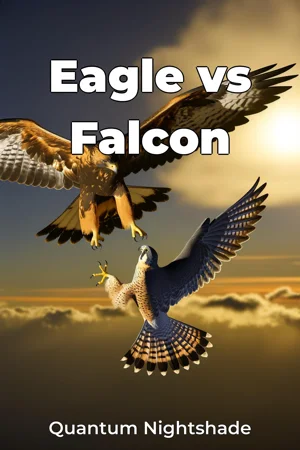
"Eagle vs Falcon" presents a detailed examination of two apex aerial predators, revealing how their distinct hunting strategies and physical adaptations have evolved to dominate different niches within the same ecosystem. Through comparative analysis and field research, this comprehensive study illuminates the sophisticated mechanisms that make these birds highly successful hunters. The book explores three primary themes: the biomechanics of flight specific to each species, their specialized hunting techniques, and the evolutionary adaptations that enable their survival. These topics provide readers with a thorough understanding of how these raptors maintain their position at the top of their respective food chains. Drawing from decades of ornithological research, including recent advances in high-speed photography and GPS tracking, the text examines how eagles leverage their superior size and strength for sustained soaring and powerful strikes, while falcons utilize their streamlined bodies and rapid acceleration for high-speed pursuit hunting. The book demonstrates how these different approaches reflect millions of years of evolutionary refinement. The central thesis establishes that eagles and falcons represent two distinct but equally successful evolutionary solutions to aerial hunting. This understanding challenges the common perception of a single "superior" hunting strategy and reveals how environmental pressures have shaped these different approaches. Structured in three main sections, the book first examines the physical characteristics of each bird, including wing structure, visual capabilities, and neurological adaptations. The second section analyzes hunting behaviors and territories, supported by extensive field observations and tracking data. The final section explores the ecological roles these birds play and their adaptation to various habitats. The research presented combines traditional field studies with modern technology, including wind tunnel testing, computer modeling of flight patterns, and DNA analysis. This multifaceted approach provides readers with contemporary scientific insights into raptor biology. The work connects deeply with aerodynamics, evolutionary biology, and ecosystem dynamics. These interdisciplinary links help readers understand how principles of physics influence hunting strategies and how environmental pressures drive evolutionary adaptations. The book employs a systematic, data-driven approach while maintaining accessibility through clear explanations and detailed illustrations. Technical concepts are carefully explained using precise language and supporting diagrams. Written for both professional ornithologists and informed nature enthusiasts, the text assumes basic knowledge of biology but provides necessary context for more complex concepts. The material particularly appeals to readers interested in predator-prey relationships, flight mechanics, and evolutionary adaptation. The scope focuses specifically on hunting behaviors and physical adaptations, intentionally limiting coverage of breeding patterns and social behaviors to maintain depth in core areas. This focused approach allows for detailed examination of hunting strategies while acknowledging areas for further study. Practical applications include insights for wildlife photography, bird watching, and conservation efforts. The book provides specific guidance for identifying and observing these birds in their natural habitats while respecting their space and behavior patterns. Current debates addressed include the impact of climate change on hunting territories and the effectiveness of different conservation strategies for these species. The text presents multiple perspectives on these issues while maintaining scientific objectivity. This work fills a crucial gap in raptor literature by providing a detailed comparative analysis of two different approaches to aerial hunting, offering readers a comprehensive understanding of how these birds have adapted to their roles as apex predators.
"Eagle vs Falcon" presents a detailed examination of two apex aerial predators, revealing how their distinct hunting strategies and physical adaptations have evolved to dominate different niches within the same ecosystem. Through comparative analysis and field research, this comprehensive study illuminates the sophisticated mechanisms that make these birds highly successful hunters. The book explores three primary themes: the biomechanics of flight specific to each species, their specialized hunting techniques, and the evolutionary adaptations that enable their survival. These topics provide readers with a thorough understanding of how these raptors maintain their position at the top of their respective food chains. Drawing from decades of ornithological research, including recent advances in high-speed photography and GPS tracking, the text examines how eagles leverage their superior size and strength for sustained soaring and powerful strikes, while falcons utilize their streamlined bodies and rapid acceleration for high-speed pursuit hunting. The book demonstrates how these different approaches reflect millions of years of evolutionary refinement. The central thesis establishes that eagles and falcons represent two distinct but equally successful evolutionary solutions to aerial hunting. This understanding challenges the common perception of a single "superior" hunting strategy and reveals how environmental pressures have shaped these different approaches. Structured in three main sections, the book first examines the physical characteristics of each bird, including wing structure, visual capabilities, and neurological adaptations. The second section analyzes hunting behaviors and territories, supported by extensive field observations and tracking data. The final section explores the ecological roles these birds play and their adaptation to various habitats. The research presented combines traditional field studies with modern technology, including wind tunnel testing, computer modeling of flight patterns, and DNA analysis. This multifaceted approach provides readers with contemporary scientific insights into raptor biology. The work connects deeply with aerodynamics, evolutionary biology, and ecosystem dynamics. These interdisciplinary links help readers understand how principles of physics influence hunting strategies and how environmental pressures drive evolutionary adaptations. The book employs a systematic, data-driven approach while maintaining accessibility through clear explanations and detailed illustrations. Technical concepts are carefully explained using precise language and supporting diagrams. Written for both professional ornithologists and informed nature enthusiasts, the text assumes basic knowledge of biology but provides necessary context for more complex concepts. The material particularly appeals to readers interested in predator-prey relationships, flight mechanics, and evolutionary adaptation. The scope focuses specifically on hunting behaviors and physical adaptations, intentionally limiting coverage of breeding patterns and social behaviors to maintain depth in core areas. This focused approach allows for detailed examination of hunting strategies while acknowledging areas for further study. Practical applications include insights for wildlife photography, bird watching, and conservation efforts. The book provides specific guidance for identifying and observing these birds in their natural habitats while respecting their space and behavior patterns. Current debates addressed include the impact of climate change on hunting territories and the effectiveness of different conservation strategies for these species. The text presents multiple perspectives on these issues while maintaining scientific objectivity. This work fills a crucial gap in raptor literature by providing a detailed comparative analysis of two different approaches to aerial hunting, offering readers a comprehensive understanding of how these birds have adapted to their roles as apex predators.
"Eagle vs Falcon" presents a fascinating exploration of two supreme aerial predators, examining how these remarkable birds have evolved distinct hunting strategies to dominate their respective niches. The book delves into the sophisticated mechanisms that make eagles and falcons highly successful hunters, revealing how their physical characteristics and hunting techniques have been shaped by millions of years of evolution. Through a combination of traditional field studies and cutting-edge technology, including high-speed photography and GPS tracking, the book illuminates how eagles utilize their superior size and strength for sustained soaring and powerful strikes, while falcons employ their streamlined bodies for high-speed pursuit hunting. The text expertly weaves together principles of aerodynamics, evolutionary biology, and ecosystem dynamics to demonstrate how these different approaches reflect equally successful adaptations to aerial hunting. Organized in three comprehensive sections, the book progresses from detailed examinations of physical characteristics and wing structure to in-depth analyses of hunting behaviors and territorial patterns, concluding with an exploration of ecological roles across various habitats. This systematic approach, supported by wind tunnel testing and DNA analysis, offers readers a thorough understanding of raptor biology while maintaining accessibility through clear explanations and detailed illustrations. The work serves both professional ornithologists and nature enthusiasts, providing valuable insights for wildlife observation and conservation efforts.
Book Details
ISBN
9788233952716
Publisher
Publifye AS
Your Licenses
You don't own any licenses for this book
Purchase a license below to unlock this book and download the EPUB.
Purchase License
Select a tier to unlock this book
Need bulk licensing?
Contact us for enterprise agreements.