
About This Book
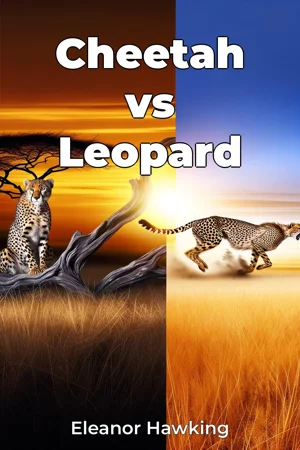
"Cheetah vs Leopard" presents a detailed scientific analysis of two of Africa's most successful predators, examining how their distinct evolutionary paths have led to remarkably different hunting strategies and physical adaptations. Through comprehensive research and field observations, this book challenges common misconceptions about these often-confused big cats while revealing the sophisticated mechanisms behind their survival. The book begins by establishing the evolutionary divergence of these two species, tracking their development from a common ancestor to their current specialized forms. This foundation sets up the book's core argument: that cheetahs and leopards represent two equally successful but fundamentally different approaches to predation in African ecosystems. Divided into three main sections, the text first examines physical adaptations. Readers learn about the cheetah's lightweight frame, enlarged heart, and semi-retractable claws designed for traction, contrasted with the leopard's muscular build, powerful jaw structure, and fully retractable claws for climbing. The second section analyzes hunting behaviors, from the cheetah's high-speed pursuit tactics to the leopard's ambush strategy. The final section explores their ecological roles and conservation challenges. Supporting evidence comes from recent GPS tracking studies, high-speed video analysis of hunting sequences, and detailed anatomical comparisons. The book incorporates research from multiple scientific institutions across Africa and Europe, including previously unpublished data on hunting success rates and territorial behaviors. The work connects biology with physics, examining how biomechanics influence hunting success, and ecology, exploring how each species affects prey populations differently. These interdisciplinary connections provide readers with a comprehensive understanding of predator-prey dynamics. What distinguishes this book is its systematic comparison approach, using split-screen diagrams and detailed anatomical illustrations to highlight differences that might otherwise go unnoticed. The writing maintains a scientific focus while remaining accessible to educated general readers, using clear explanations of technical concepts and relevant field examples. The primary audience includes wildlife biologists, conservation students, and informed nature enthusiasts. The book serves as both a scholarly reference and a practical guide for wildlife photographers and safari guides who need to distinguish between these species. Following the conventions of scientific literature, each chapter includes clearly stated objectives, methodological explanations, and evidence-based conclusions. The scope focuses specifically on African populations of both species, acknowledging but not deeply exploring Asian leopard populations. Practical applications include identification guides for field observers, prediction models for hunting behavior, and implications for wildlife management. The book addresses ongoing debates in conservation biology about the effects of habitat fragmentation on these species and their different responses to human encroachment. The text maintains objectivity when discussing controversial topics such as conservation priorities and management strategies, presenting multiple viewpoints supported by current research. It concludes by examining future challenges these species face and potential conservation solutions. This comprehensive comparison provides readers with the tools to understand not just what makes these cats different, but why these differences matter for their survival and the health of African ecosystems. Through careful analysis and evidence-based discussion, the book demonstrates how different evolutionary strategies can lead to equal success in the natural world.
"Cheetah vs Leopard" presents a detailed scientific analysis of two of Africa's most successful predators, examining how their distinct evolutionary paths have led to remarkably different hunting strategies and physical adaptations. Through comprehensive research and field observations, this book challenges common misconceptions about these often-confused big cats while revealing the sophisticated mechanisms behind their survival. The book begins by establishing the evolutionary divergence of these two species, tracking their development from a common ancestor to their current specialized forms. This foundation sets up the book's core argument: that cheetahs and leopards represent two equally successful but fundamentally different approaches to predation in African ecosystems. Divided into three main sections, the text first examines physical adaptations. Readers learn about the cheetah's lightweight frame, enlarged heart, and semi-retractable claws designed for traction, contrasted with the leopard's muscular build, powerful jaw structure, and fully retractable claws for climbing. The second section analyzes hunting behaviors, from the cheetah's high-speed pursuit tactics to the leopard's ambush strategy. The final section explores their ecological roles and conservation challenges. Supporting evidence comes from recent GPS tracking studies, high-speed video analysis of hunting sequences, and detailed anatomical comparisons. The book incorporates research from multiple scientific institutions across Africa and Europe, including previously unpublished data on hunting success rates and territorial behaviors. The work connects biology with physics, examining how biomechanics influence hunting success, and ecology, exploring how each species affects prey populations differently. These interdisciplinary connections provide readers with a comprehensive understanding of predator-prey dynamics. What distinguishes this book is its systematic comparison approach, using split-screen diagrams and detailed anatomical illustrations to highlight differences that might otherwise go unnoticed. The writing maintains a scientific focus while remaining accessible to educated general readers, using clear explanations of technical concepts and relevant field examples. The primary audience includes wildlife biologists, conservation students, and informed nature enthusiasts. The book serves as both a scholarly reference and a practical guide for wildlife photographers and safari guides who need to distinguish between these species. Following the conventions of scientific literature, each chapter includes clearly stated objectives, methodological explanations, and evidence-based conclusions. The scope focuses specifically on African populations of both species, acknowledging but not deeply exploring Asian leopard populations. Practical applications include identification guides for field observers, prediction models for hunting behavior, and implications for wildlife management. The book addresses ongoing debates in conservation biology about the effects of habitat fragmentation on these species and their different responses to human encroachment. The text maintains objectivity when discussing controversial topics such as conservation priorities and management strategies, presenting multiple viewpoints supported by current research. It concludes by examining future challenges these species face and potential conservation solutions. This comprehensive comparison provides readers with the tools to understand not just what makes these cats different, but why these differences matter for their survival and the health of African ecosystems. Through careful analysis and evidence-based discussion, the book demonstrates how different evolutionary strategies can lead to equal success in the natural world.
"Cheetah vs Leopard" offers a fascinating scientific exploration of two of Africa's most remarkable big cats, examining how their distinct evolutionary paths have shaped their physical characteristics and hunting strategies. Through meticulous research and field observations, the book reveals how these frequently confused predators have developed entirely different approaches to survival in African ecosystems, from their physical adaptations to their hunting techniques. The analysis progresses logically from evolutionary origins to detailed anatomical comparisons, showcasing the cheetah's speed-oriented adaptations—including its lightweight frame and specialized semi-retractable claws—against the leopard's power-focused features, such as its muscular build and climbing abilities. The book's systematic comparison approach, supported by GPS tracking studies and high-speed video analysis, illuminates how these differences influence their hunting success rates and territorial behaviors. Particularly intriguing is the examination of how each species' unique characteristics affect their interaction with prey populations and their broader ecological roles. What sets this work apart is its comprehensive integration of multiple scientific disciplines, from biomechanics to conservation biology, presented through clear explanations and detailed illustrations. The book maintains scientific rigor while remaining accessible to both specialists and educated enthusiasts, offering practical applications for wildlife management and field identification. This thorough examination of two successful but contrasting predatory strategies provides valuable insights into the diversity of evolutionary adaptations in African ecosystems.
Book Details
ISBN
9788233952693
Publisher
Publifye AS
Your Licenses
You don't own any licenses for this book
Purchase a license below to unlock this book and download the EPUB.
Purchase License
Select a tier to unlock this book
Need bulk licensing?
Contact us for enterprise agreements.