
About This Book
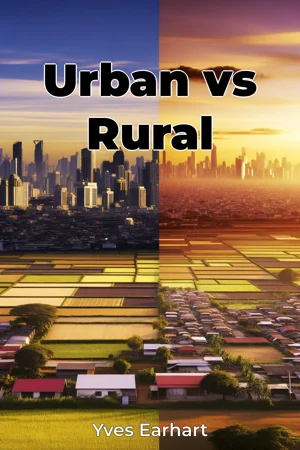
"Urban vs Rural" opens with a fundamental question that shapes modern society: How do the distinct environments of city and countryside influence the daily lives, social connections, and economic opportunities of their residents? Drawing on comprehensive census data and demographic research spanning the past three decades, this book presents a detailed examination of the contrasting realities between urban and rural living in contemporary society. The work systematically analyzes three core dimensions: economic patterns, social structures, and environmental impacts. Through careful examination of population density data, employment statistics, and community surveys, it reveals how these factors interact to create distinctly different living experiences. The research incorporates data from multiple national censuses, providing longitudinal insights into demographic shifts and evolving patterns of human settlement. The book's central thesis argues that understanding the urban-rural divide requires moving beyond simple population statistics to examine complex interconnections between physical environment, social networks, and economic opportunities. This understanding becomes increasingly vital as policy makers and planners work to address challenges in both settings. Structured in three main sections, the book first establishes a baseline comparison of infrastructure and services, including healthcare access, educational facilities, and transportation networks. The second section delves into social dynamics, examining how community structures and interpersonal relationships differ between urban and rural settings. The final section explores economic patterns, analyzing employment opportunities, cost of living variations, and economic resilience in both environments. The research methodology combines quantitative census data with qualitative studies from sociology and urban planning. It incorporates geographical information systems (GIS) data to map patterns of development and population movement, while economic data from various sectors illustrates resource distribution and economic activity patterns. The work connects multiple disciplines, bridging geography, sociology, and economics. It integrates environmental science when discussing sustainability challenges and psychology when examining the impact of living environments on mental well-being. This interdisciplinary approach provides readers with a comprehensive understanding of how location influences life outcomes. Written in an analytical style that balances academic rigor with accessibility, the book presents complex data through clear narratives and visual representations. It targets urban planners, policy makers, social researchers, and informed citizens interested in understanding population distribution patterns and their implications. The scope encompasses both developed and developing regions, though it focuses primarily on patterns observed in industrialized nations. It examines current trends while acknowledging historical contexts that shaped present-day settlement patterns. Practical applications include insights for urban and rural development planning, policy formation, and individual decision-making regarding residence location. The book addresses ongoing debates about rural revitalization, urban sprawl, and the future of human settlement patterns in an increasingly connected world. For the social science and geography communities, this work provides a methodical analysis of how physical location influences human experience. It avoids simplified rural-urban dichotomies, instead presenting nuanced analysis of how these environments shape opportunities, challenges, and daily life patterns for their residents. This research fills a crucial gap in current literature by providing an updated, data-driven examination of how geographic location influences social and economic outcomes in contemporary society. It serves as both a comprehensive reference for professionals and an informative resource for general readers interested in understanding the complex dynamics between urban and rural life.
"Urban vs Rural" opens with a fundamental question that shapes modern society: How do the distinct environments of city and countryside influence the daily lives, social connections, and economic opportunities of their residents? Drawing on comprehensive census data and demographic research spanning the past three decades, this book presents a detailed examination of the contrasting realities between urban and rural living in contemporary society. The work systematically analyzes three core dimensions: economic patterns, social structures, and environmental impacts. Through careful examination of population density data, employment statistics, and community surveys, it reveals how these factors interact to create distinctly different living experiences. The research incorporates data from multiple national censuses, providing longitudinal insights into demographic shifts and evolving patterns of human settlement. The book's central thesis argues that understanding the urban-rural divide requires moving beyond simple population statistics to examine complex interconnections between physical environment, social networks, and economic opportunities. This understanding becomes increasingly vital as policy makers and planners work to address challenges in both settings. Structured in three main sections, the book first establishes a baseline comparison of infrastructure and services, including healthcare access, educational facilities, and transportation networks. The second section delves into social dynamics, examining how community structures and interpersonal relationships differ between urban and rural settings. The final section explores economic patterns, analyzing employment opportunities, cost of living variations, and economic resilience in both environments. The research methodology combines quantitative census data with qualitative studies from sociology and urban planning. It incorporates geographical information systems (GIS) data to map patterns of development and population movement, while economic data from various sectors illustrates resource distribution and economic activity patterns. The work connects multiple disciplines, bridging geography, sociology, and economics. It integrates environmental science when discussing sustainability challenges and psychology when examining the impact of living environments on mental well-being. This interdisciplinary approach provides readers with a comprehensive understanding of how location influences life outcomes. Written in an analytical style that balances academic rigor with accessibility, the book presents complex data through clear narratives and visual representations. It targets urban planners, policy makers, social researchers, and informed citizens interested in understanding population distribution patterns and their implications. The scope encompasses both developed and developing regions, though it focuses primarily on patterns observed in industrialized nations. It examines current trends while acknowledging historical contexts that shaped present-day settlement patterns. Practical applications include insights for urban and rural development planning, policy formation, and individual decision-making regarding residence location. The book addresses ongoing debates about rural revitalization, urban sprawl, and the future of human settlement patterns in an increasingly connected world. For the social science and geography communities, this work provides a methodical analysis of how physical location influences human experience. It avoids simplified rural-urban dichotomies, instead presenting nuanced analysis of how these environments shape opportunities, challenges, and daily life patterns for their residents. This research fills a crucial gap in current literature by providing an updated, data-driven examination of how geographic location influences social and economic outcomes in contemporary society. It serves as both a comprehensive reference for professionals and an informative resource for general readers interested in understanding the complex dynamics between urban and rural life.
"Urban vs Rural" presents a comprehensive exploration of how city and countryside environments fundamentally shape the lives, social connections, and economic opportunities of their residents. Drawing from three decades of census data and demographic research, the book delves deep into the complex interplay between physical environment, social structures, and economic patterns that create distinct living experiences in urban and rural settings. The book uniquely approaches this topic through three interconnected dimensions: economic patterns, social structures, and environmental impacts. Rather than simply focusing on population statistics, it examines crucial factors like healthcare access, educational facilities, and transportation networks. Through careful analysis of census data, employment statistics, and community surveys, the work reveals fascinating patterns in how location influences everything from mental well-being to economic resilience. Moving beyond traditional urban-rural dichotomies, the research combines quantitative census data with qualitative sociological studies to paint a nuanced picture of contemporary settlement patterns. The book progresses systematically through infrastructure comparisons, social dynamics, and economic patterns, using geographical information systems (GIS) data to illustrate development trends. This interdisciplinary approach, bridging geography, sociology, and economics, offers valuable insights for urban planners, policy makers, and anyone interested in understanding how location shapes modern life outcomes.
Book Details
ISBN
9788233952303
Publisher
Publifye AS
Your Licenses
You don't own any licenses for this book
Purchase a license below to unlock this book and download the EPUB.
Purchase License
Select a tier to unlock this book
Need bulk licensing?
Contact us for enterprise agreements.